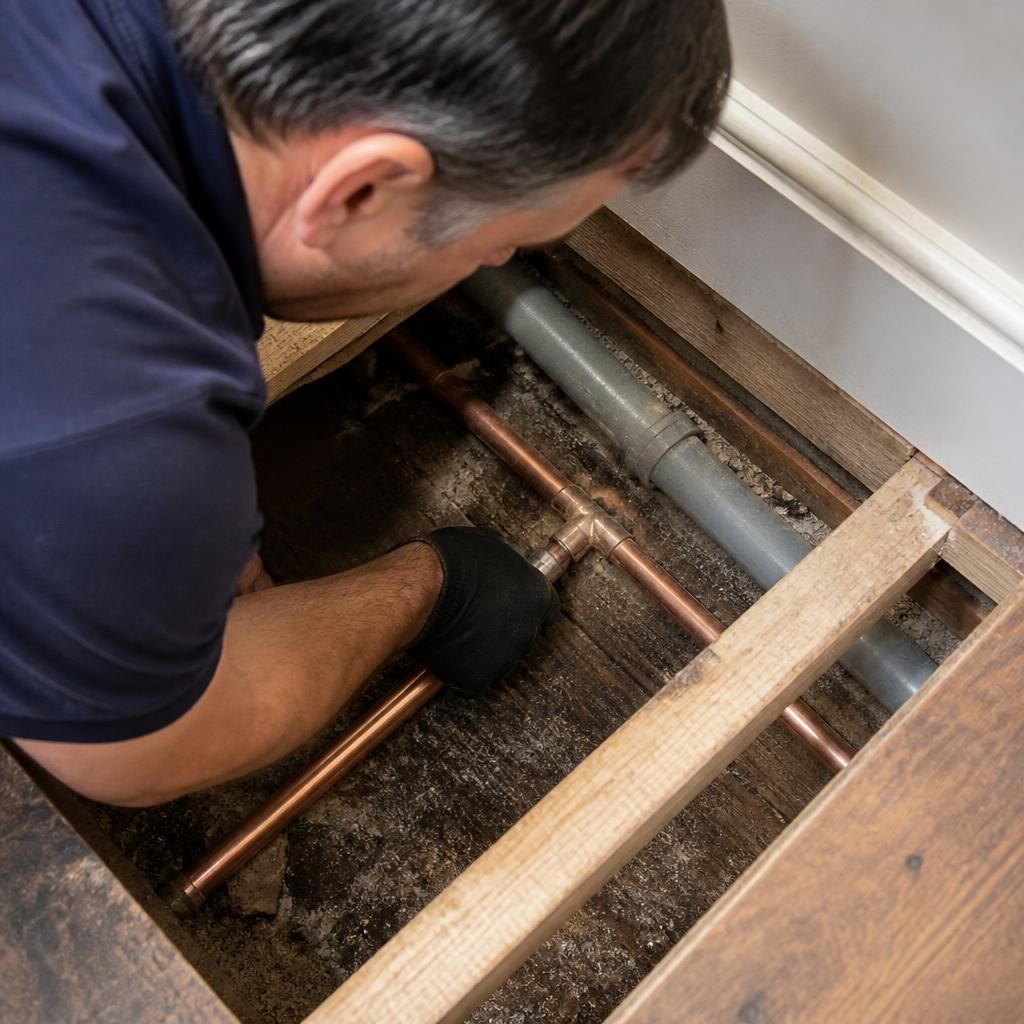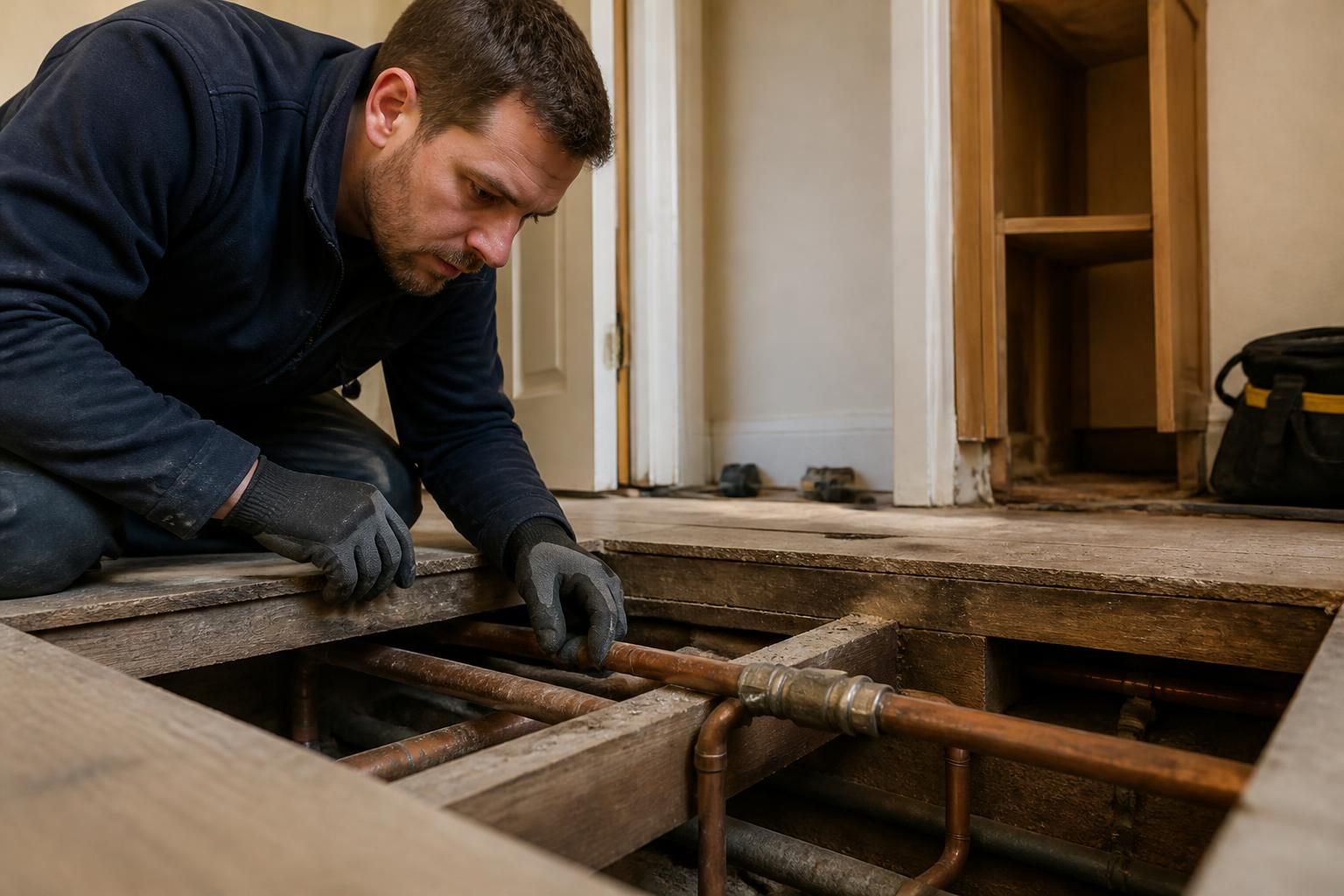
Once a pipe leak has been located, the next steps are to identify the most suitable repair, reach the affected section safely, complete the work and confirm that the surrounding area is no longer being affected by escaping water. The exact process depends on the pipe material, the position of the fault and whether the leak is from a joint, fitting, pinhole or burst section.
A plumber will normally establish the condition of the affected pipework before deciding whether a local repair or replacement is more appropriate. A sound pipe with a failed joint or connector may only need the faulty component renewed. Where the pipe is cracked, badly corroded, distorted or weakened in more than one place, replacing a longer section can provide a more dependable result than fitting a temporary patch.
The repair method also depends on the type of pipe:
- Copper pipe: the damaged section may be cut out and replaced, with the connection method selected according to its position and condition.
- PVC pipe: a damaged length or fitting can usually be removed and replaced using compatible components and suitable joints.
- Flexible or connected pipework: the fittings, seals and connection points need to be checked because the visible moisture may come from a loose or deteriorated connection rather than the pipe itself.
Where the pipe is concealed behind a wall, floor or fitted unit, access should be limited to the area needed to carry out the work safely. This can involve removing a panel, lifting a small section of flooring or creating a carefully positioned opening. The access point should be planned around the pipe route and the repair method, rather than opening a large area without first establishing what needs to be replaced.
After the faulty section has been repaired, the pipework is checked for secure connections and correct alignment. The affected supply can then be brought back into use in a controlled manner while the repaired area is observed. Further checks help identify seepage from a joint that may not be apparent when the pipe is not under normal operating conditions.
It is also important to consider water that has already escaped. Damp insulation, flooring, plasterboard, cupboards and other surrounding materials may need time to dry, even after the pipe itself has been repaired. Persistent dampness, staining, bubbling paint or a musty smell can indicate that moisture remains in the structure or that additional damage has been caused. Electrical fittings near the affected area should not be used if they may have been exposed to water.
Once the plumbing work is complete, any removed panels or fittings can be put back where this forms part of the agreed work. Decorative repairs, drying, flooring replacement and treatment of extensive water damage may require separate arrangements, particularly where the leak has affected several rooms or structural materials.
Keep a record of the leak location, the work carried out and any visible damage. Landlords and tenants may need this information for communication between the parties or for an insurance claim. If signs of moisture return after the repair, the pipework should be checked again rather than assuming that the original leak has simply left residual dampness.