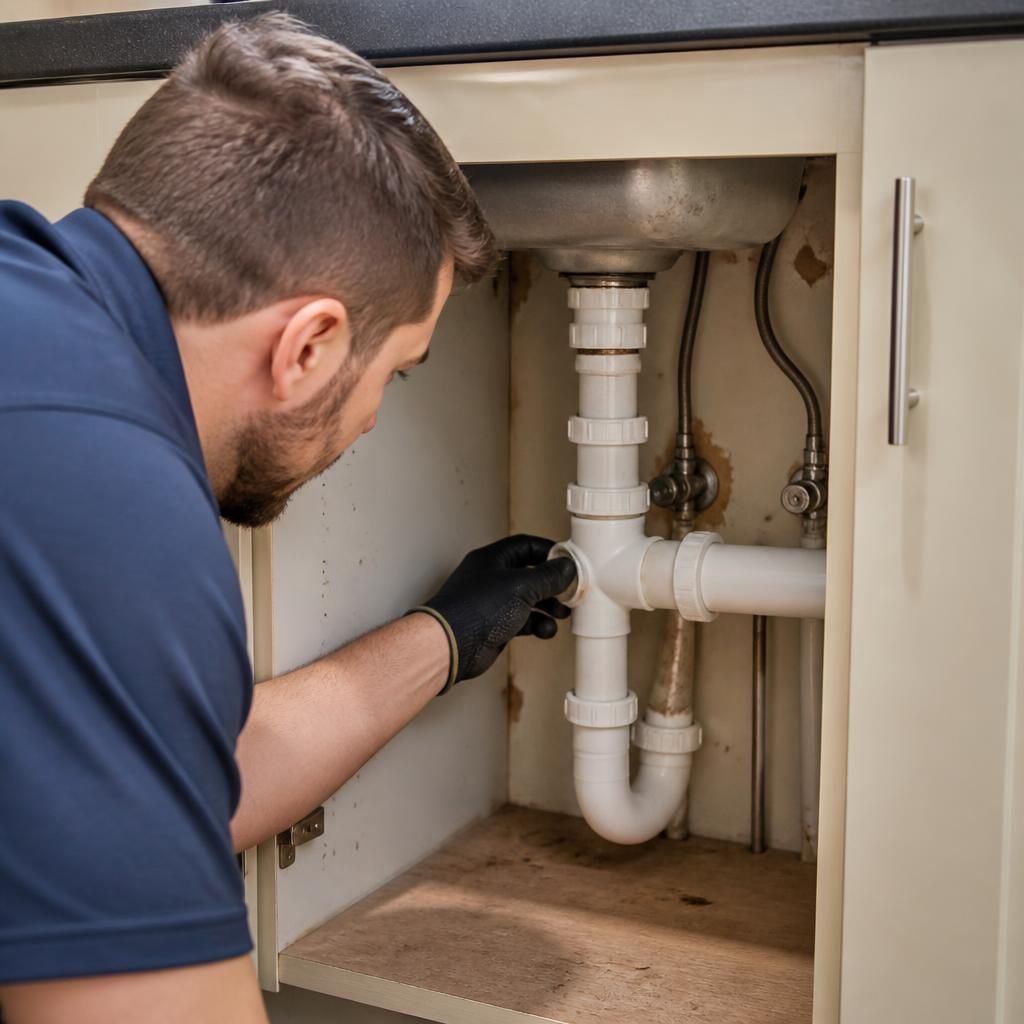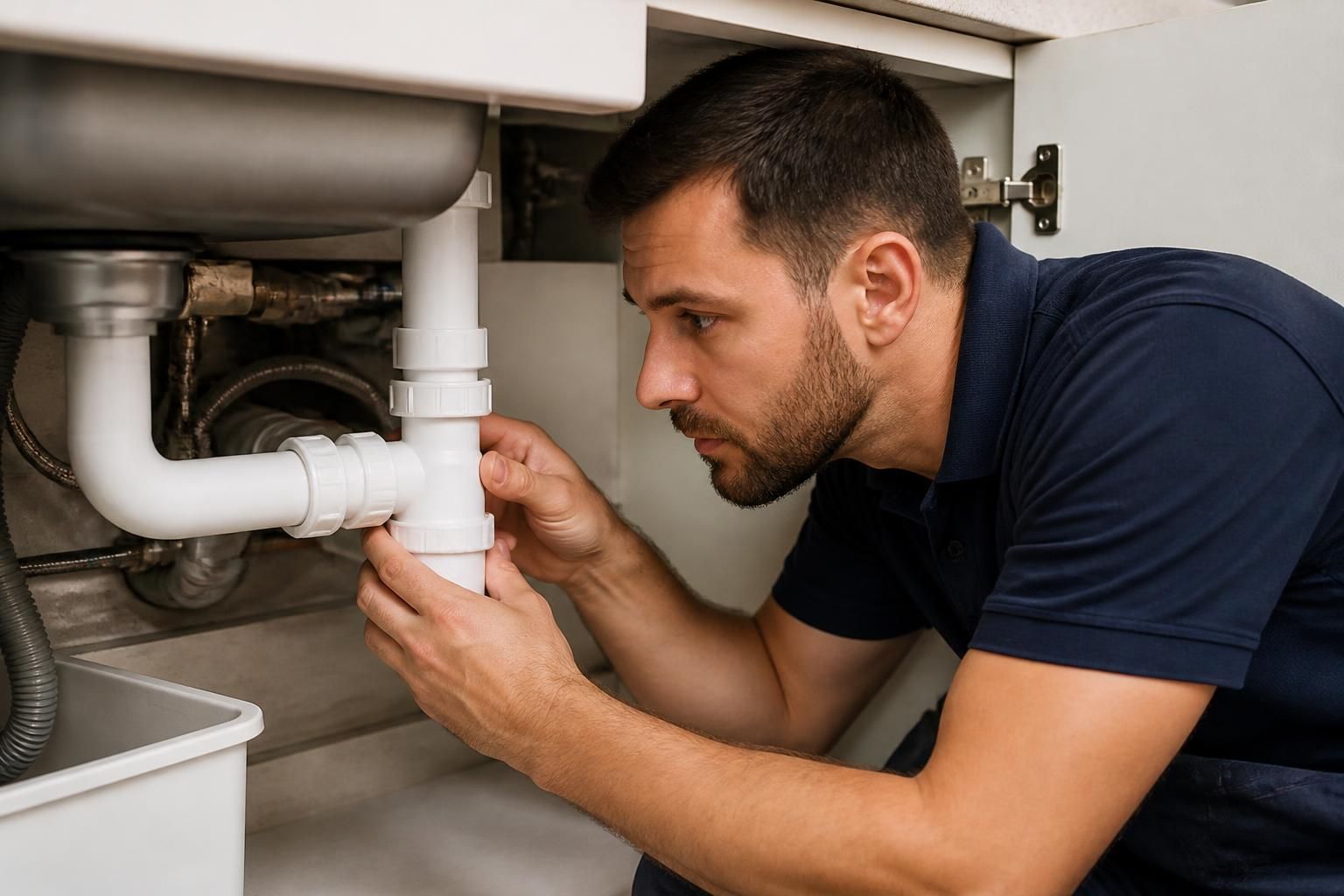
A PVC leak repair is usually least disruptive when the pipe can be reached through an existing opening, removable access panel or the space beneath a sink. The repair can then be completed by exposing the faulty joint or section, cutting out damaged material where necessary, and fitting a suitable replacement connector or length of pipe.
The amount of access required depends on the type and position of the pipe. A visible waste pipe beneath a basin may only require the trap or a nearby connection to be loosened. Pipework behind a kitchen unit, bath panel or vanity unit may be reachable by removing the panel rather than dismantling the entire fixture. An appliance may also be moved temporarily if it prevents safe access, although this should be done carefully to avoid damaging water, waste or electrical connections.
Several repair methods may be considered:
- Joint replacement: A leaking solvent-welded joint generally requires the affected fitting to be cut out and replaced with new PVC fittings and pipe.
- Damaged-section replacement: If the pipe itself is cracked, split or distorted, the damaged portion can be removed and joined to sound pipe using appropriate couplers.
- Mechanical repair fittings: Where there is limited room to move the pipe, a suitable repair coupling may avoid the need to dismantle a larger section of surrounding pipework.
- Accessible threaded or compression connections: These can often be taken apart and resealed or replaced, provided the pipe and fittings are not damaged beyond the connection.
Access should not be judged solely by whether the leak is visible. A small opening may reveal the drip but still leave insufficient room to cut the pipe squarely, clean it, fit the coupling and allow the joint to set correctly. Trying to work in a confined space can also place strain on nearby connections, which may create a second leak. Where the pipe is concealed behind a fixed bath, tiled finish, plasterboard or built-in cabinetry, a carefully positioned access opening may be more appropriate than removing the whole fixture.
The source of the water should be confirmed before deciding how much to remove. Water can travel along the outside of PVC pipe or through a cabinet base, making a leak appear to come from a joint that is not actually faulty. The surrounding pipework, traps and connections should be checked for movement, impact damage, poor alignment and signs of previous repair. If the leak is connected to a pressurised supply rather than a waste pipe, the water supply must be isolated before work begins.
After the repair, the joint needs to be given the appropriate setting or sealing time before the pipe is tested. The area can then be checked while water flows through the system, with attention paid to both the repaired connection and nearby joints disturbed during the work. A repair is not complete simply because visible dripping has stopped; the pipe should remain supported and correctly aligned so that strain does not return to the new connection.
Removing a fixture may therefore be avoidable, but it should not be ruled out in every case. If access is too restricted to make a sound repair, or if the pipe is buried within a wall or floor, limited removal or opening-up work may be needed. A qualified plumber can normally separate the access needed for the repair itself from any additional reinstatement, helping to keep disruption proportionate to the fault.