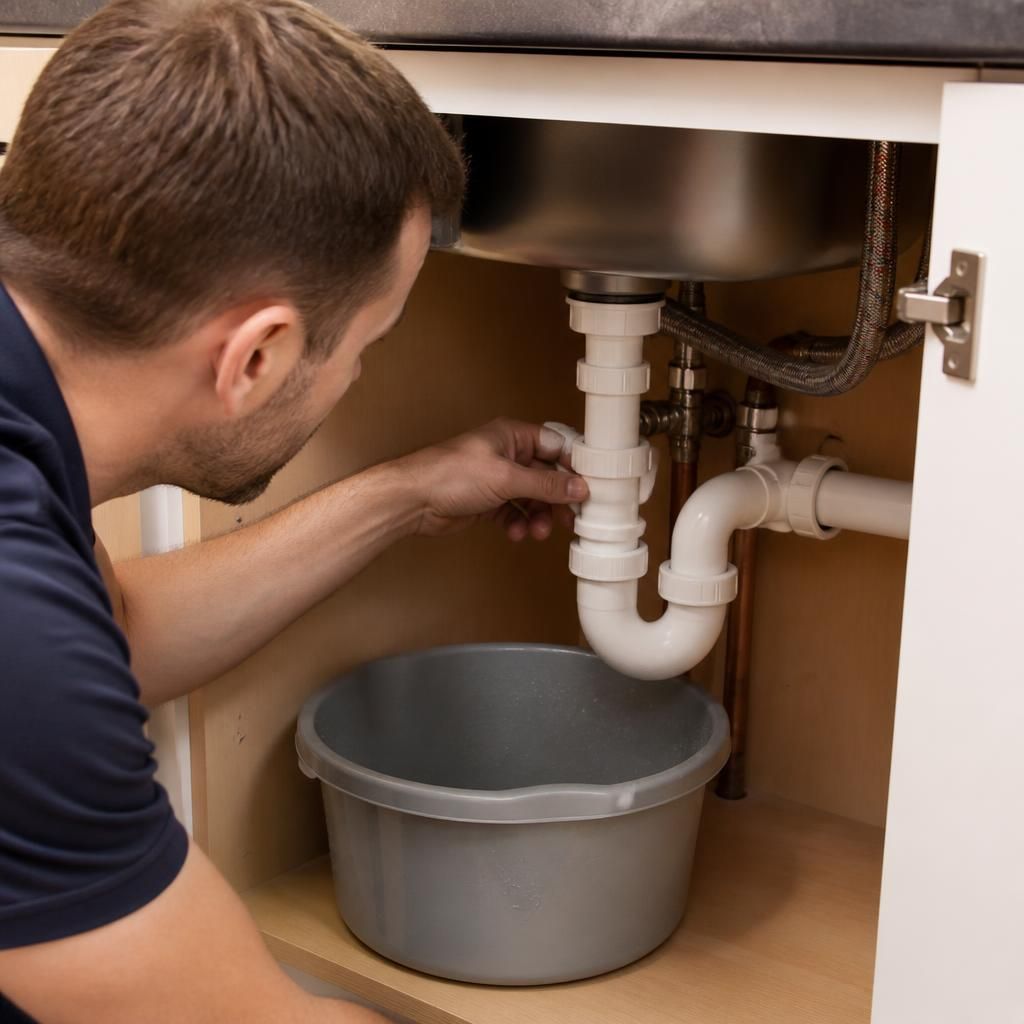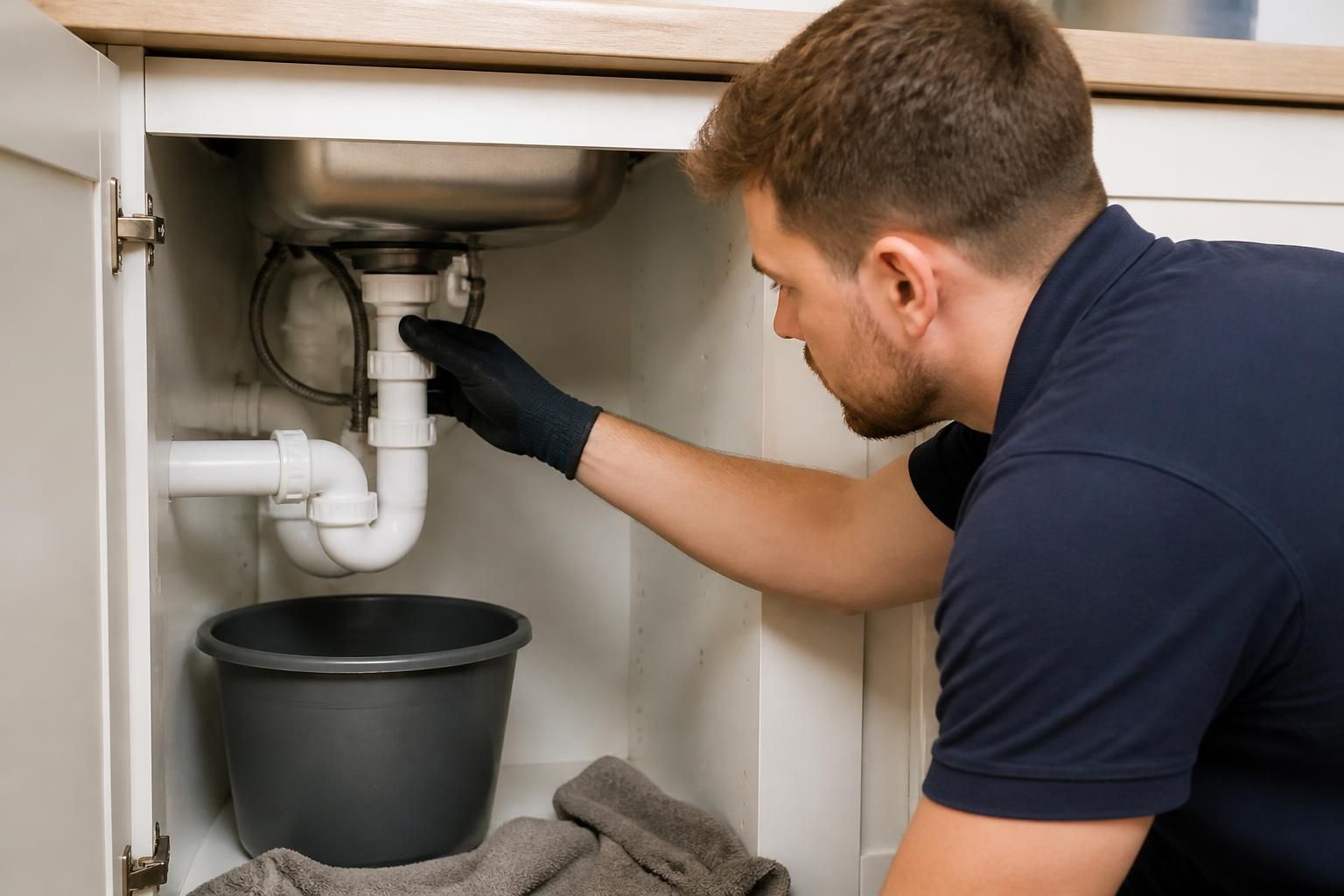
The best preparation is to make the area safe and accessible, record useful information about the leak and avoid applying a permanent-looking repair before the pipe has been inspected. These steps help the plumber identify whether the fault is in the PVC pipe itself, a joint, a valve or a connected fitting, and reduce the risk of further damage.
Check the location and extent of the problem. Note whether water is coming from the straight section of pipe, a joint, an elbow, a tee or a connection to another fitting. Look for related signs such as staining, softened plasterboard, swollen flooring, mould or dampness inside a cupboard. If the leak is intermittent, record when it appears, for example when a tap, toilet, washing machine or heating appliance is used. A photograph or short video can be useful, particularly if the leak stops before the appointment.
Make access straightforward. Remove stored items from beneath sinks, behind access panels or around pipework, taking care not to pull or twist the pipe. If a fitted unit, boxing or panel obstructs the repair, identify how it can be opened without damaging it. Do not cut into walls, floors or cabinets unless this has been agreed with the relevant owner or contractor. Clear a safe working route and keep children and pets away from the repair area.
Deal with electrical risks carefully. Water around sockets, switches, appliances, extension leads or electrical equipment can create a shock and fire risk. Do not touch electrical items while standing on a wet surface or attempt to move equipment through pooled water. If it is safe to do so without contact with water, switch off the affected circuit at the consumer unit; otherwise, leave the area and seek appropriate professional assistance. A plumber should be told about any electrical equipment or wiring that may have been exposed.
Do not use unsuitable temporary repairs. Avoid forcing a clamp tightly onto cracked PVC, applying solvent cement to a wet or pressurised joint, or covering the fault with adhesive, tape or sealant. These measures can hide the source of the leak, make the pipe harder to inspect and complicate removal of the damaged section. If a temporary measure has already been used, tell the plumber what was applied and when.
Gather relevant information before the visit. If available, have details of previous plumbing work, the approximate age of the installation and any recent changes such as decorating, drilling, fitting a bathroom unit or connecting an appliance. Tell the plumber whether the pipe serves drinking water, a toilet, a heating system or an outside tap. This distinction matters because the repair method and the need for additional checks can differ.
For a suspected concealed leak, mark the visible damp patch without damaging the surface and describe any changes in water pressure, boiler pressure or appliance operation. Do not rely on a damp mark alone to identify the source, as water can travel along timber, insulation or pipework before appearing elsewhere.
Prepare access and ownership details. Tenants should notify the landlord or managing agent and follow any required procedure before authorising alterations to fixtures, cupboards or building fabric. Homeowners should check whether the affected pipe is within their property or part of a shared system. If an insurance claim may be relevant, keep photographs, notes and receipts for emergency protective work, but avoid removing damaged materials until any required inspection has taken place.
Finally, tell the plumber about any immediate safety concerns, previous attempted repairs and areas that must not be disturbed. This information supports a more accurate assessment and helps establish whether the appropriate solution is replacing a short section of PVC, renewing a joint or investigating a wider installation fault.