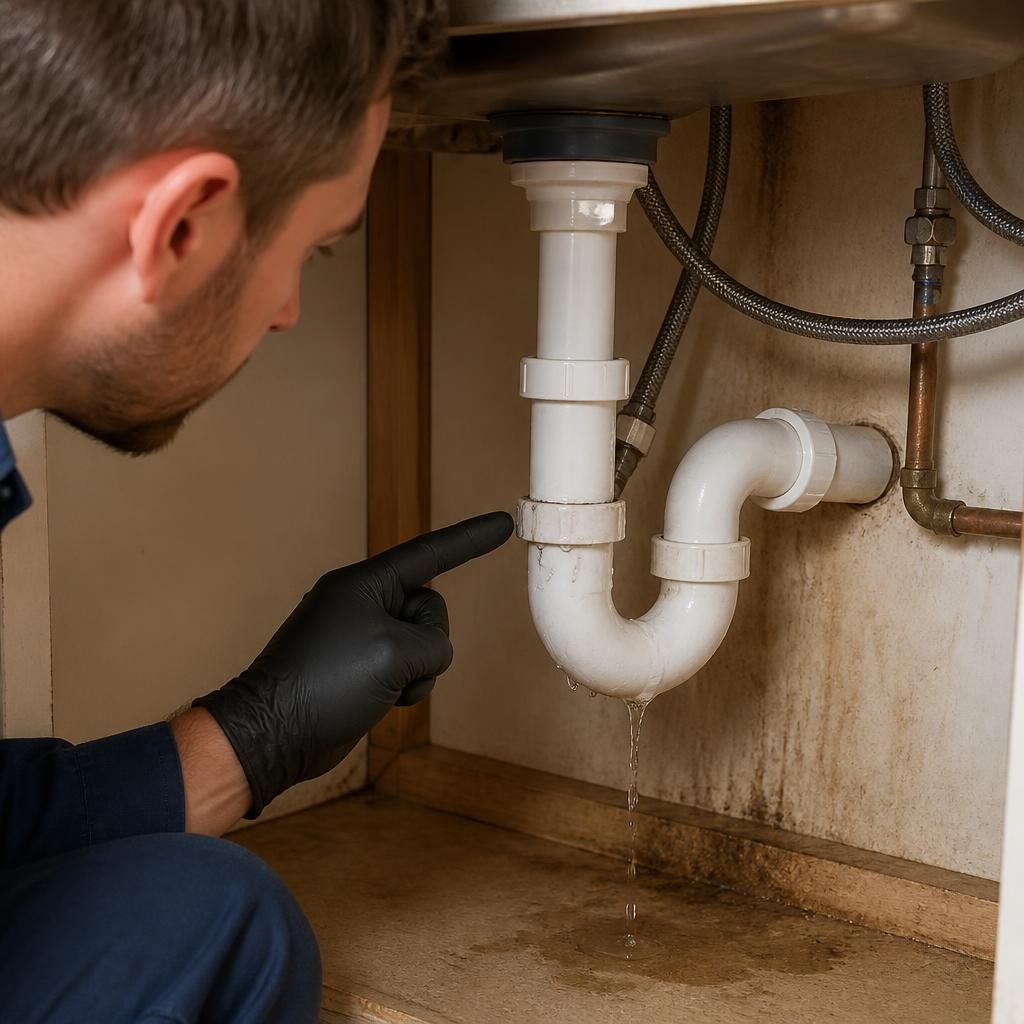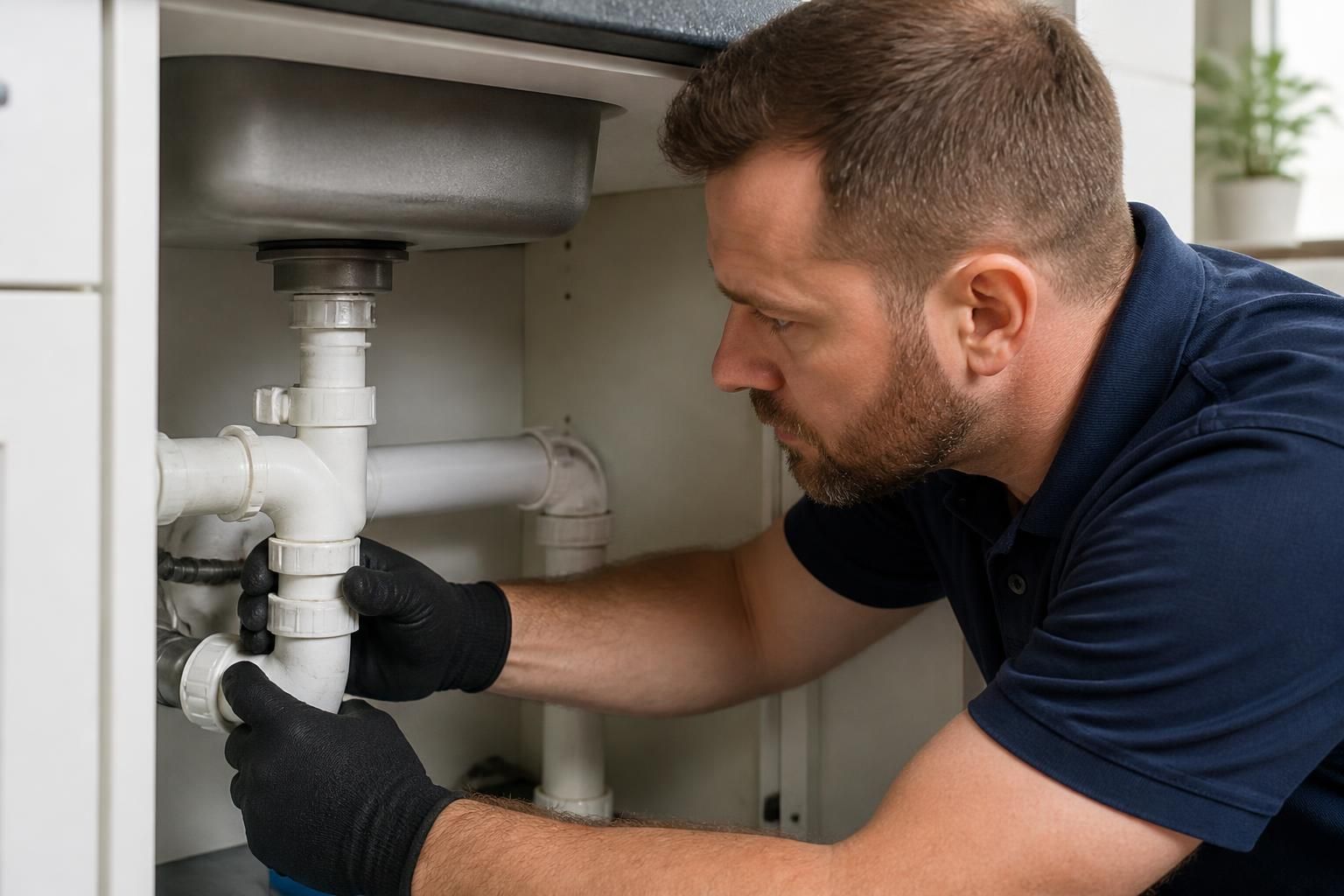
The cost of repairing a leaking PVC pipe is mainly determined by the type of failure and the work needed to reach it. A simple repair to an exposed joint usually involves less labour and fewer materials than replacing a damaged section hidden behind a wall, floor or fitted unit. For that reason, a reliable price should be based on an inspection rather than a standard charge.
What affects the price?
- Location of the leak: An accessible pipe beneath a sink, behind a removable panel or within a service void is generally simpler to work on than pipework beneath flooring or inside a wall.
- Nature of the fault: A failed joint, cracked fitting and split pipe each require different repair methods. The condition of nearby components may also determine whether one fitting or a longer section needs replacing.
- Pipe size and fittings: Material costs vary according to the diameter of the pipe and the connectors, bends, couplers or valves required.
- Water damage: If the leak has affected cabinets, flooring, plasterboard or insulation, making good those areas may be separate from the plumbing repair.
- Access and preparation: Moving appliances, lifting flooring or carefully opening an enclosed area can add work before the pipe itself can be repaired.
- Testing and reinstatement: The pipe should be checked under normal water pressure after repair, and any opened access point may need to be secured or sealed.
Typical repair approaches
Where the pipe is sound and the problem is confined to a connection, the plumber may remove the faulty fitting and install a replacement connector or joint. If the PVC pipe has split, become brittle or suffered impact damage, the affected section is normally cut out and replaced using suitable couplers. Replacing only the failed part can be appropriate, but renewing adjoining fittings may be more dependable where they show signs of movement, distortion or wear.
A concealed leak can cost more than an exposed one because locating the precise point of failure and creating safe access takes additional work. The visible water may also appear some distance from the actual leak, particularly where pipework runs beneath flooring or within a wall. A proper assessment helps prevent unnecessary removal of surrounding materials and identifies whether the pipe or a nearby appliance connection is responsible.
What a quotation should explain
- The suspected source of the leak and the proposed repair method.
- Labour and any attendance or diagnostic charges.
- The pipe, fittings, sealants and other materials to be used.
- Whether access work, removal of fixtures or reinstatement is included.
- Whether making good decorative finishes is excluded.
- Any additional work that could become necessary if concealed damage is found.
Before accepting a quotation, ask whether it covers the complete plumbing repair or only the initial investigation. Clarify whether tax, materials, disposal of damaged parts and testing are included, and request approval before work outside the agreed scope is carried out. This makes quotations easier to compare and reduces the risk of unexpected charges.
If water is still escaping, isolate the relevant supply where it is safe to do so and protect nearby contents from further damage. Avoid applying permanent adhesive or closing up an access area before the pipe has been inspected, as this can conceal the fault and make the eventual repair more difficult. The final cost can then be assessed against the actual condition of the pipe, the access available and the work required to leave the system watertight.