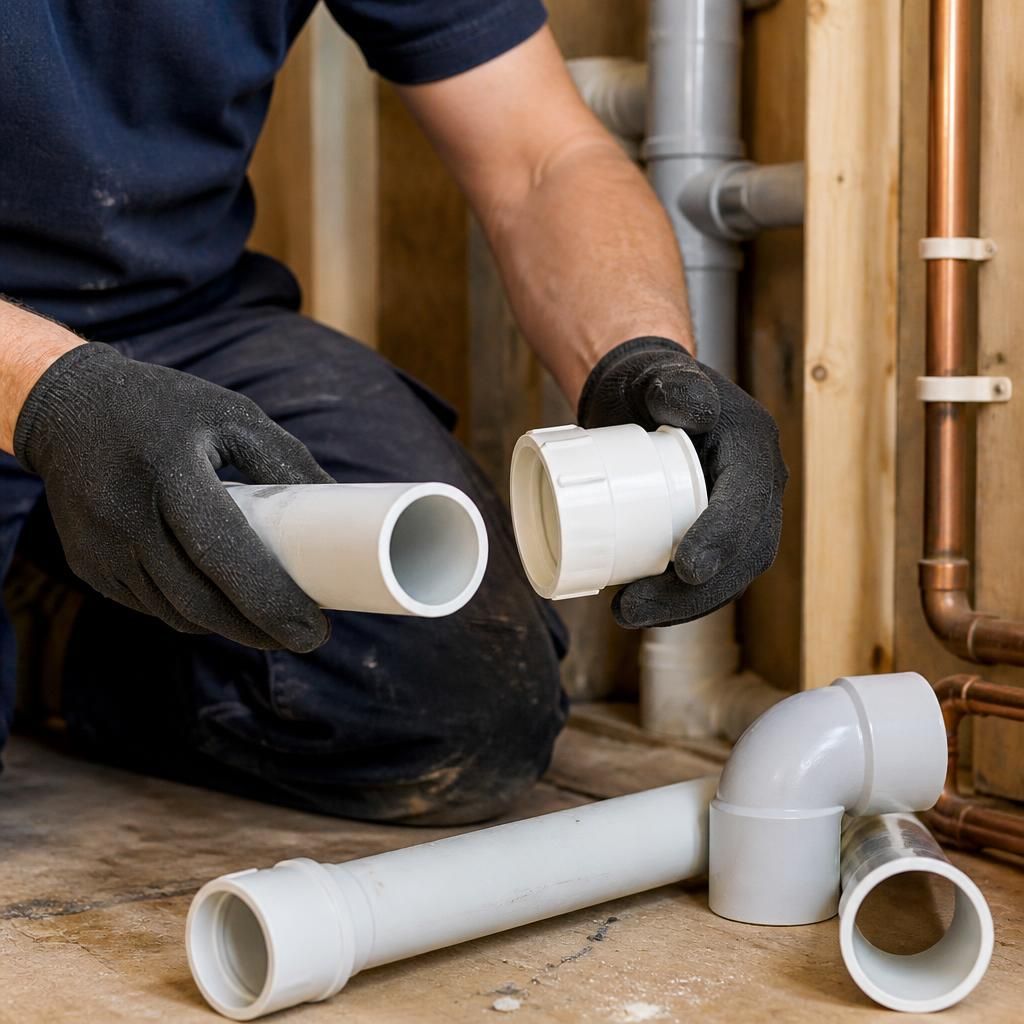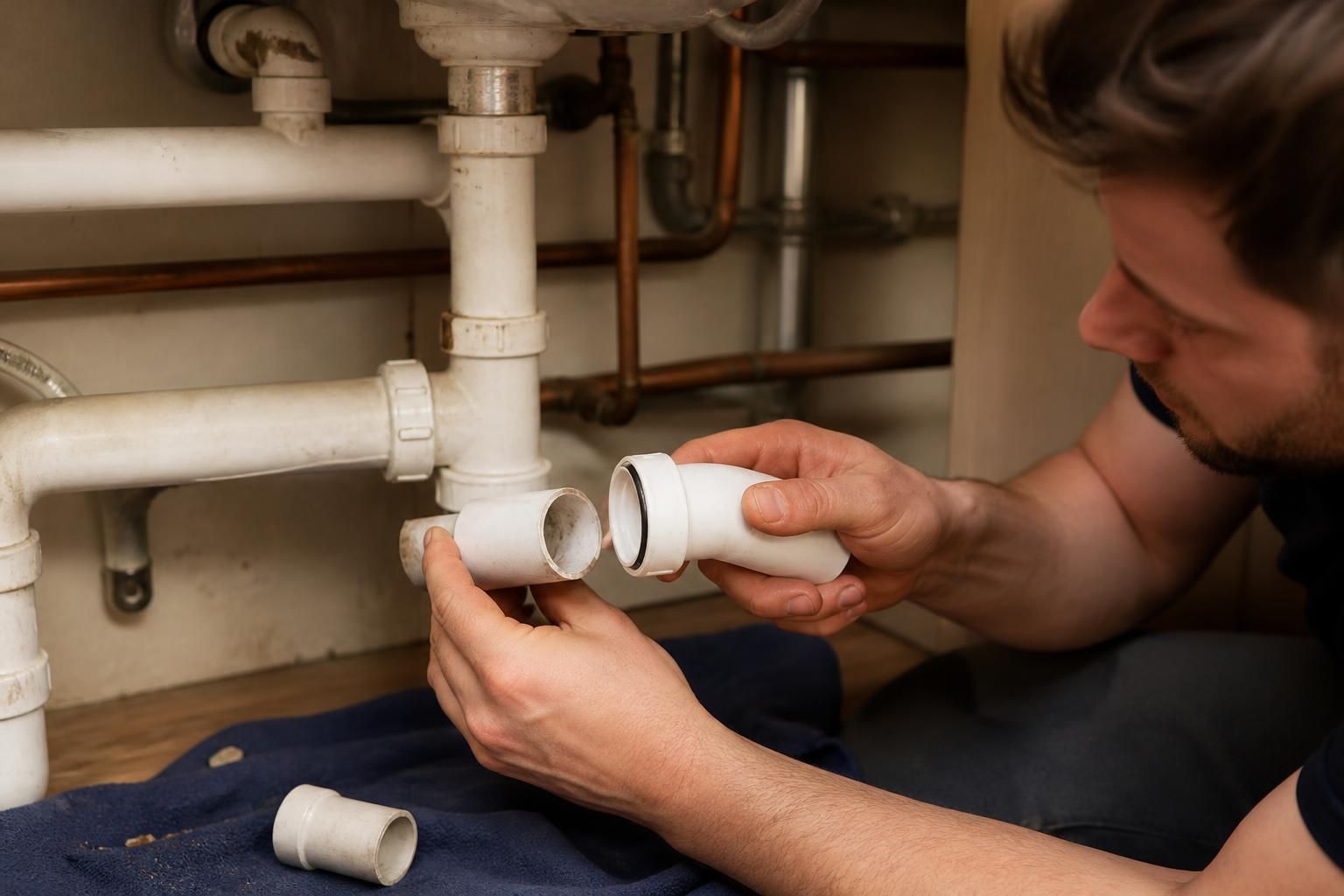
A leaking PVC pipe joint is repaired by restoring the connection between sound sections of pipe and a correctly matched fitting. The appropriate method depends on whether the joint is solvent-welded, compression-based, threaded or connected to another material. A plumber will also establish whether the leak comes from the joint itself or from a crack, distortion or movement nearby, because replacing the fitting alone will not provide a lasting repair if the surrounding pipe is damaged.
Identifying the cause of the leak
Water at a joint does not always indicate that the joint is the original failure point. Moisture can travel along the outside of a pipe before appearing at a lower fitting. The area is therefore inspected and dried so that the source can be located accurately. Common causes include an incompletely bonded solvent-weld joint, a displaced or worn compression seal, overtightening, pipe movement, frost damage, impact or stress caused by unsupported pipework.
The condition of the pipe is important. PVC that has become brittle, distorted or split close to the fitting may need a longer section replaced rather than a new connector fitted to the damaged end. Joints that have been exposed to chemicals or excessive heat also require careful assessment, as the material may no longer provide a reliable surface for reconnection.
How a solvent-welded joint is repaired
With a solvent-welded connection, the affected fitting is generally cut out and the remaining pipe ends are checked for damage and usable length. The cut must be square so that the pipe sits properly in the replacement fitting. Burrs, dirt, moisture and damaged material are removed, and the pipe and fitting are prepared with products suitable for the particular PVC system.
Solvent cement softens the mating surfaces and forms a bonded connection as it sets. It must be applied evenly and only to clean, compatible surfaces. The pipe is inserted fully into the fitting with the correct movement for the system, then held securely while the connection establishes. Excess material is removed where appropriate, and the joint is allowed to set in accordance with the product instructions before the pipe is tested.
How a compression joint is repaired
A compression fitting is repaired differently because it seals through an internal ring, washer or rubber seal rather than a bonded connection. The fitting is dismantled and its components are examined for wear, distortion or contamination. The pipe end must be clean, round and free from deep scratches. A damaged seal or fitting is replaced with a compatible part, and the nut is tightened sufficiently to create the seal without forcing it.
Overtightening can distort some fittings or damage the sealing components, while insufficient tightening can allow seepage when the pipe is under pressure. The fitting should also remain accessible where future inspection or maintenance may be necessary.
Connections between different pipe materials
Some leaking joints connect PVC to copper, metal, flexible pipe or another type of plastic. These cannot automatically be repaired using PVC solvent cement. A suitable transition fitting, adaptor or compression connection is selected according to the pipe sizes, the application and the operating conditions. The connection must also allow for differences in movement between the materials; otherwise strain can be transferred to the joint and cause another leak.
Inspection and testing after the repair
Once the new connection is in place, the pipe is checked for alignment and support. Pipe clips, brackets or other supports may need adjustment if movement contributed to the failure. The supply is then restored in a controlled manner while the joint is inspected for seepage. A proper check includes observing the connection under normal pressure and, where appropriate, running the connected fixture or drainage flow to identify leaks that only appear when the system is being used.
The surrounding area should be dried before the final inspection. This prevents old moisture from being mistaken for a continuing leak. If the pipe is concealed behind flooring, boxing or a wall, the repair should be checked before the access area is closed, because a hidden connection cannot be visually monitored once covered.
When replacing more than the joint is necessary
A fitting may not be the only part that needs attention. Replacement of a longer pipe section can be appropriate where the pipe has multiple cracks, is badly discoloured or brittle, has insufficient length for a secure connection, or has been repeatedly repaired. A repair may also involve improving the pipe’s support or correcting its alignment so that the new joint is not placed under constant strain.
For a concealed, pressurised or difficult-to-access joint, professional assessment helps determine the correct fitting and prevents an unsuitable adhesive or sealant being used as a temporary covering. Sealant applied over an active or poorly prepared leak does not restore the pipe connection and can make later repair more difficult.