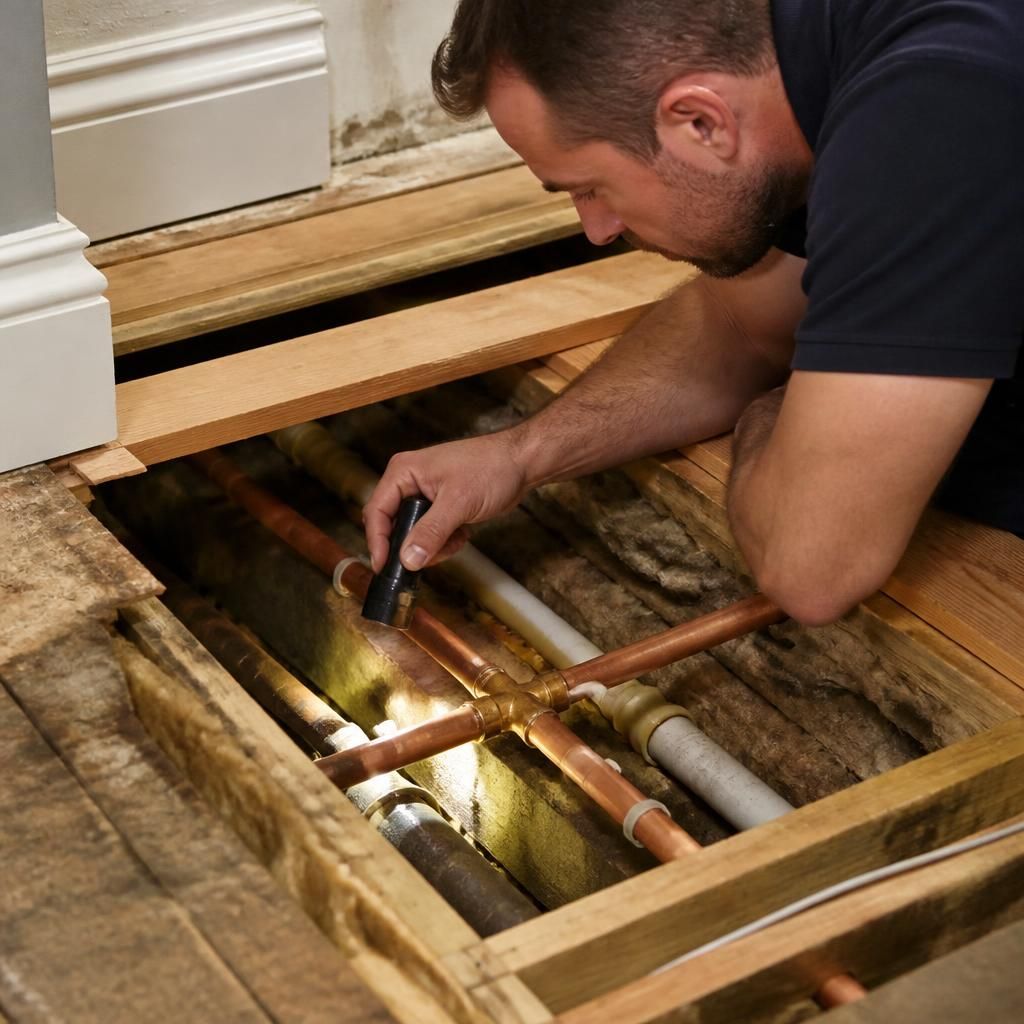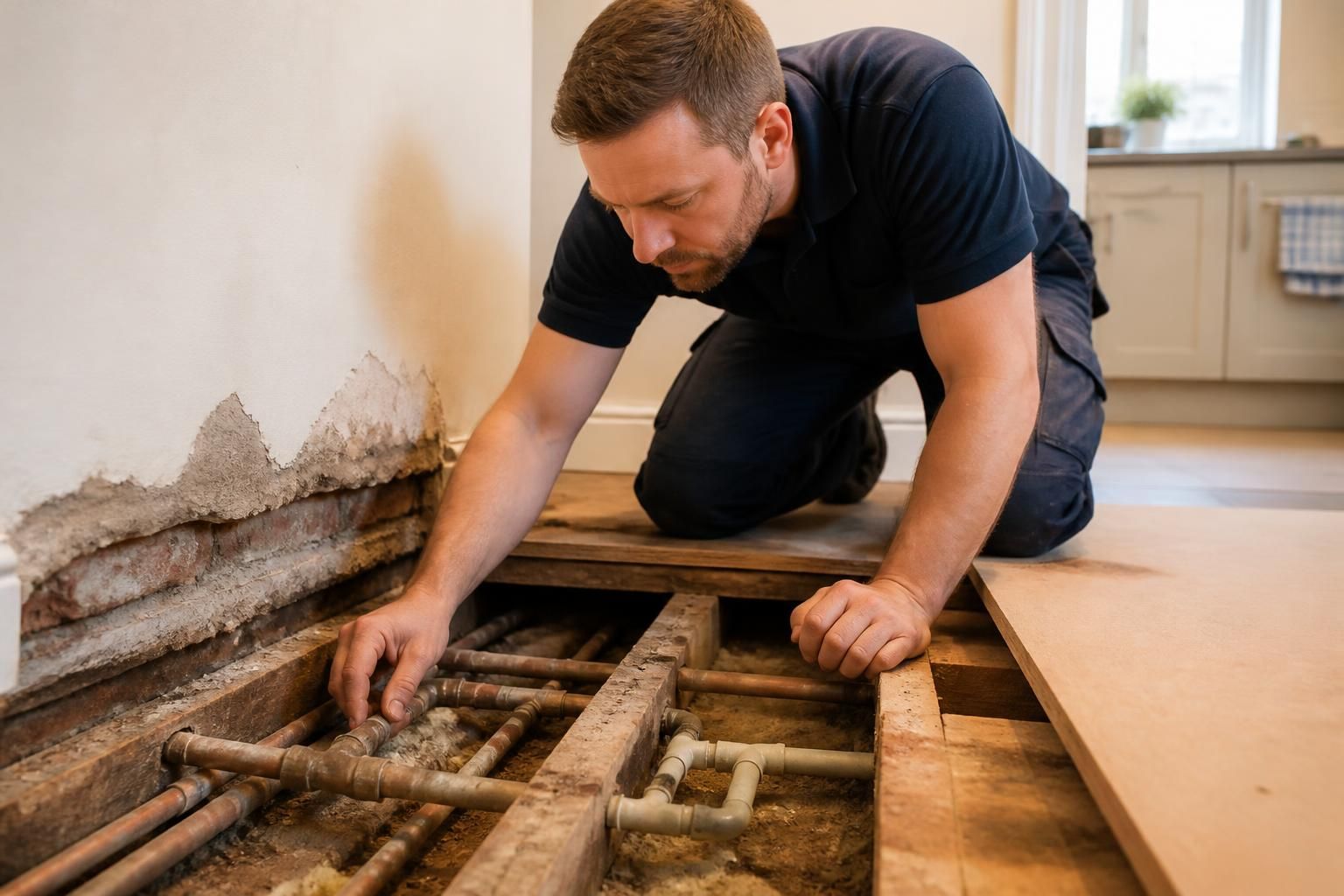
Water pipe leaks can usually be repaired in most residential property types, including detached and semi-detached houses, terraces, flats, maisonettes, rented homes and properties with older plumbing systems. However, no repair method is suitable for every situation. The practical solution depends on the condition of the affected pipe, who is responsible for it, how the pipe is installed and whether the leak can be reached without causing unnecessary damage to the building.
In a house, the leaking pipe may be located beneath floors, within walls, in a loft space, under kitchen units or outside the property. Internal supply pipes are often repairable when the damaged section can be isolated and reached. A localised joint failure, split fitting or small section of damaged pipe may be resolved by replacing the fitting or cutting out the affected section and joining sound pipework. If the pipe has deteriorated along a wider area, repairing one point may only provide a temporary result, making replacement of a longer section more appropriate.
Flats and maisonettes require additional checks because plumbing may connect to shared risers, communal service ducts or pipework serving several dwellings. A leak inside an individual flat may be the occupier's responsibility, while a problem in a shared system may involve the building owner, managing agent or freeholder. Access may also be restricted by fire-rated boxing, communal areas or another property above or below. These factors do not automatically prevent repair, but they can affect how the pipe is isolated and how access is arranged.
Rented properties can also be repaired, but the tenant should normally report the leak to the landlord or managing agent as soon as it is identified. This helps establish responsibility and prevents unauthorised work to fixed plumbing. A plumber can identify the source and explain the required work, while the property owner or authorised representative may need to approve repairs involving walls, flooring, ceilings or shared installations.
Older properties often contain pipework that has been altered or extended over time. Different materials may be joined together, sections may be concealed beneath solid floors, and previous repairs may make the route difficult to follow. In these circumstances, the visible damp patch is not necessarily the point of failure. Water can travel along joists, plaster or insulation before appearing elsewhere, so a proper assessment should trace the pipe route rather than relying only on the most obvious mark.
Some buildings present particular access challenges:
- Properties with solid floors may require careful access to pipes beneath the surface.
- Plastered walls, tiled areas and fitted units can conceal pipework and may need partial removal for a lasting repair.
- Loft, cellar and crawl-space installations may be physically difficult to reach or may require attention to insulation and protection from freezing.
- Properties with shared risers or concealed service ducts may need coordination with a landlord, managing agent or building representative.
- Commercial or mixed-use buildings may have more complex isolation arrangements and several occupants affected by one pipe.
A repair may not be advisable where the pipe is badly corroded, repeatedly failing, distorted, contaminated or damaged across a substantial length. The same applies where the surrounding structure has moved or where an existing connection is no longer compatible with the rest of the system. In those cases, replacing the affected section can reduce the risk of another failure, although the decision should follow an inspection rather than the property type alone.
The assessment should establish the source of the water, identify the affected supply or heating circuit, check whether the pipe can be safely isolated and determine the condition of nearby pipework. It should also consider the consequences of leaving access points open, the need to protect electrical installations and whether drying or follow-up building work is required after the plumbing repair. Finding the source and stopping the leak is separate from repairing cosmetic damage caused by escaping water.
Ideal Plumbing Services assesses water pipe leaks in residential properties across Birmingham and the West Midlands, including homes where access, ownership or concealed pipework makes the repair less straightforward. The recommended work should be based on the condition and layout of the installation, with repair used where it is dependable and replacement considered where it offers a more suitable long-term solution.