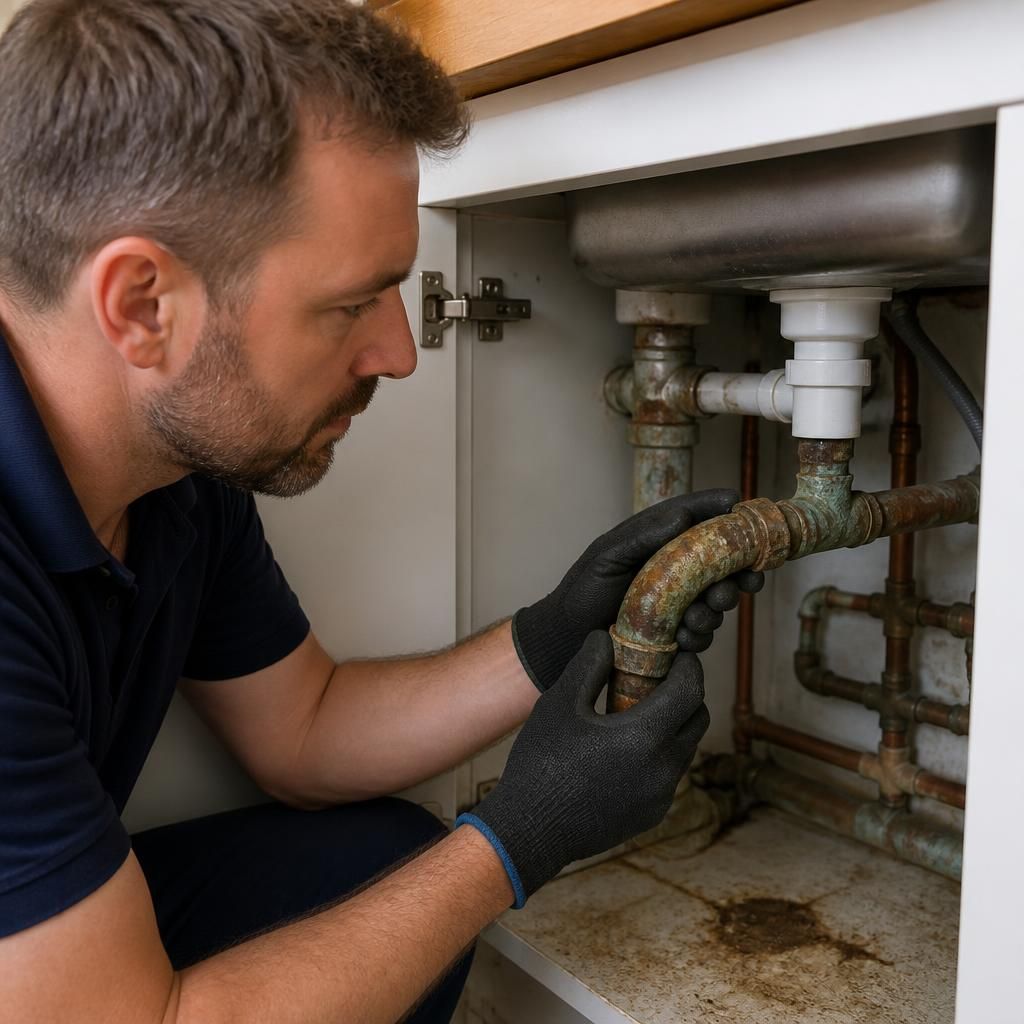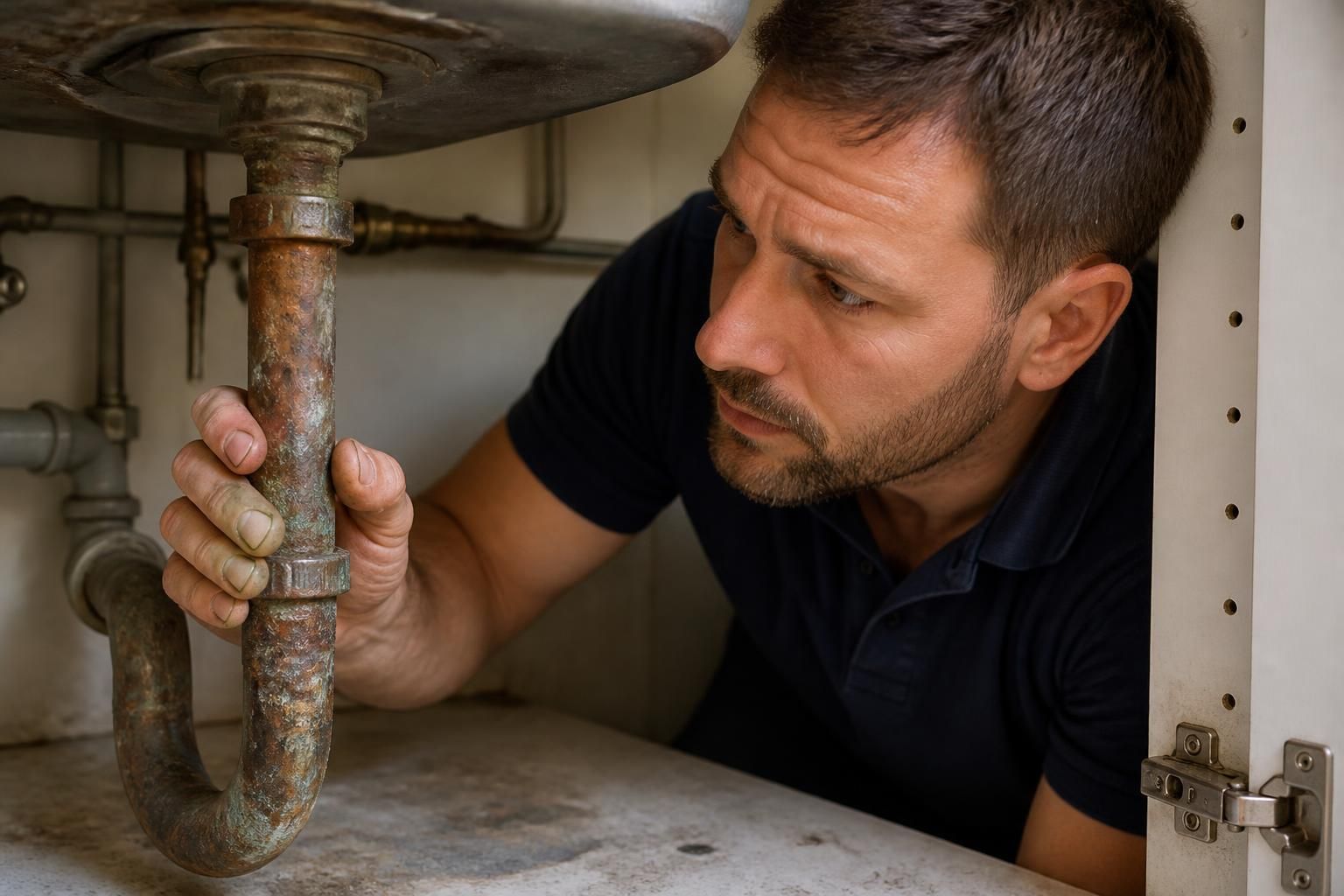
The key test is whether the remaining pipework is structurally sound and whether a repair can create a durable, watertight connection. Replacement is generally the safer option when the pipe wall, fittings or surrounding section can no longer be relied upon, even if the visible escape of water appears small.
Signs that replacement may be more suitable include:
- Extensive surface deterioration: flaking, deep pitting, heavy rusting or mineral build-up can indicate that the pipe wall has lost strength. Adding a patch or new joint to severely deteriorated material may only move the failure to another point.
- Damage close to a fitting: leaks at joints, valves, bends and connectors can sometimes be resolved by renewing the fitting. However, if the pipe has distorted, split or corroded around the connection, the affected section may need to be renewed as well.
- Several defects in one area: multiple damp spots, pinhole leaks or previous patch repairs suggest that the pipework may be reaching the end of its serviceable condition. Replacing the affected run can be more dependable than treating each defect separately.
- Movement or impact damage: a pipe that has been crushed, sharply bent, fractured or displaced may not seal properly with a local repair. The cause of the movement also needs to be addressed so that new pipework is not put under continuing stress.
- Evidence of concealed deterioration: staining, recurring dampness, mould growth or damage to nearby surfaces may indicate that water has been escaping behind walls, beneath floors or inside cupboards for some time. The visible point is not always the full extent of the problem.
A repair is more likely to be appropriate when the defect is clearly isolated, the pipe material remains in good condition and there is sufficient sound pipe to form secure connections. The technician will normally inspect the exposed pipe, trace the source of the water and consider pressure, accessibility, pipe material and the condition of nearby joints before recommending an option.
Temporary measures are not the same as a permanent repair. Clamps, sealants and repair tapes can sometimes limit water loss while the supply is isolated or while access is arranged, but they should not be treated as suitable for every pipe or every pressure level. A temporary measure may also conceal progressive corrosion, allowing damage to continue out of sight.
The location of the leak affects the practical decision. An exposed pipe in a utility area may allow a straightforward replacement of a short run. Pipework beneath a floor, inside a wall or behind fitted units may require more investigation and careful access. Replacing only the failed section can reduce unnecessary disturbance, but extending the replacement to include weakened or inaccessible joints may provide a more reliable result.
Pipe material is also relevant. Different materials require different cutting, joining and support methods, and an older installation may contain fittings that are no longer in good condition. Mixing materials without the correct connectors can create further leakage or compatibility problems. A professional assessment should establish what is installed before any section is removed.
After the work, the repaired or renewed pipework should be checked for leaks under normal water pressure. The surrounding area should also be inspected for residual moisture, damaged insulation and signs that water has travelled beyond the original escape point. Where a leak has affected plaster, flooring, cabinetry or electrical equipment, those separate risks may need attention before the area is closed up.
For homeowners, landlords and tenants, photographs of staining or recurring leaks can help document how the problem developed, but they do not establish whether the pipe itself needs replacing. A qualified plumber can distinguish between a failed seal, a defective fitting and deterioration within the pipe, then explain which parts need renewal and which can remain in service. Ideal Plumbing Services provides water leak assessment and repair support for residential properties in Birmingham and across the West Midlands.