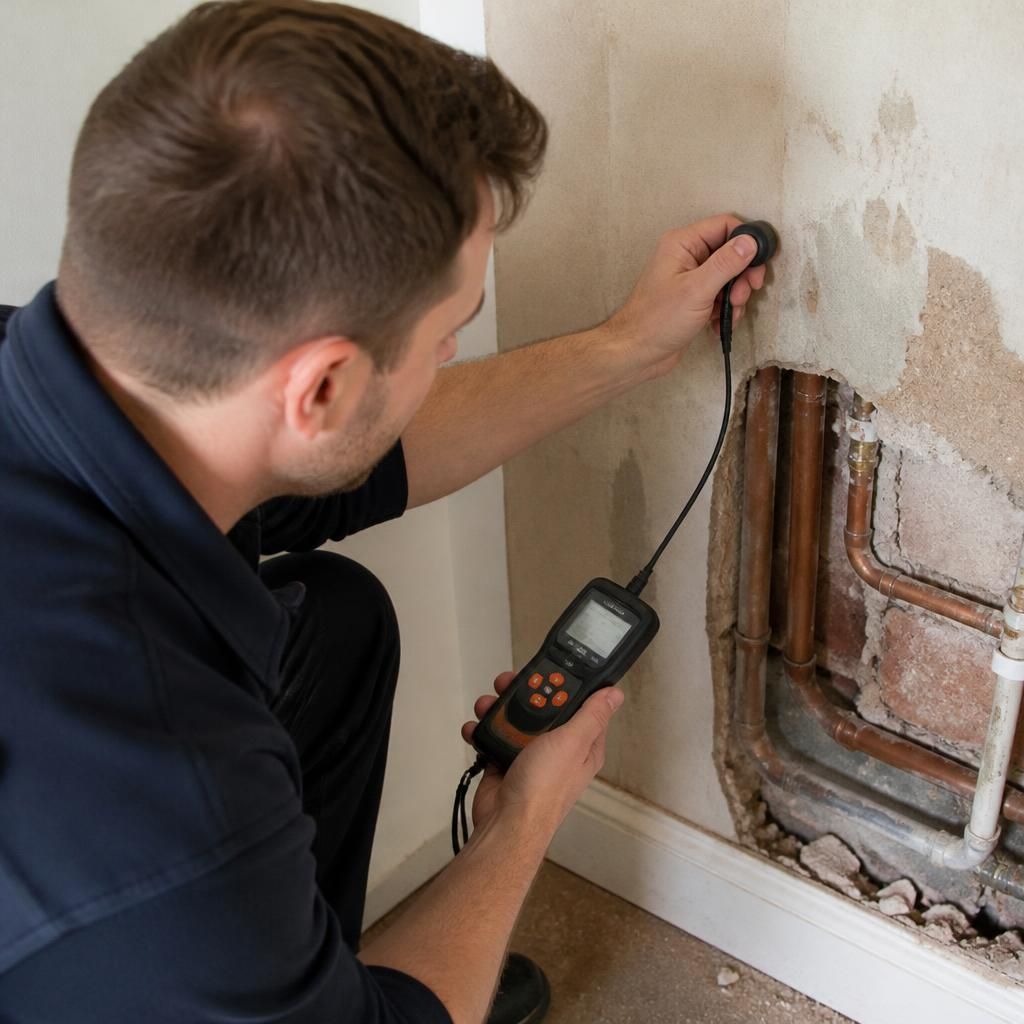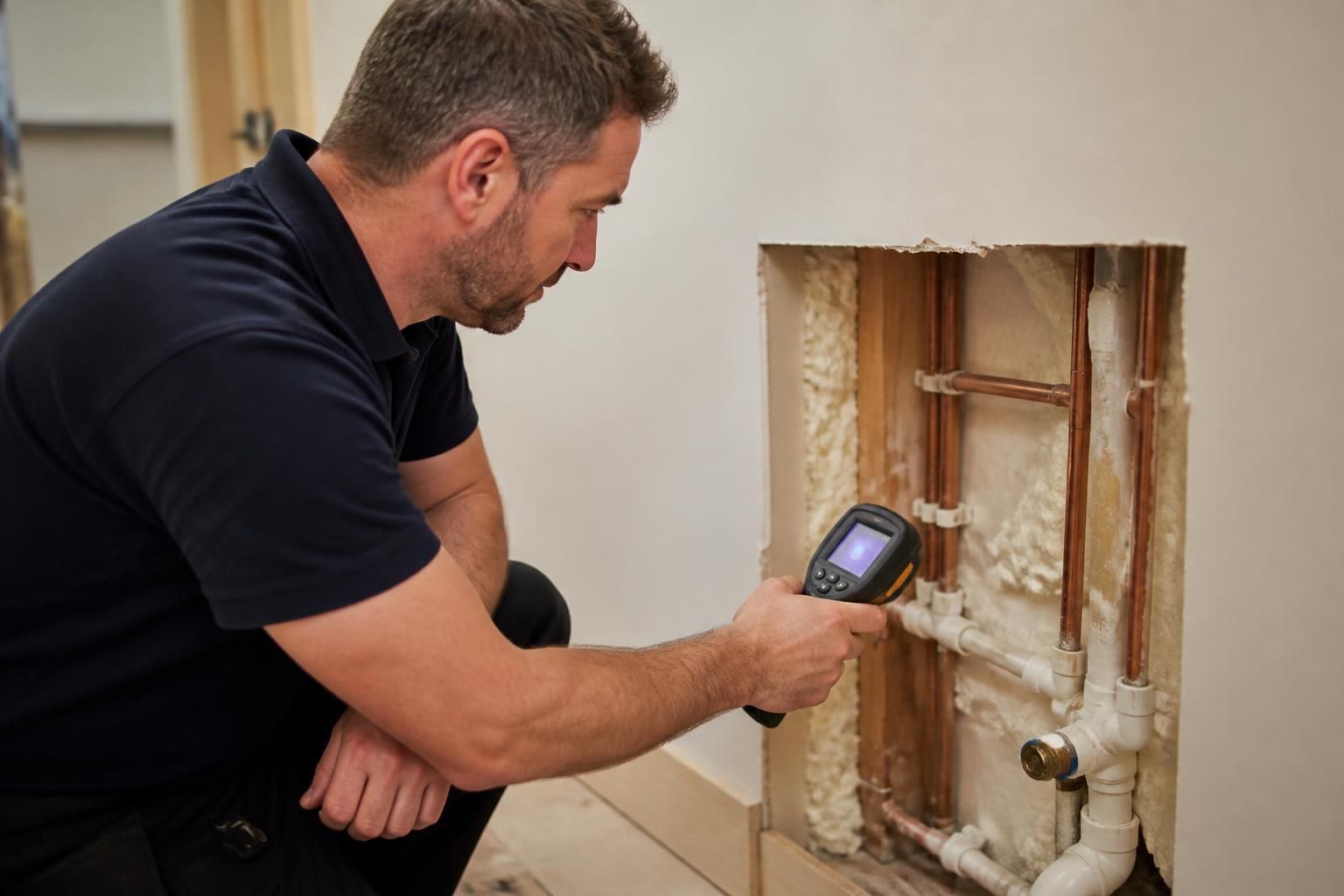
Water pipe leak repair cost is the total of the investigation, plumbing work, replacement parts and any associated work needed to leave the system safe and operational. The price can therefore vary even when two leaks appear similar, because the time and materials required to diagnose and correct them may be quite different.
The diagnostic stage can affect the overall price. A plumber may need to carry out pressure checks, inspect connected pipework or use specialist leak detection methods before starting the repair. Clear identification of the failed section helps avoid unnecessary removal of sound pipework and gives a more accurate basis for the quotation.
The repair method is another important factor. A straightforward joint repair or replacement of a short section generally involves less labour than altering a longer run, replacing several connections or changing the route of pipework. The plumber may also need to isolate the water supply, drain the affected system and test it thoroughly after the work. These steps form part of a proper repair, rather than being optional additions.
Additional components can contribute to the price. Depending on the fault, the work may require connectors, valves, seals, clips, insulation or other compatible fittings alongside the replacement pipe. The condition of nearby components also matters: replacing a worn connection at the same time may help prevent the repaired section from placing pressure on an already weak part of the installation.
Pipework layout and the number of repair points affect labour time. A single failed connection is different from a system with multiple leaks or several sections that have deteriorated. Complex layouts can require more careful isolation, testing and reconnection, particularly where other plumbing fixtures are connected to the same supply.
Repair or replacement decisions can lead to different costs. Repairing one isolated defect may be appropriate where the surrounding pipework remains sound. If the pipe has repeated failures, widespread deterioration or an unsuitable configuration, replacing a larger section may provide a more practical long-term solution. A responsible assessment should explain why a particular option is being recommended rather than assuming that the most extensive work is necessary.
Compliance and reinstatement requirements may also be relevant. Alterations to plumbing systems can require suitable materials, secure support, insulation or checks against current installation standards. Where access panels, flooring or other finishes have to be dealt with as part of the job, clarify whether making good is included in the quotation or arranged separately.
When comparing quotations, ask for the following details:
- Whether the diagnostic work is included in the stated price.
- Which labour, parts and testing are covered.
- Whether the quotation is for a repair or a wider replacement.
- Whether VAT applies and whether it is included.
- What could cause the price to change once work begins.
- Whether any reinstatement or finishing work is included.
A written, itemised quotation makes it easier to compare like-for-like proposals and reduces uncertainty about additional charges. It is also sensible to ask what happens if the initial inspection finds more than one fault. Ideal Plumbing Services provides water leak detection and pipe leak repairs for residential customers in Birmingham and across the West Midlands, with advice based on the condition of the individual plumbing system rather than a standard assumed price.