In many cases, a tap or shower leak can be repaired in place rather than by replacing the complete fitting. The deciding factor is whether the fault is confined to a removable working part or connection, or whether the main body of the fitting has deteriorated. A proper diagnosis prevents an unnecessary replacement and identifies whether a repair will provide a durable result.
The location of the water is an important part of the assessment. Water escaping from the spout when the tap is closed usually points to an internal control problem. Water appearing around the handle, escutcheon or shower control may indicate a failed internal seal or an issue with the fitting’s connection. A leak from a flexible hose, riser rail connection or shower head may be repairable by renewing the relevant connection or component without disturbing the main control unit.
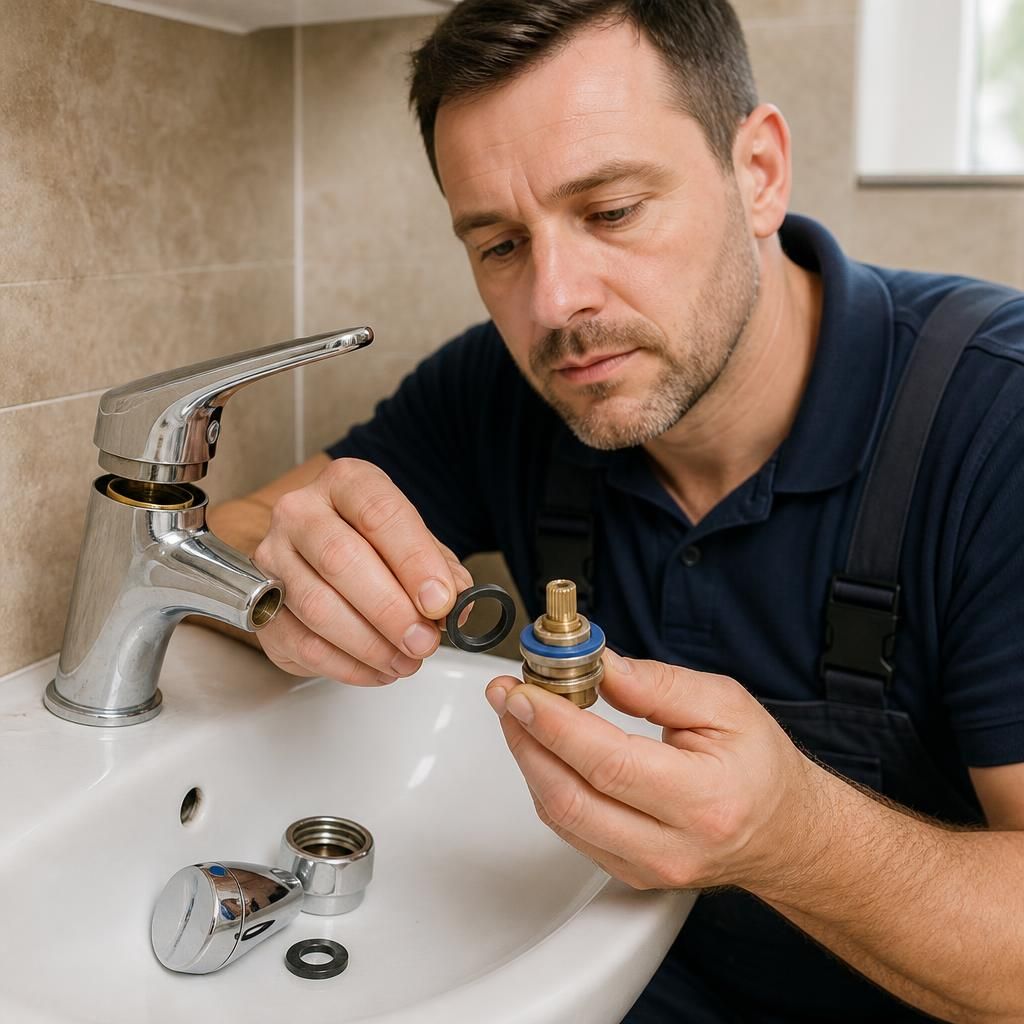
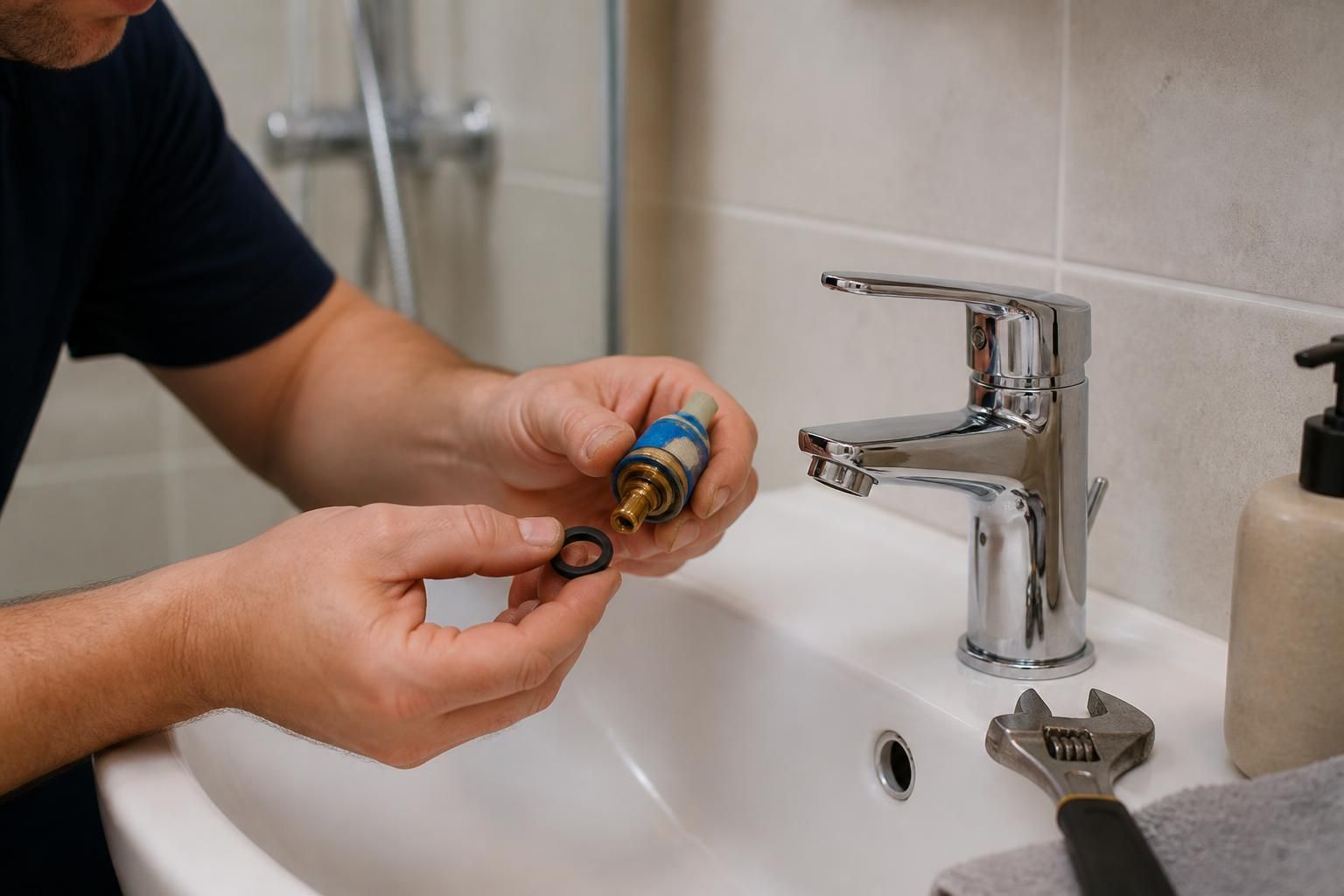
For a tap, the repair process may involve isolating the supply, removing the handle and examining the internal mechanism. The replacement part must match the tap design and dimensions. Similar-looking fittings can use different internal components, so fitting a generic part without checking compatibility can leave the leak unresolved or make the control stiff. Once the replacement is installed, the tap should be operated repeatedly and checked around every joint.
Showers require a similar assessment, although the fault may be harder to trace because water can travel behind trim or along the wall before it becomes visible. A plumber may inspect the control, shower hose, head, handset connection and accessible pipe joints. If the control body remains sound and the fault is limited to a serviceable part, repair is often preferable to removing the whole unit. Concealed shower controls may require more careful access, but the visible fitting does not automatically need to be replaced.
Repair is generally the more suitable option when:
- the main fitting is securely fixed and has no structural damage;
- the faulty part can be identified and obtained in a compatible size;
- the surrounding connections are sound; and
- the fitting still operates correctly apart from the identified leak.
Complete replacement becomes more sensible when the fitting cannot accept a dependable replacement part, several areas are failing, or access and labour would make repeated repairs impractical. Replacement may also be considered where the existing design is obsolete and suitable components are no longer available. This is a practical assessment rather than a rule that applies to every tap or shower.
Before attempting any repair, turn off the appropriate isolation valve if it is accessible and avoid forcing a seized handle or connection. Keep the area dry enough to identify where fresh water is emerging, rather than relying only on staining or dampness. If the isolation valve does not stop the flow, the fitting is concealed, or water is reaching electrical equipment or floor-level areas, professional inspection is advisable.
Ideal Plumbing Services can assess tap and shower leaks for homeowners, landlords and tenants in Birmingham and across the West Midlands, explaining whether a component-level repair is suitable or whether replacing the fitting is the more reliable option.