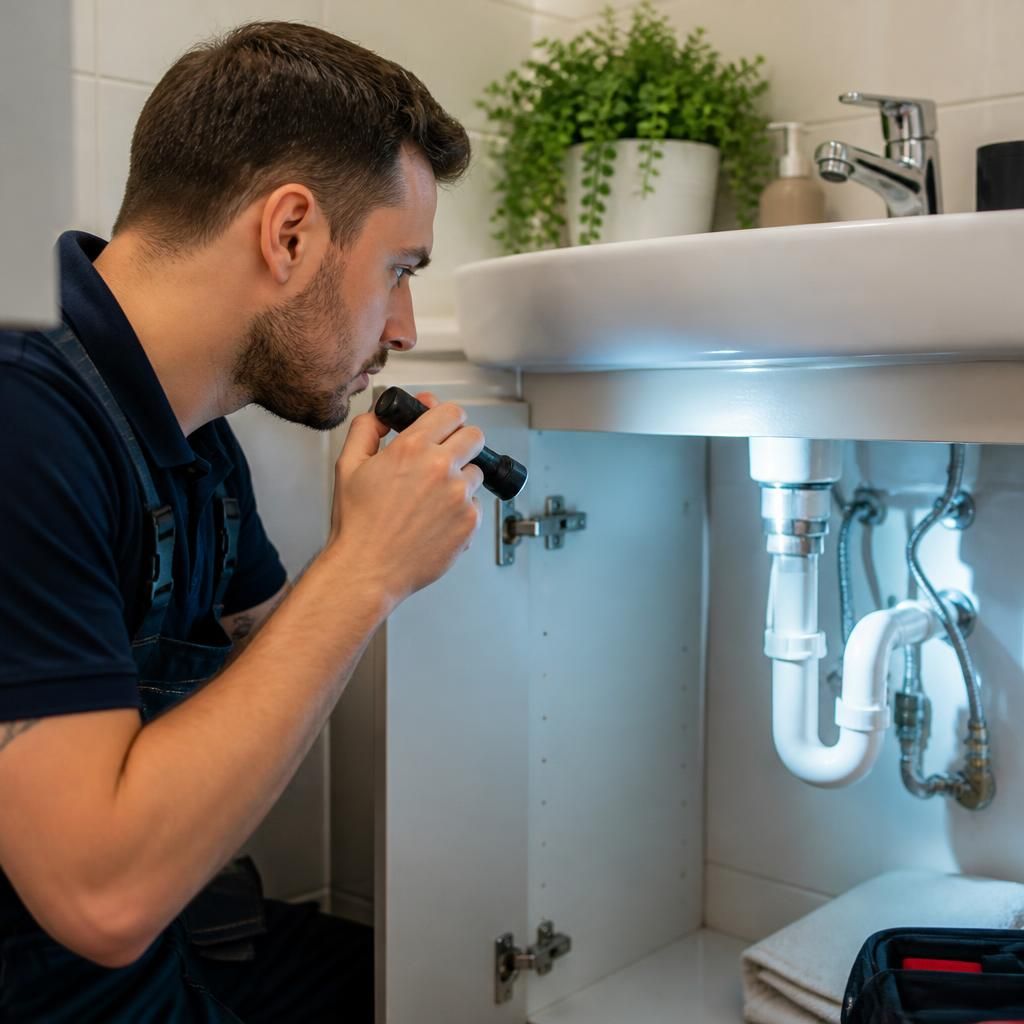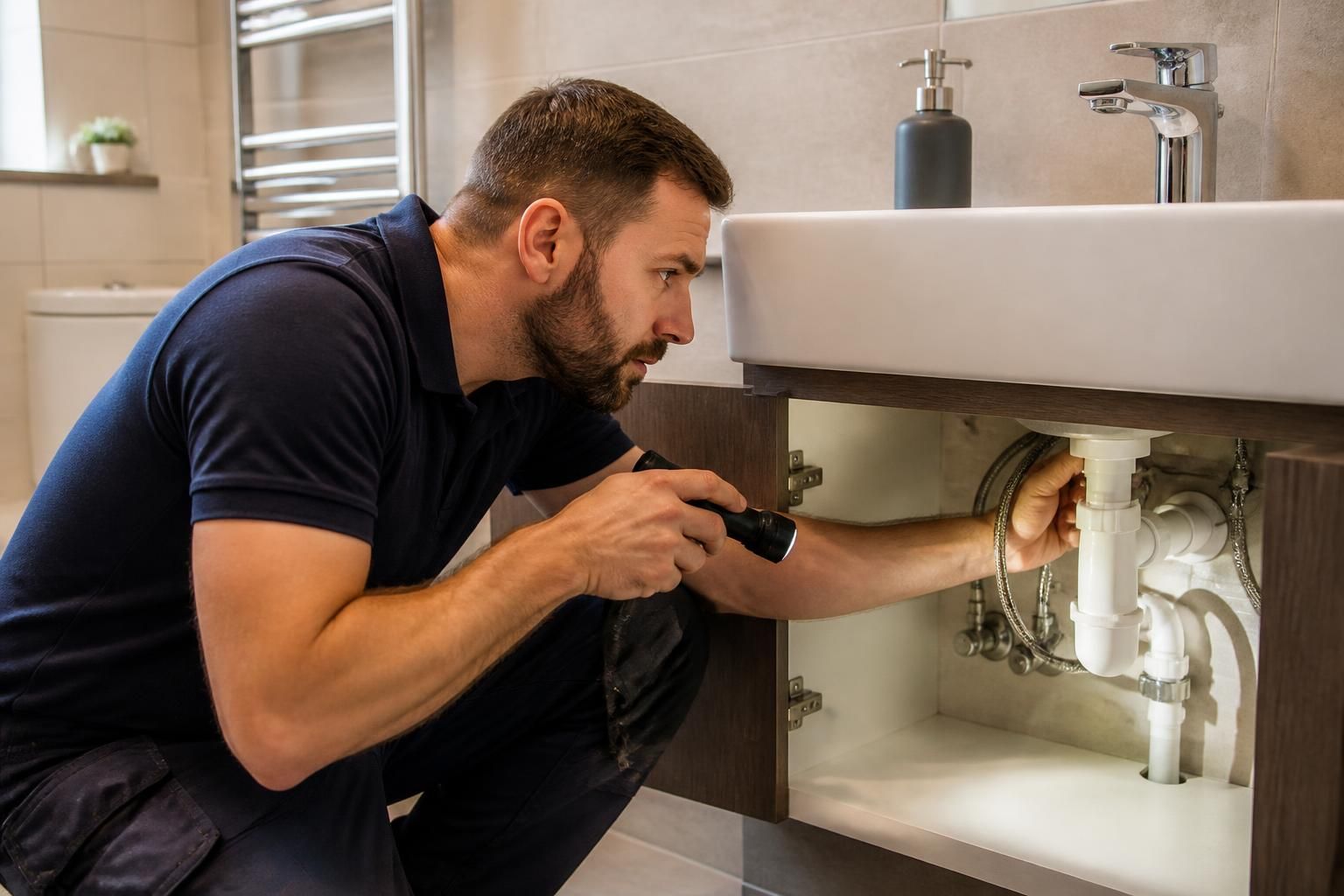
Tap and shower leak detection generally causes limited disruption. The main impact is usually temporary access to the fitting, connected pipework and any nearby area affected by moisture, rather than removal of bathroom or kitchen surfaces. The extent depends on whether the leak is visible, concealed, intermittent or connected to pipework behind a wall or beneath a floor.
What happens during the inspection: The plumber will normally begin by discussing the symptoms, checking the tap or shower while it is operated where appropriate, and looking for signs such as dampness, staining, mould, damaged sealant or water tracking. Surrounding surfaces and accessible pipework may be checked for moisture. These steps do not usually require alterations to the room.
Some temporary interruption to water use may be necessary while the source is assessed. This can involve leaving the affected tap or shower unused during specific checks, or isolating the relevant water supply briefly. If the fitting is in a kitchen or bathroom, the area around it should remain clear so the inspection can be carried out without moving unnecessary belongings.
Access requirements vary:
- A standard tap inspection may require access beneath a basin, sink or worktop to examine connections and flexi-hoses.
- A shower inspection may require access to the shower head, hose, controls, tray, bath edge or surrounding sealant.
- If water is appearing in an adjoining room, the ceiling, wall or floor below may also need to be examined.
- Where an inspection hatch or removable panel already exists, it may be opened to check concealed pipework and then replaced.
Specialist detection equipment can help identify moisture or trace the likely route of water without immediately opening walls, floors or tiled areas. The purpose is to narrow down the source before any intrusive work is considered. This can reduce unnecessary disturbance, particularly where water has travelled away from the original fault and the visible damp patch is not directly beside the leaking fitting.
More disruption may be necessary when:
- the leak is behind fixed tiles, plasterboard, a wall lining or flooring;
- there is no existing access panel to the concealed pipework;
- the source cannot be confirmed through accessible checks;
- the fitting or connection is damaged and must be exposed for safe testing; or
- moisture has spread into surrounding materials and further investigation is needed to establish its extent.
Detection and repair are separate stages. Finding the source may require only inspection and testing, while repairing it could involve removing sealant, opening a small section of a surface, lifting flooring or taking out a fitting. A plumber should explain why additional access is being considered before proceeding, including whether the work is needed to confirm the leak or to repair it.
To keep the visit as straightforward as possible, clear the area around the tap or shower, remove items from beneath sinks or basins, and identify any accessible stop tap or isolation valves. It is also useful to point out when the leak appears, whether it occurs only while the fitting is running, and where the first sign of water was noticed. These details can help distinguish a supply-pipe leak from a waste, seal or fitting fault.
After detection, the affected area may need to remain dry and unused for a period while surfaces are checked or a repair is planned. Any standing water should be dealt with promptly, and cupboards, flooring or wall finishes showing dampness should be monitored for changes. A precise inspection helps limit unnecessary opening-up, but the final level of disruption depends on the location of the fault and the access needed to put it right.