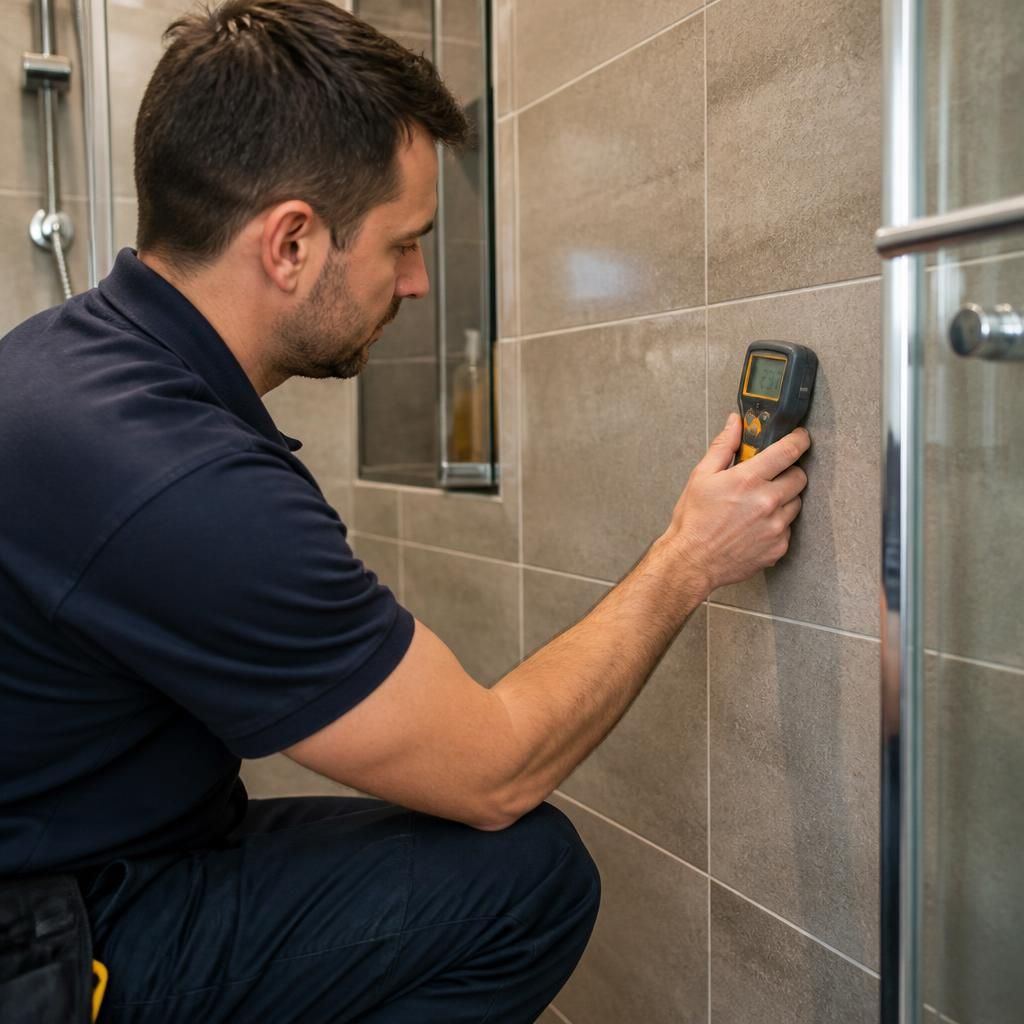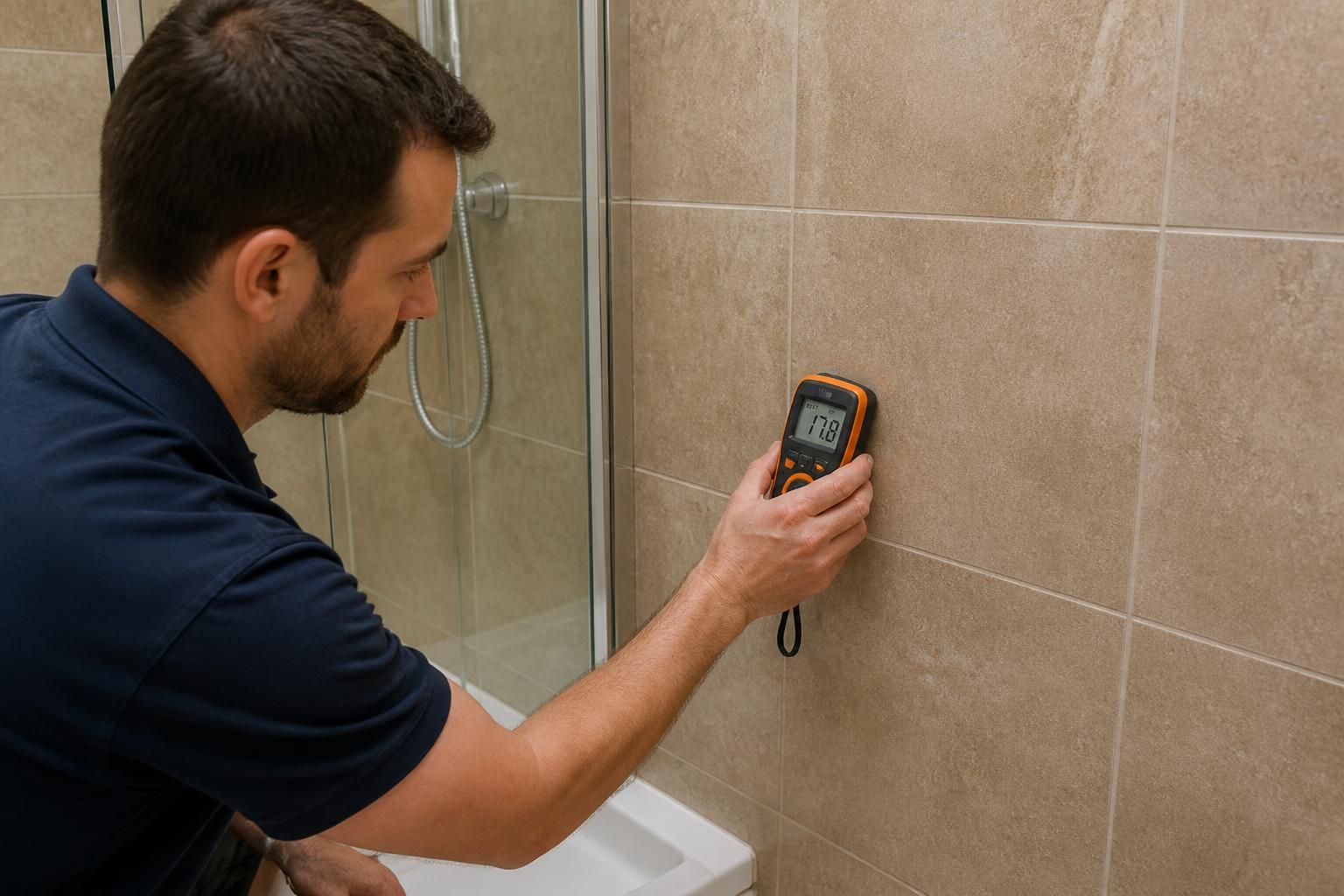
In many cases, a concealed shower leak can be traced without removing tiles. The inspection focuses on identifying where water is escaping and how far it has travelled, rather than immediately exposing the pipework. This allows the likely source to be assessed before any decision is made about opening the wall or floor.
How non-invasive detection works
A plumber will usually begin by taking a detailed history of the problem and inspecting the shower, adjacent walls, ceiling below and surrounding floor. The location of staining or dampness is not always the location of the leak, because water can travel behind tiles, through joints and along structural materials before becoming visible.
- Moisture mapping: Moisture meters can compare readings across walls, floors and ceilings to identify abnormal damp areas and indicate the direction in which water is spreading.
- Thermal imaging: An infrared camera can highlight temperature differences caused by damp materials or escaping water. It is particularly useful when the affected area is larger than the visible mark, although it normally supports other findings rather than proving the source by itself.
- Acoustic inspection: Specialist listening equipment may detect the sound or vibration produced by pressurised water escaping from a concealed supply pipe. This is most useful for certain plumbing leaks and may be less conclusive where the leak is very small or intermittent.
- Targeted pressure testing: Isolating sections of the shower plumbing and checking whether pressure is maintained can help distinguish a supply-pipe leak from water escaping only when the shower is operating.
What the inspection is trying to distinguish
A shower leak may come from a concealed hot or cold supply pipe, a waste connection, the shower valve, the tray or bath outlet, failed sealant, cracked grout, or a breakdown in the waterproofing behind the tiles. These faults can produce similar symptoms but require different repairs. For example, dampness that appears only while the shower is running may point towards the waste, tray or waterproofing, while a continuously damp area may warrant checks on a pressurised supply pipe.
Testing should therefore include both the plumbing and the areas that contain or direct water. The shower may be run in a controlled way, fittings and joints may be examined, and the waste route may be checked for signs of discharge. Comparing results from several methods gives a more reliable indication than relying on a single damp reading or visible stain.
When tiles may still need to be removed
Non-invasive detection can locate or narrow down the affected area, but it cannot always provide direct access to a failed component. Tiles may need to be lifted or another small access point created when the evidence points to a concealed fitting, pipe joint or damaged waterproofing that must be physically inspected or repaired. If access is required, a targeted opening is generally preferable to removing tiles across the whole shower area.
Access may also be necessary where readings are affected by saturated materials, reinforced construction, thick coverings or several possible leak routes. In some cases, the visible damage is caused by an old leak rather than an active one, so the findings need to be interpreted alongside the condition of the pipework and the results of controlled testing.
What happens after the source is identified
The findings should be explained clearly, including whether the evidence indicates a supply leak, waste leak, seal failure or waterproofing problem. A repair to a concealed pipe or connection is different from renewing sealant or addressing damaged shower-area waterproofing. Drying and monitoring may also be appropriate after the repair, because surrounding materials can remain damp after the leak has stopped.
Prompt investigation is sensible if there is a spreading stain, mould, lifting flooring, a loose tile, a damp smell or damage to the ceiling below. Finding the source before removing tiles helps limit unnecessary disruption and provides a sound basis for deciding what access and repair work are actually required.