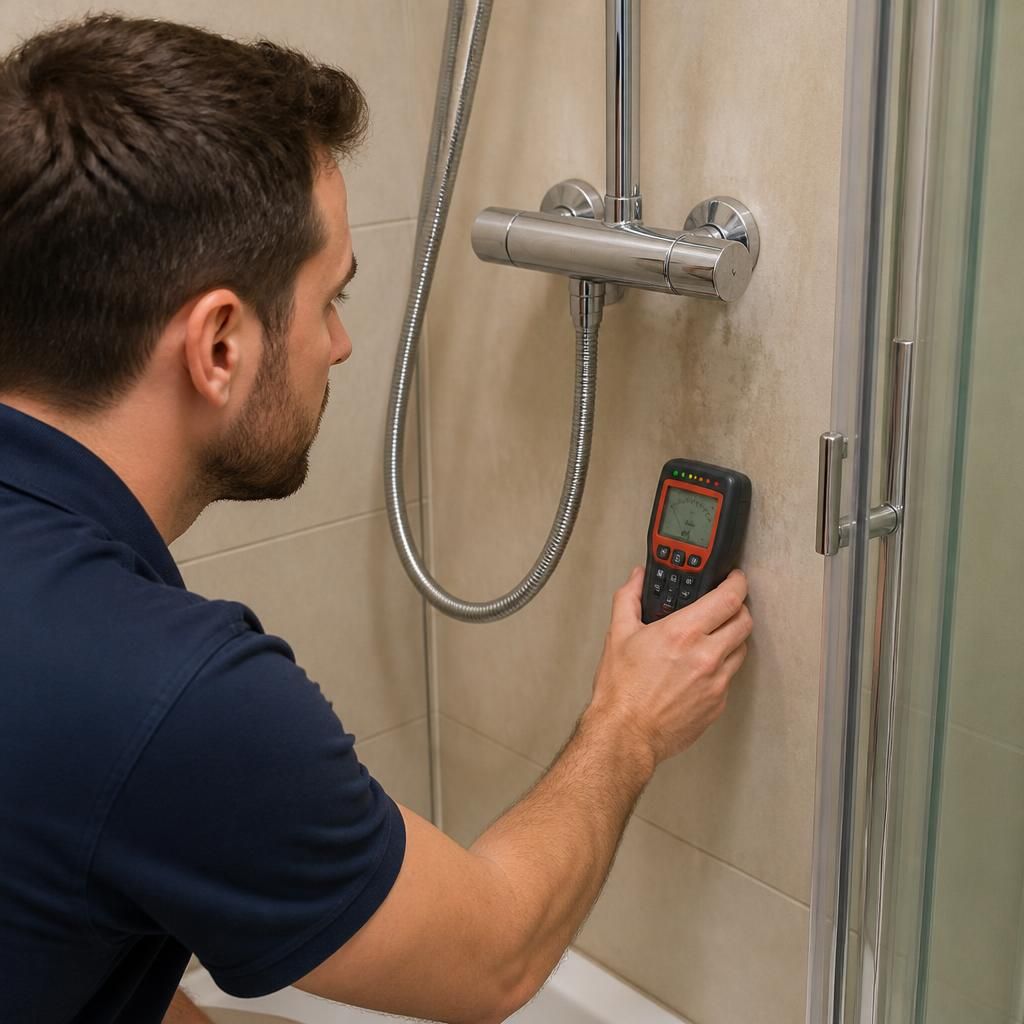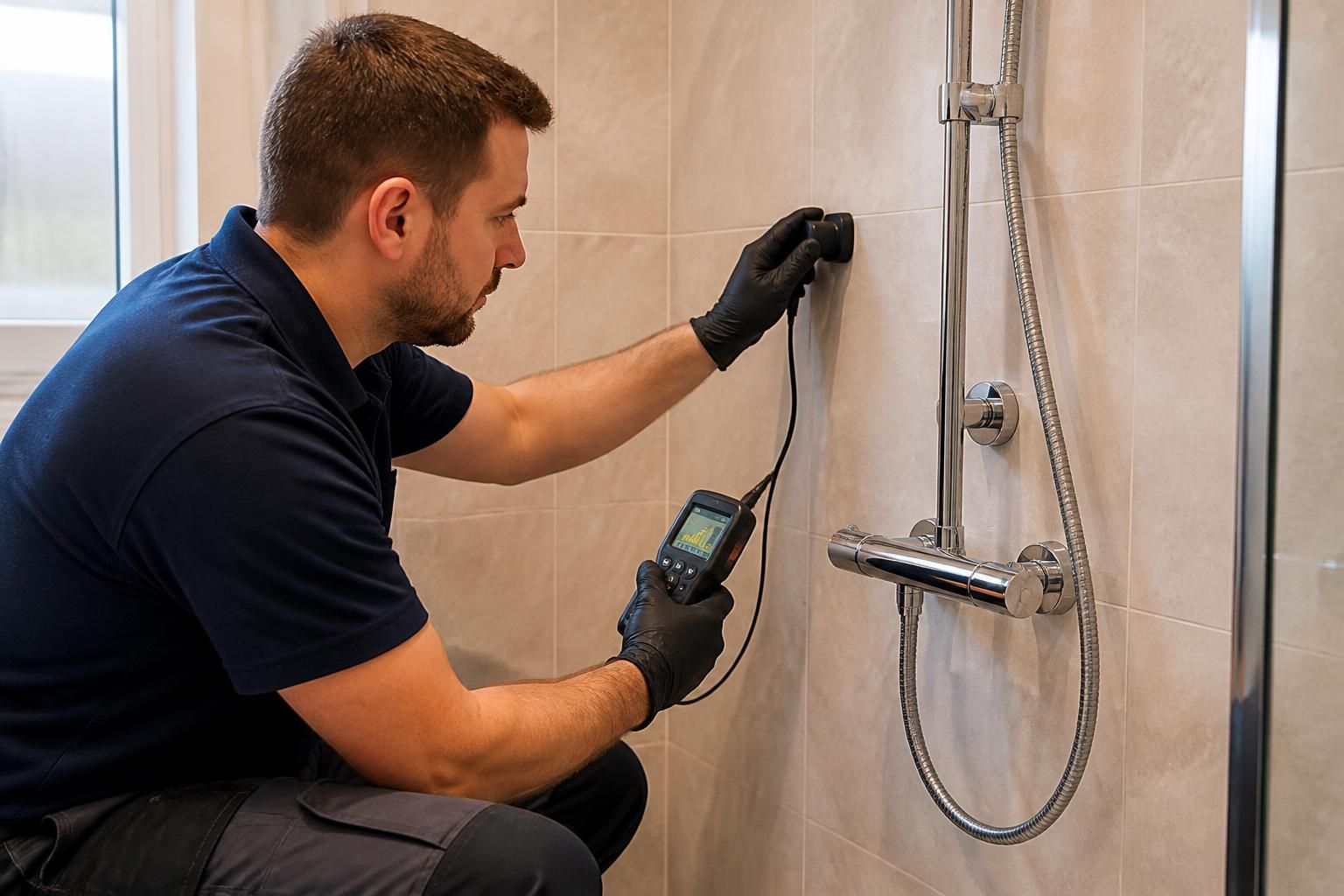
Intermittent leaks can usually be investigated through a combination of visual inspection, controlled testing and moisture assessment. Unlike a continuously dripping tap, an intermittent leak may only appear when the fitting is turned on, the shower is running, the pipework is under pressure, or water has reached a particular level. The absence of visible water during an appointment does not necessarily rule out a leak.
Why intermittent leaks are difficult to see
Water can escape from a tap or shower installation in several ways. A worn washer, cartridge or internal seal may leak only in a particular handle position. A loose connection may remain dry until water pressure rises. Shower water can pass behind a seal, screen or trim, then travel along a wall or under a floor before becoming visible some distance from the original source.
Some leaks also depend on how the fitting is used. The amount and direction of water, the length of time the shower runs, movement in a flexible hose, or changes in temperature can all affect whether water escapes. This is why a dry surface at the time of inspection is useful information, but not conclusive evidence that the installation is sound.
How an inspection can reproduce the problem
A plumber will normally start by examining the tap, shower controls, spout, hose, connections, seals and nearby surfaces. Signs such as staining, softened materials, damaged sealant, corrosion, mould or a localised damp patch can help identify where water has travelled.
Testing may then mirror the conditions under which the leak has been reported. This can include:
- Operating the tap or shower through its normal range, including the position in which the leak is most often noticed.
- Running the shower for an appropriate period and checking the tray, screen, wall junctions, controls and surrounding floor.
- Checking connections and joints while water is flowing and after it has been turned off.
- Moving a shower hose or handset where movement may disturb a seal or connection.
- Observing whether water appears after use rather than only while the fitting is running.
- Comparing moisture levels around the fitting with nearby areas that should remain dry.
The purpose of these tests is not simply to look for a drip. It is to establish whether water is escaping, when it escapes and the route it takes before becoming visible.
Using evidence when the leak does not occur during testing
If the reported leak cannot be reproduced, the inspection can still provide useful evidence. Moisture readings may show that a wall, floor or cabinet has previously been affected, while visual signs can indicate the likely direction of travel. The position of the damp area should not automatically be treated as the location of the faulty fitting because water often follows grout lines, pipework, joists or the underside of a surface.
Information from the occupant is also relevant. The time the leak appears, whether it follows tap or shower use, which control position is involved, and whether water is found during or after use can narrow the possible causes. Photographs or a short video taken while the leak is visible may help when the symptom has disappeared before inspection.
Distinguishing a leak from other moisture
Not every wet area near a tap or shower is caused by a failed fitting. Splashing, poor ventilation, condensation, water escaping from a shower screen, and failed silicone can create similar marks. A leak from pipework inside the wall or below the floor may also be mistaken for a problem with the tap or shower itself. A proper assessment considers the whole installation and eliminates these alternatives rather than replacing the most visible component without testing.
When specialist detection may be appropriate
If basic testing identifies moisture but not its source, further leak detection methods may be considered. The suitable approach depends on the installation, access and materials. The aim is to locate the source as accurately as practical before opening finished surfaces or removing fittings. This can help determine whether the problem relates to a seal, connection, fitting, concealed pipework or surrounding waterproofing.
There are limits to any inspection. A leak that occurs only under an unusual combination of pressure, temperature or use may not be fully reproduced at one visit. Where the evidence remains inconclusive, monitoring the area and recording when moisture appears can provide additional information. Water should not be allowed to continue spreading, particularly around electrical points, timber, plasterboard or flooring.
Ideal Plumbing Services provides tap and shower leak detection for homeowners, landlords and tenants in Birmingham and the wider West Midlands. The assessment can establish whether an intermittent symptom is linked to the fitting, its connections or a concealed part of the installation, helping inform the next repair decision.