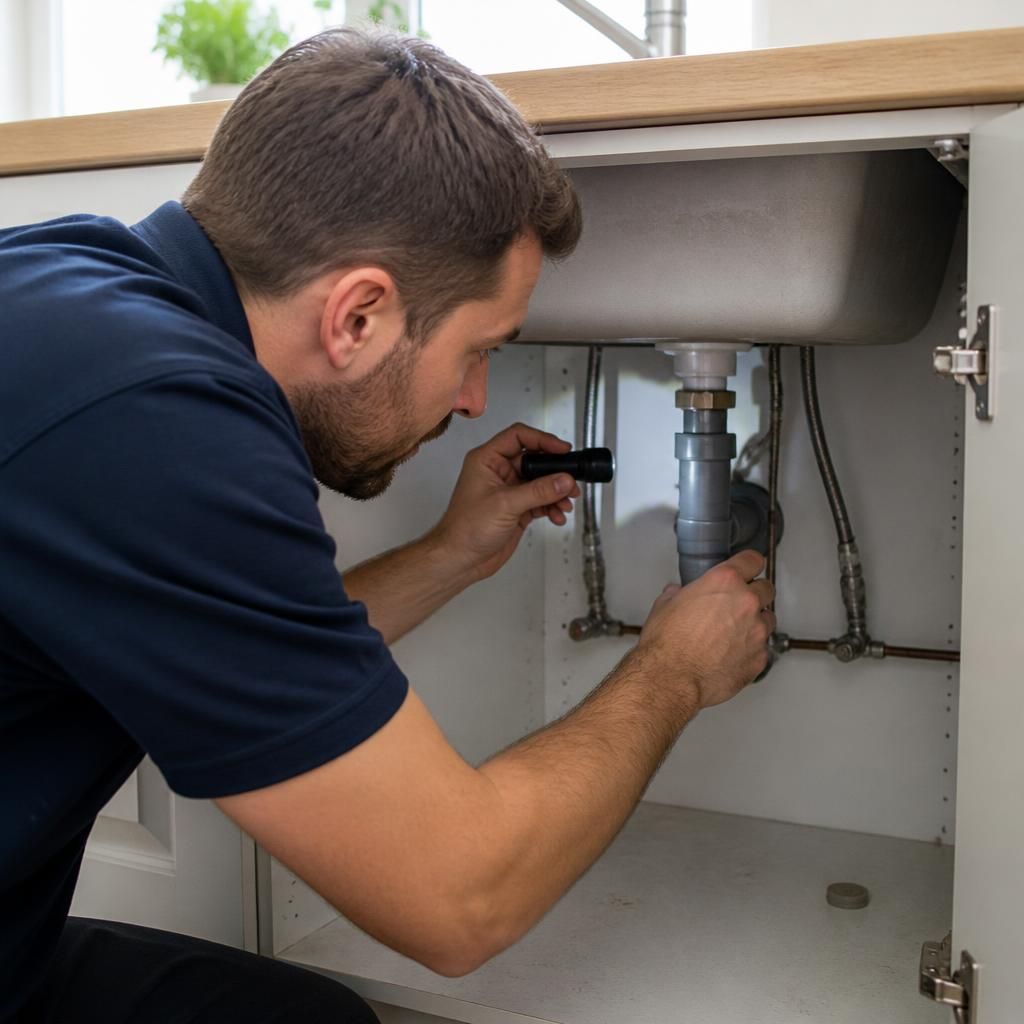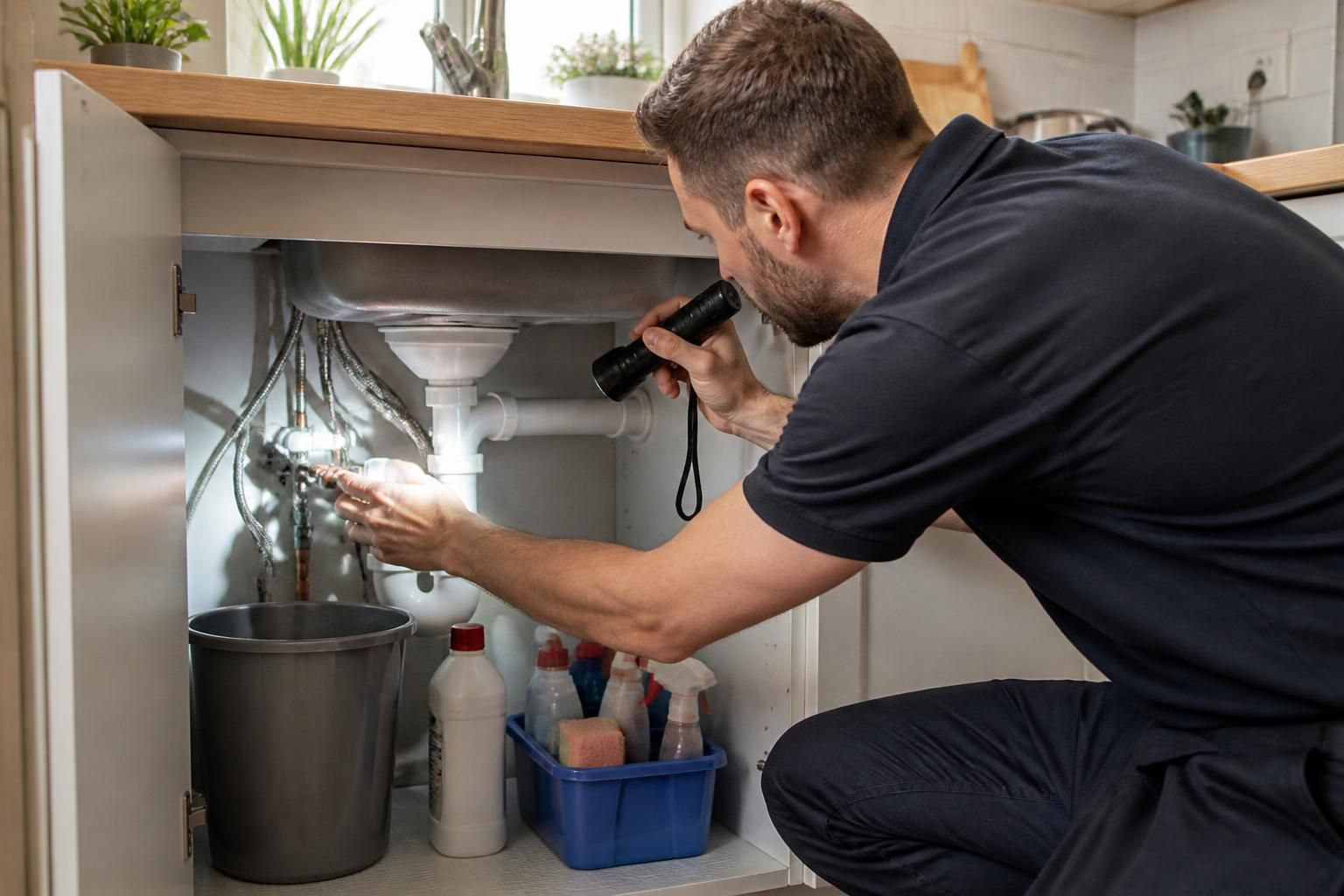
Inspection beneath a leaking kitchen tap normally requires enough room for a plumber to place their hands and tools around the tap’s underside and connected fittings. In most installations, this means working from the front of the sink unit rather than creating an opening in the floor, wall, sink or worktop.
The amount of access depends on the tap design and how the original installation was completed. A plumber may need to examine:
- the securing nut, fixing plate or bracket holding the tap in place;
- flexible hoses or rigid supply tails connecting the tap to the water pipes;
- compression joints, push-fit connections and threaded fittings;
- the position and condition of isolation valves; and
- the underside of the sink, cabinet base and nearby pipework for signs of water tracking.
Access does not necessarily need to be completely unobstructed. A narrow cabinet or restricted working position may still be manageable if the relevant fittings can be seen and reached safely. However, cramped conditions can make it difficult to identify the source accurately, hold a fitting securely or remove a seized connection without damaging surrounding components.
During an assessment, the plumber may use a torch, inspection mirror or camera to view areas that are partly hidden. They will usually distinguish between water escaping from the tap body, a connection below the tap, the supply pipework or water that has travelled from another part of the sink area. This distinction matters because moisture found beneath the tap is not always coming from the fitting directly above it.
Extra access may be needed where a rear fixing is enclosed, the tap has been fitted tightly against the sink, pipework is boxed in, or a leak has affected the cabinet material. In those circumstances, the next step might be moving a removable panel, disconnecting a waste component or carefully removing part of the cabinet lining. More intrusive work should only be considered after less disruptive inspection methods have established that it is necessary.
Before the inspection, remove loose items and wipe away standing water where it is safe to do so. Avoid forcing valves, tightening fittings or dismantling the tap, as this can worsen a leak or make the original source harder to identify. If access is restricted by fixed cabinetry or the leak is close to electrical equipment, tell the plumber before work begins so the inspection can be planned safely.
Ideal Plumbing Services can assess the available access and explain whether the leak can be investigated as it stands or whether a removable obstruction needs to be dealt with first. Any repair recommendation should be based on the actual leak source, the condition of the fittings and the amount of access needed to complete the work securely.