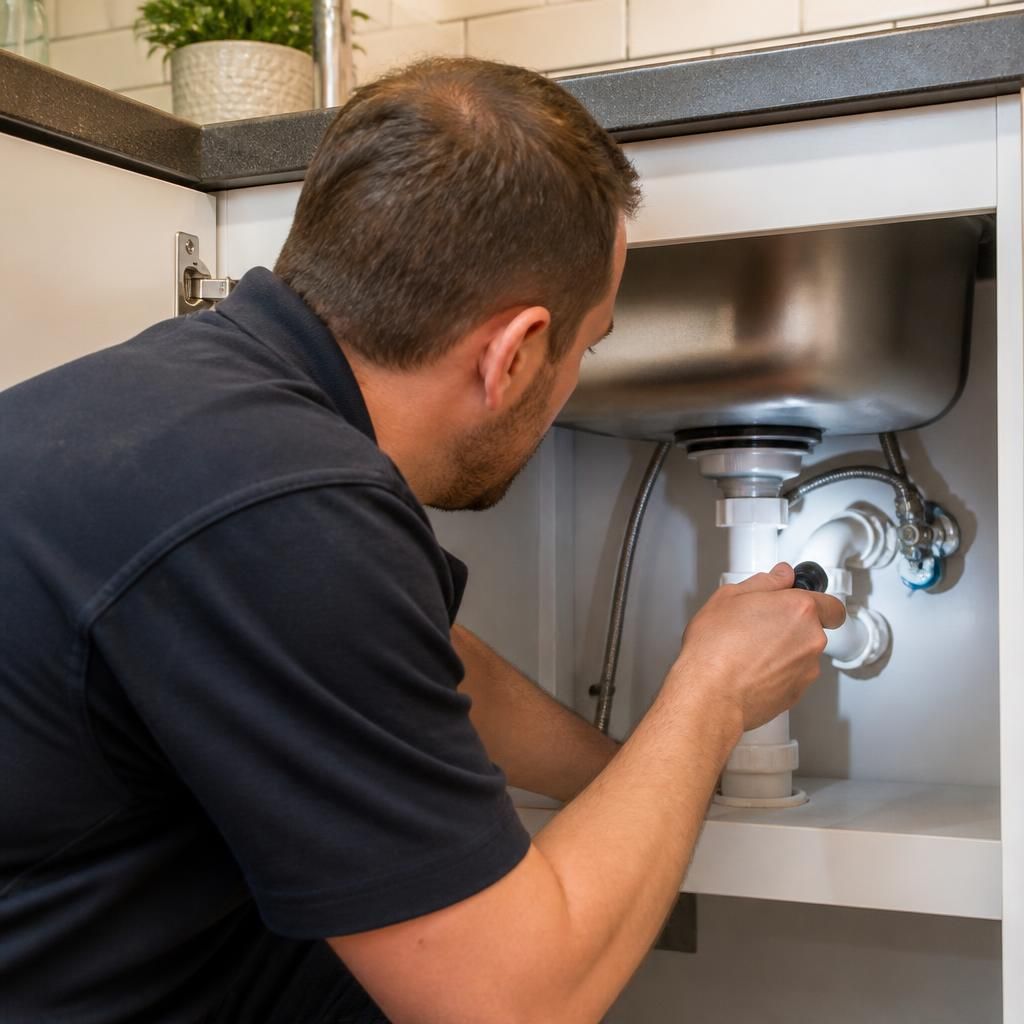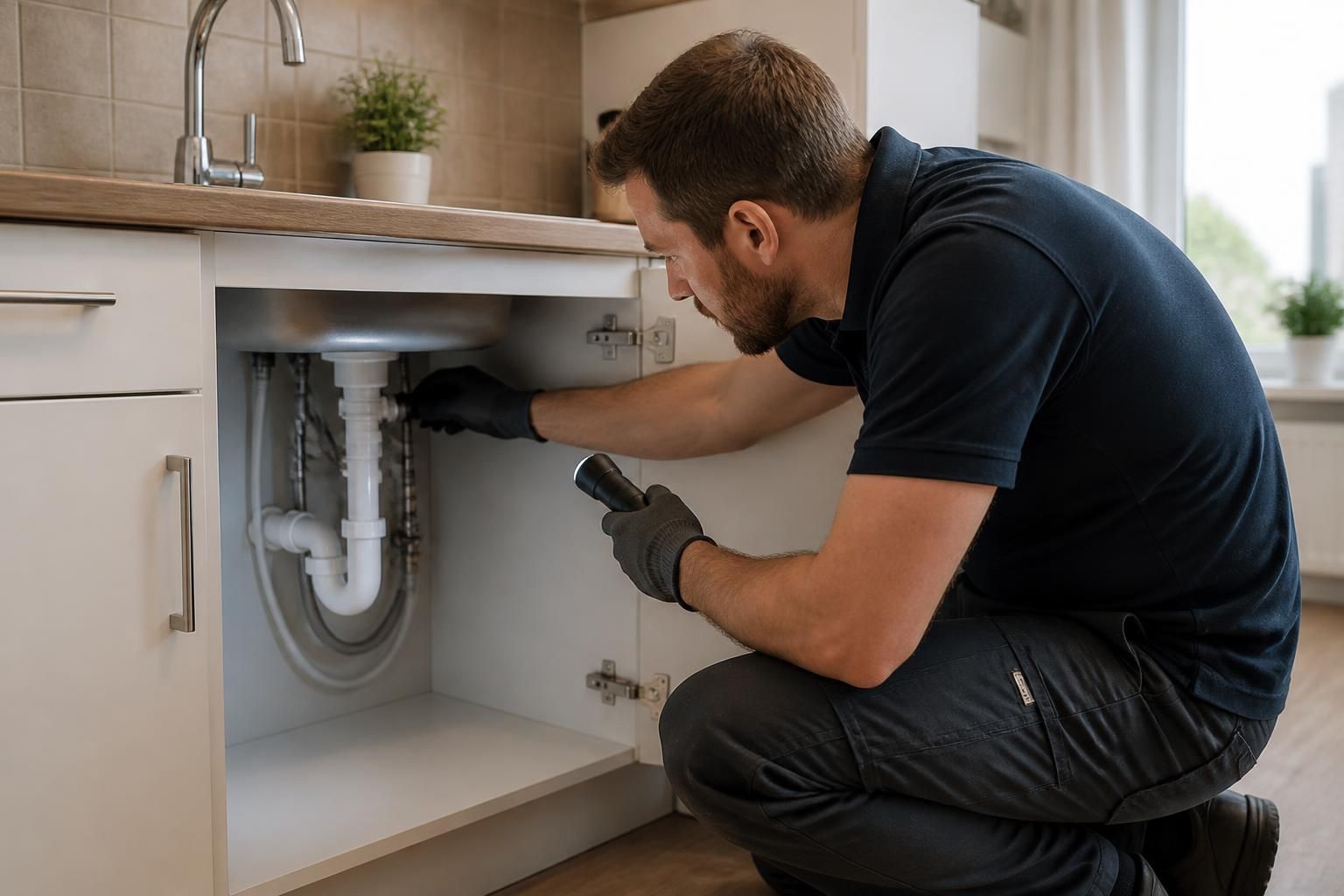
Kitchen tap leak detection is suitable for rented properties because it can help establish the source of a leak without requiring the tenant to dismantle the tap or surrounding fittings. This is useful where the visible water is not coming directly from the tap, but from a flexible hose, isolation valve, waste connection, concealed joint or pipework beneath the sink.
The inspection can help separate three important issues:
- Where the water is coming from: the tap body, supply connection, waste plumbing or nearby pipework.
- Whether the problem is isolated: a small leak beneath the sink may be unrelated to dampness in an adjoining cupboard, wall or ceiling.
- What work may be needed: for example, tightening or replacing a connection, repairing a pipe or replacing the tap.
For tenants, the main benefit is having a clearer description of the fault before repair work is authorised. Avoid taking the tap apart or attempting a permanent repair yourself, as this could worsen the leak or make it harder to establish its original cause. If it is safe to do so, close the relevant isolation valve, remove items from the cupboard and place a container or towels beneath the dripping connection while arrangements are made.
Responsibility normally depends on the tenancy agreement and the cause of the problem. A landlord or managing agent will usually need to decide whether a repair should be instructed, particularly where the issue involves fixed plumbing, concealed pipework or damage to the kitchen unit. A tenant may be responsible where damage resulted from misuse or an unauthorised alteration, but the agreement and the individual circumstances should be checked rather than assumed.
Landlords and agents can also use leak detection as an initial diagnostic step before approving more disruptive work. A clear finding can reduce unnecessary replacement of sound fittings and provide a useful record for maintenance decisions. Where there is staining, swelling to cabinets or dampness beyond the sink unit, the inspection should consider the surrounding area as well as the tap itself.
Some rented homes present additional complications. In a flat, water may have travelled from an upper property or from shared building pipework, so the apparent kitchen tap leak may not be the only possible source. In these cases, the landlord, managing agent or building management company may need to coordinate access and responsibility. Any inspection should distinguish the tenant’s fixture from communal or neighbouring plumbing.
Before an appointment, the useful information to provide includes when the leak was first noticed, whether it occurs continuously or only when the tap is running, any visible staining or damage, and whether the water supply has already been isolated. Photographs can help document the condition of the area, especially if the leak has affected stored belongings or kitchen units.
Leak detection identifies the likely source; it does not automatically authorise replacement or other remedial work. The person responsible for the property should agree the proposed repair, access arrangements and any making-good work before intrusive changes are undertaken. For rented homes in Birmingham and the wider West Midlands, Ideal Plumbing Services can assess residential plumbing faults for tenants, landlords and managing agents, with the findings used to guide the appropriate repair.