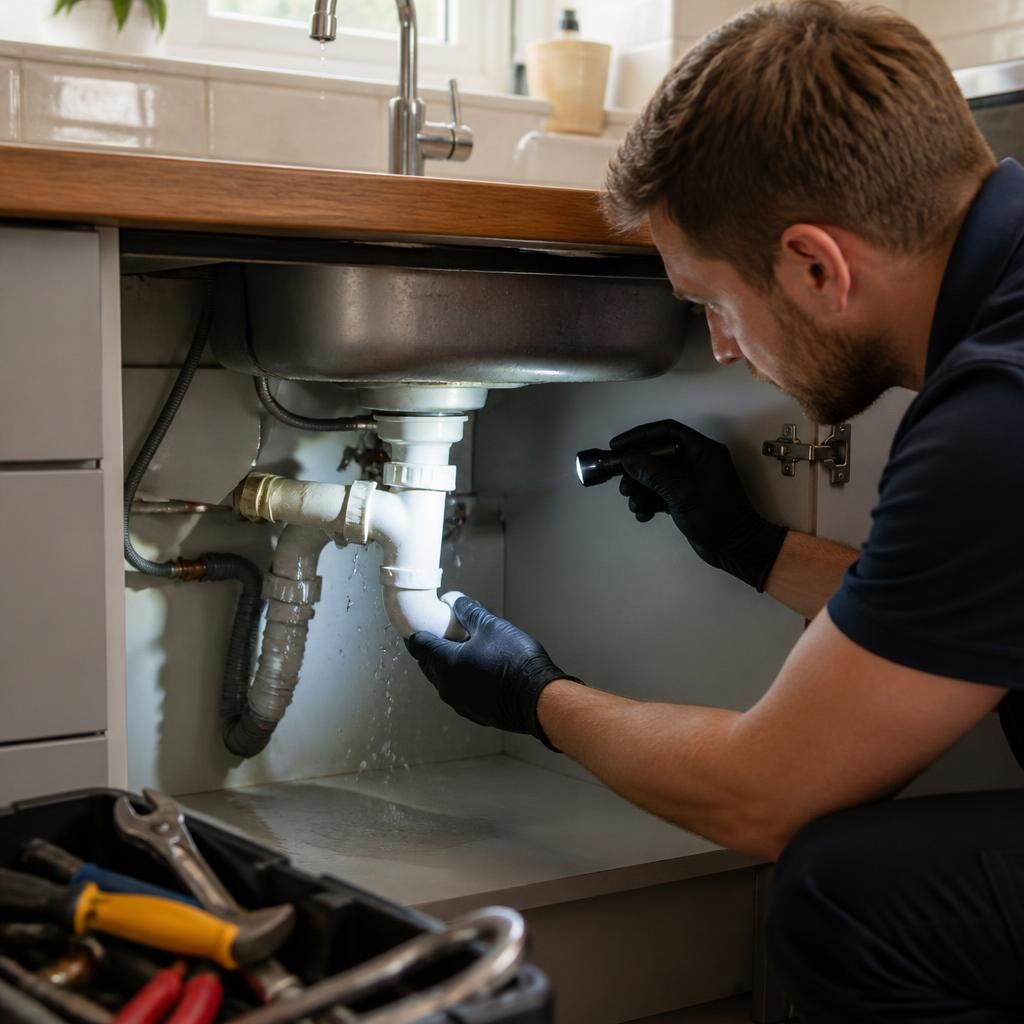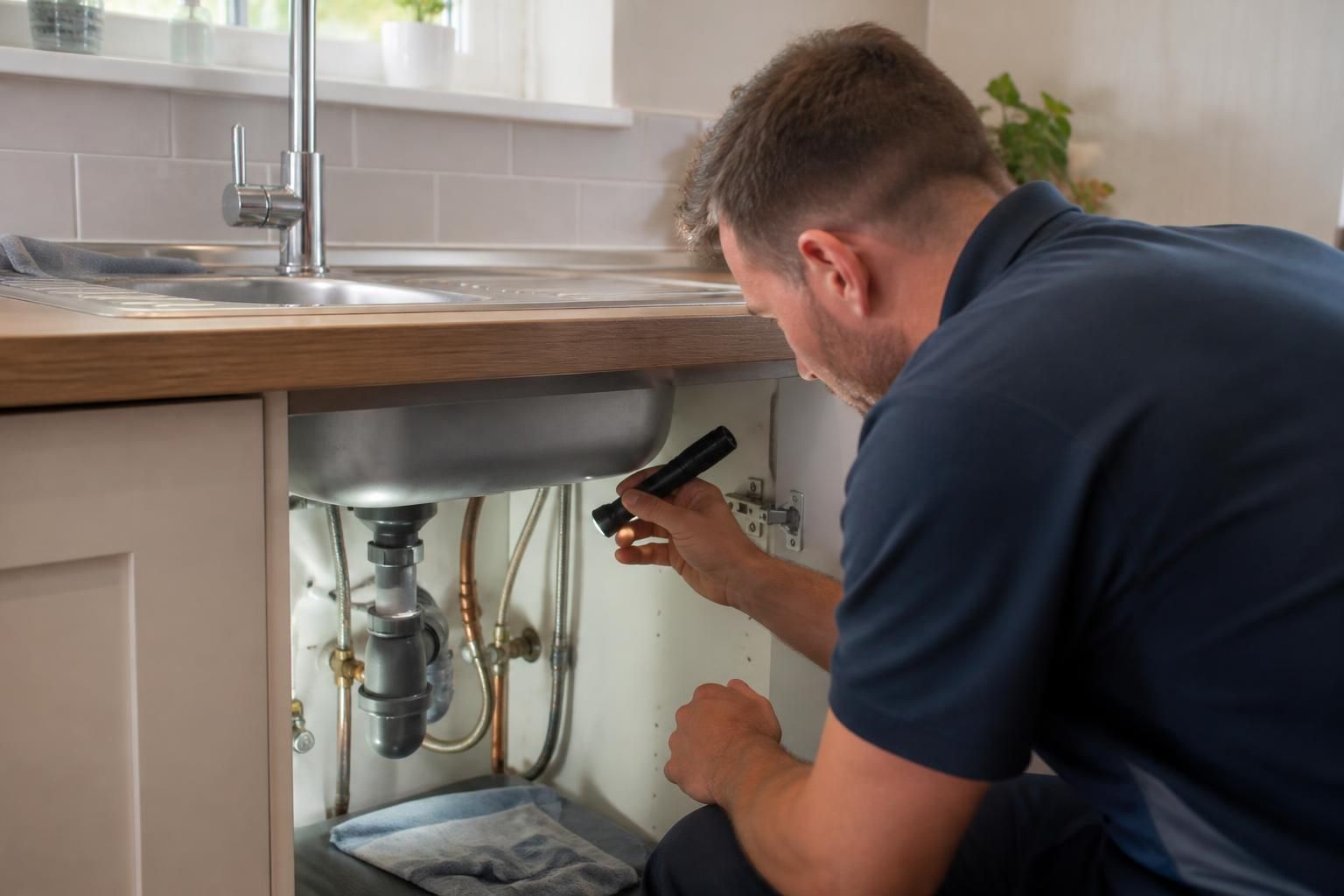
Kitchen tap leak detection is usually priced as an inspection or diagnostic service, with repairs, replacement parts and any remedial work charged separately where required. There is no single Birmingham price because the total depends on the type of fault, the time needed to identify its source and whether the leak is affecting connected pipework or concealed areas.
What the detection charge may cover
- Checking the tap body, handles, spout, seals and connections for visible signs of leakage.
- Testing the supply pipes, isolation valves, flexible hoses and waste connections beneath the sink.
- Tracing moisture that has travelled away from the original point of failure.
- Using suitable diagnostic equipment where the source cannot be confirmed through visual inspection alone.
- Explaining the findings and outlining the available repair options.
A straightforward leak from a tap connection may take less investigation than moisture coming from behind a unit, beneath a worktop or within a wall. If water is collecting inside the cabinet or has damaged surrounding materials, the plumber may need to distinguish a plumbing fault from secondary damage before recommending work.
Detection cost compared with repair cost
Finding the source and putting it right are separate parts of the job. A worn washer, faulty cartridge, loose connection or damaged hose may be repairable, while a badly corroded tap or inaccessible pipe may make replacement more practical. Parts, labour and any work needed to reach the affected area should be explained before additional work is undertaken.
Ask whether the quoted price includes the inspection only, whether minor adjustments are included, and how replacement parts or follow-on repairs will be charged. A clear quotation should distinguish the diagnostic work from optional remedial work and identify any charge that could arise if further access or specialist tracing becomes necessary.
Why two kitchen tap leak quotes can differ
- Fault complexity: a dripping spout is different from a leak that appears only when the tap is used or when the sink is full.
- Location of the water: moisture beneath the sink may come from the tap, supply pipework, waste trap or a nearby appliance connection.
- Access: crowded cupboards, fixed panels and sealed worktops can increase the care and labour needed to inspect the plumbing.
- Equipment: concealed or intermittent leaks may require more detailed tracing than a clearly visible failed connection.
- Consequential work: drying, removing access panels or dealing with damaged fittings may not form part of the initial detection service.
How to prepare for an accurate quote
Before requesting an assessment, note when the leak occurs, where water first appears and whether the problem changes when the tap is turned on, the sink is drained or the cupboard is used. Photographing visible moisture can also help if the area dries before the appointment. Keep the space beneath the sink as clear as possible, but do not dismantle fittings or remove sealed panels yourself.
If water is actively escaping, use the isolation valve beneath the sink if it can be operated safely. Where that is not possible, avoid using the tap and protect stored items from further moisture. Persistent dampness, swelling in the cabinet or water reaching electrical equipment requires prompt professional assessment.
Ideal Plumbing Services provides kitchen tap leak detection and can set out the recommended work and associated charges before repairs proceed. For homeowners, landlords and tenants, the useful comparison is not simply the lowest initial price; it is whether the quote clearly explains what is being inspected, what is excluded and what repair options are available.