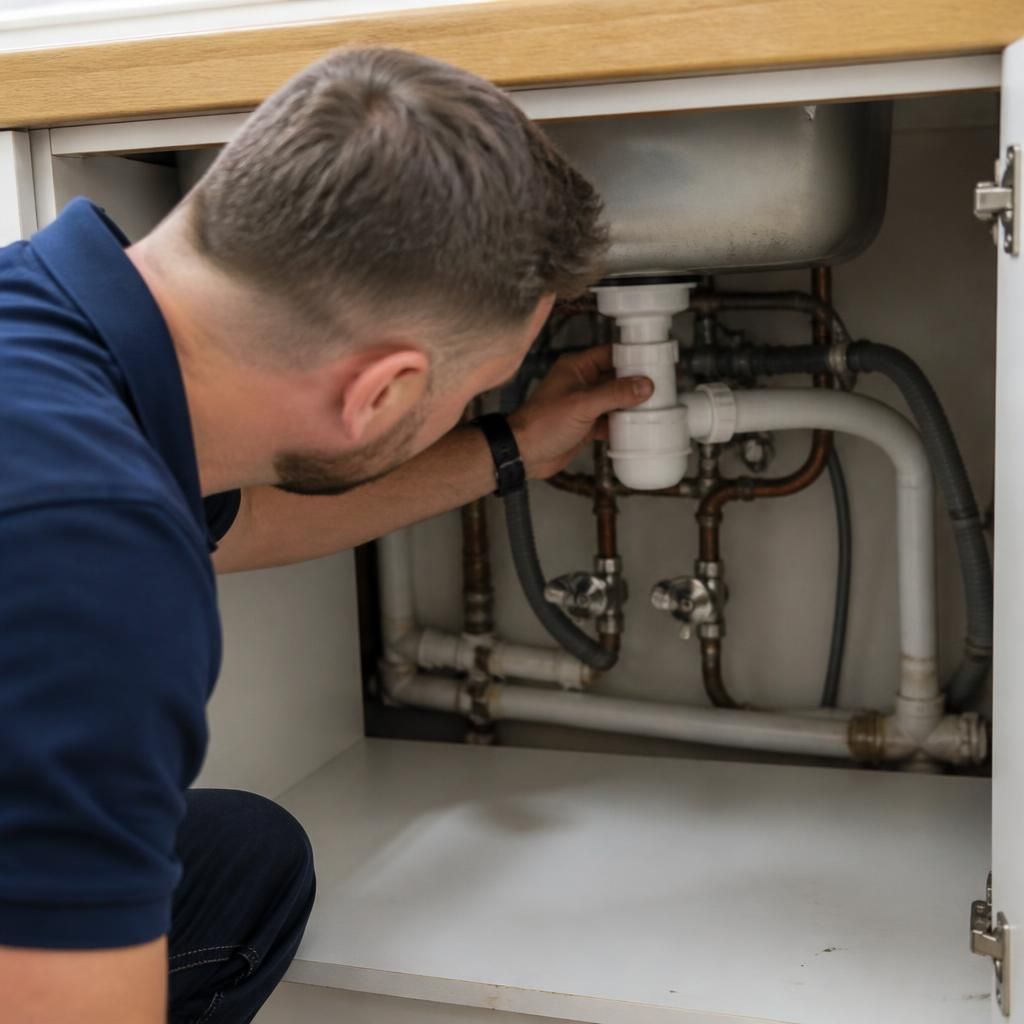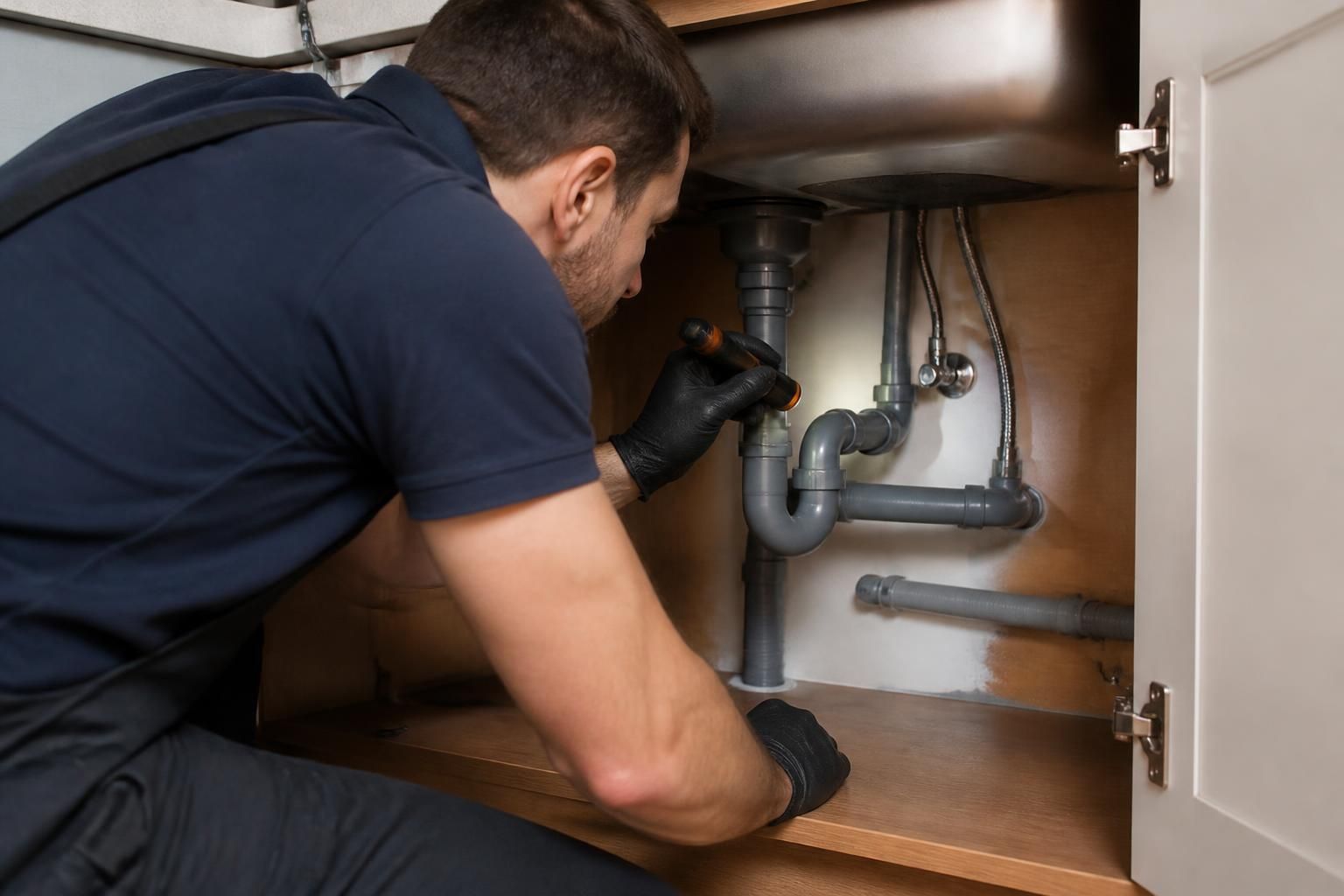
Preparing for a kitchen tap leak detection appointment means making the area safe, preserving useful evidence and ensuring the plumber can inspect the tap, connections and nearby pipework without unnecessary delay. Good preparation can also help distinguish a leaking tap from a problem with the supply hoses, isolation valves, waste fittings or concealed pipework.
Before the appointment:
- Locate the stop tap. Make sure you know where the property's main water shut-off is, usually beneath the sink, near the meter or where the supply pipe enters the property. If the leak becomes more severe, turn it off only if you can do so safely and without forcing a stiff valve.
- Keep the area safe. Remove electrical appliances from any area affected by water and avoid using sockets or appliances that may have become wet. Place a suitable container or towel beneath an active drip, but do not put yourself at risk by reaching through pooled water.
- Do not dismantle the tap. Avoid tightening fittings excessively, removing the tap, applying sealant or making alterations before the inspection. These actions can conceal the original source, worsen a damaged connection or make it harder to determine whether the leak is from the tap body, cartridge, flexible hose or valve.
- Gather relevant property information. If you know when the tap or associated plumbing was installed, repaired or replaced, have those details available. Any product instructions, previous repair notes or invoices may help establish which components are present, although paperwork is not essential.
- Record changes in the leak. If safe, observe whether the drip occurs when the tap is running, when it is turned off, when the spout is moved or when water is discharged through the waste. Do not deliberately recreate a serious leak; simply share anything you have already noticed.
- Protect cupboards and stored items. Move cleaning products, food, packaging and other belongings away from any damp area. This gives the plumber a clearer view and prevents further damage to items while the inspection takes place.
- Consider access arrangements. Ensure the person who booked the appointment can explain the symptoms and provide access to the kitchen and relevant water controls. For rented accommodation, notify the landlord or managing agent and follow any required repair-reporting procedure before work is carried out.
Tell the plumber about any warning signs. Mention damp smells, swelling to the cupboard base, staining, mould, reduced water pressure, discoloured water or water appearing away from the tap. These details may indicate that the visible drip is not the only issue and that surrounding pipework or cabinetry also needs checking.
If water is spreading towards electrical equipment, causing significant flooding or damaging the structure of the unit, prioritise personal safety and the property's emergency water shut-off procedure. Do not attempt a repair beyond your ability. Ideal Plumbing Services can use the information you provide alongside a careful inspection to identify the likely source and advise on the appropriate repair.