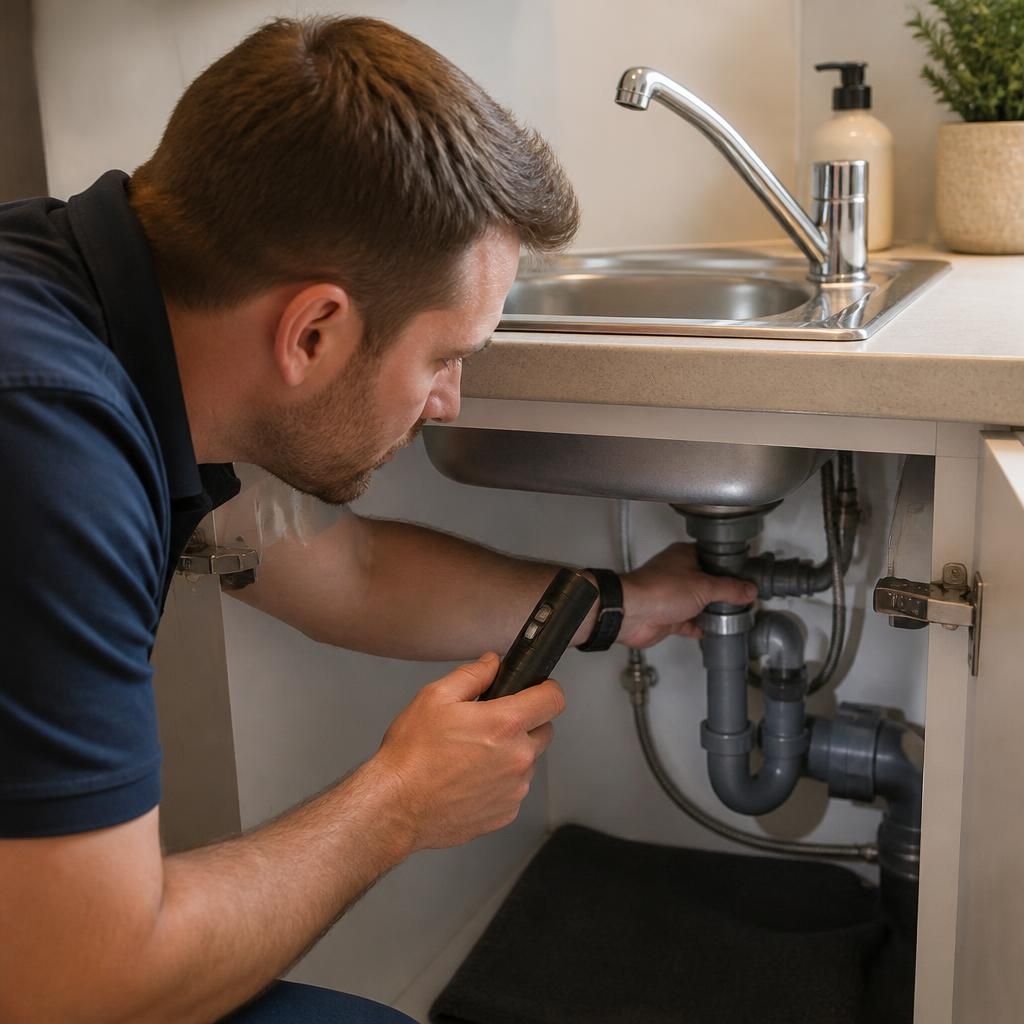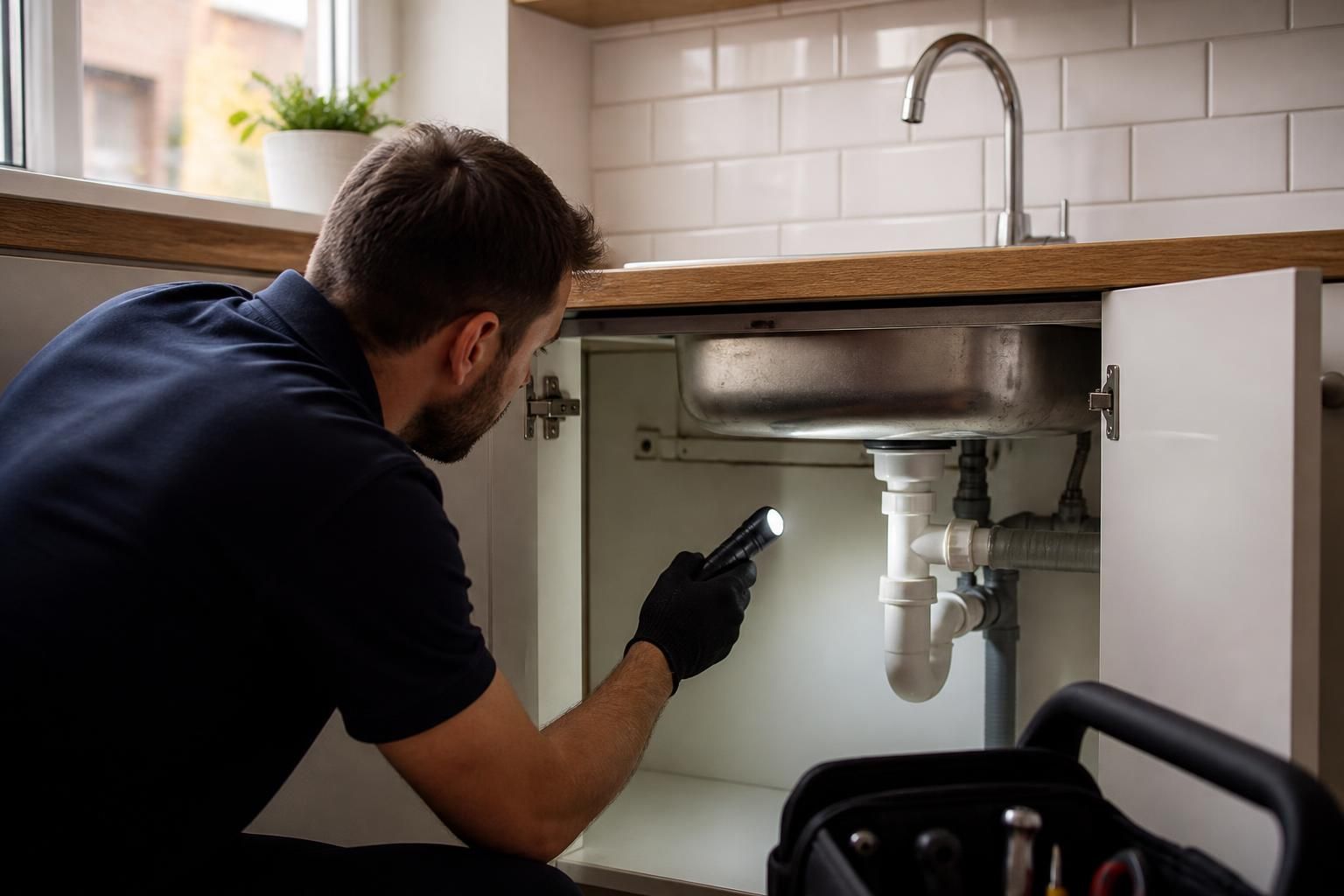
When performed correctly, kitchen tap leak detection should leave the sink and worktop undamaged. The main purpose is to locate the source of moisture without unnecessarily disturbing the tap, sealant, cabinetry or surrounding surfaces. Any inspection method should be proportionate to the suspected fault and selected with the materials in mind.
Most potential damage comes not from the detection itself, but from using excessive force, disturbing a brittle seal, drilling without checking what lies below, or allowing an existing leak to continue. A careful assessment therefore starts with the condition of the installation. A loose tap, cracked seal, swollen cabinet base or worktop joint may already show signs of deterioration, and these should be distinguished from any effect caused by the inspection.
How the sink and worktop are protected
- Protective coverings can be placed around the sink and tap base to prevent tools, debris or moisture marking the surface.
- Components should be handled with suitable tools rather than twisted or levered against the sink or worktop.
- Moisture should be wiped away during the inspection so water does not remain on timber, laminate joints or cabinet edges.
- Where a tap or connection needs to be moved, it should be supported rather than allowed to pull against the worktop or sink.
- Any sealant or fixing that has to be disturbed should be removed in a controlled manner, with the need for renewal explained before repair work proceeds.
The type of worktop affects the level of care required. Laminate worktops can be vulnerable where water reaches an unsealed cut-out or joint, while timber can swell or stain if moisture remains trapped. Stone and composite surfaces are generally resistant to ordinary water exposure, but they can still be chipped by impact or damaged by unsuitable tools and cleaning products. Stainless steel and ceramic sinks should not normally be harmed by inspection, although abrasive materials or forceful contact can mark them.
In some cases, the visible water is not coming from the tap body itself. It may be tracking from a flexible hose, isolation valve, waste connection or joint beneath the sink before appearing at the front edge of the worktop. Finding the route of the water can prevent unnecessary removal of the tap and avoids creating a new disturbance in a sound installation.
When limited disturbance may be necessary
If the leak is concealed behind a fixed panel, beneath a sealed tap base or within a difficult-to-reach connection, some minor access work may be required. This should be discussed before it is carried out. Removing a panel or carefully releasing a small section of sealant is different from cutting into a worktop or sink unit, which should not be undertaken without a clear reason and suitable protection.
There is also a practical difference between leak detection and repair. Detection identifies where water is escaping; repair may involve replacing a washer, hose, cartridge, connector or seal. A repair can require more handling than the initial inspection, but it should still be completed without damaging the sink or worktop. If a fixing is corroded, seized or already failing, forcing it may cause damage, so the safest approach is to explain the condition and agree the next step.
What you can do before the inspection
- Remove items stored beneath the sink so the surrounding area can be examined without knocks or pressure on pipework.
- Dry the tap, sink rim and cabinet interior, then note where water first reappears.
- Avoid applying fresh sealant over the suspected leak, as this can conceal the route of the water and make later access more difficult.
- Tell the plumber about any loose fittings, previous repairs, staining, swelling or damage that was present before the appointment.
- If water is reaching electrical equipment or causing substantial pooling, stop using the affected fitting and take appropriate steps to reduce further damage.
After the source has been identified, the area should be checked for residual moisture and the tap and connections tested without over-tightening. A proper assessment should leave the work area clean and should make clear whether any existing deterioration, replacement sealant or follow-on repair is needed. For homeowners, landlords and tenants in Birmingham and the West Midlands, Ideal Plumbing Services provides professional water leak detection and plumbing repairs with attention to protecting surrounding fixtures and finishes.