Outdoor tap leak detection is a diagnostic process that can identify the likely source of water loss without immediately removing paving. Detection and repair are separate stages: a plumber may be able to establish whether the problem is at the tap, a joint or the buried supply pipe before deciding whether any surface needs to be disturbed.
What can be checked without lifting paving? The inspection can begin with the visible tap and its connections. The plumber will look for moisture around the tap body, wall entry point, isolation valve and exposed joints, then check whether the tap continues to lose water when it is fully closed. These checks help distinguish a faulty washer or cartridge from a leak in the pipe feeding the tap.
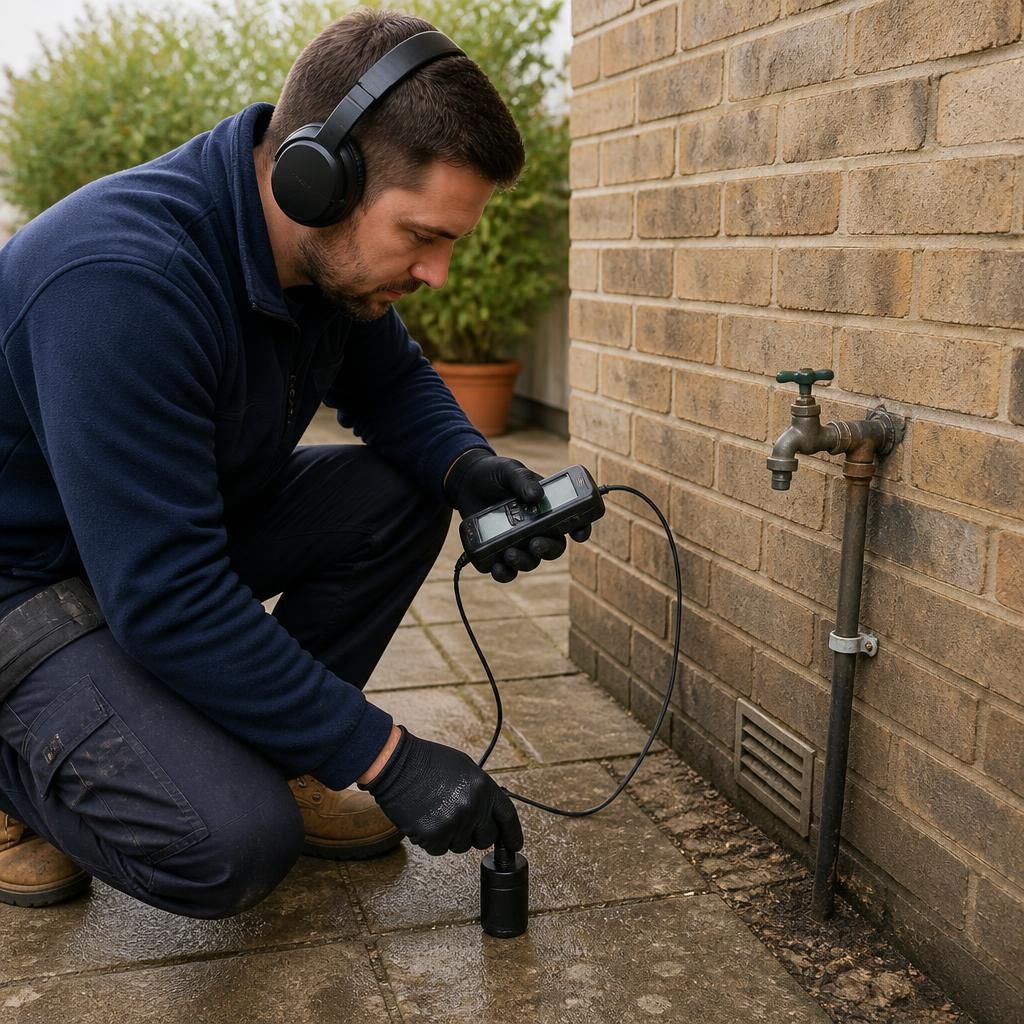
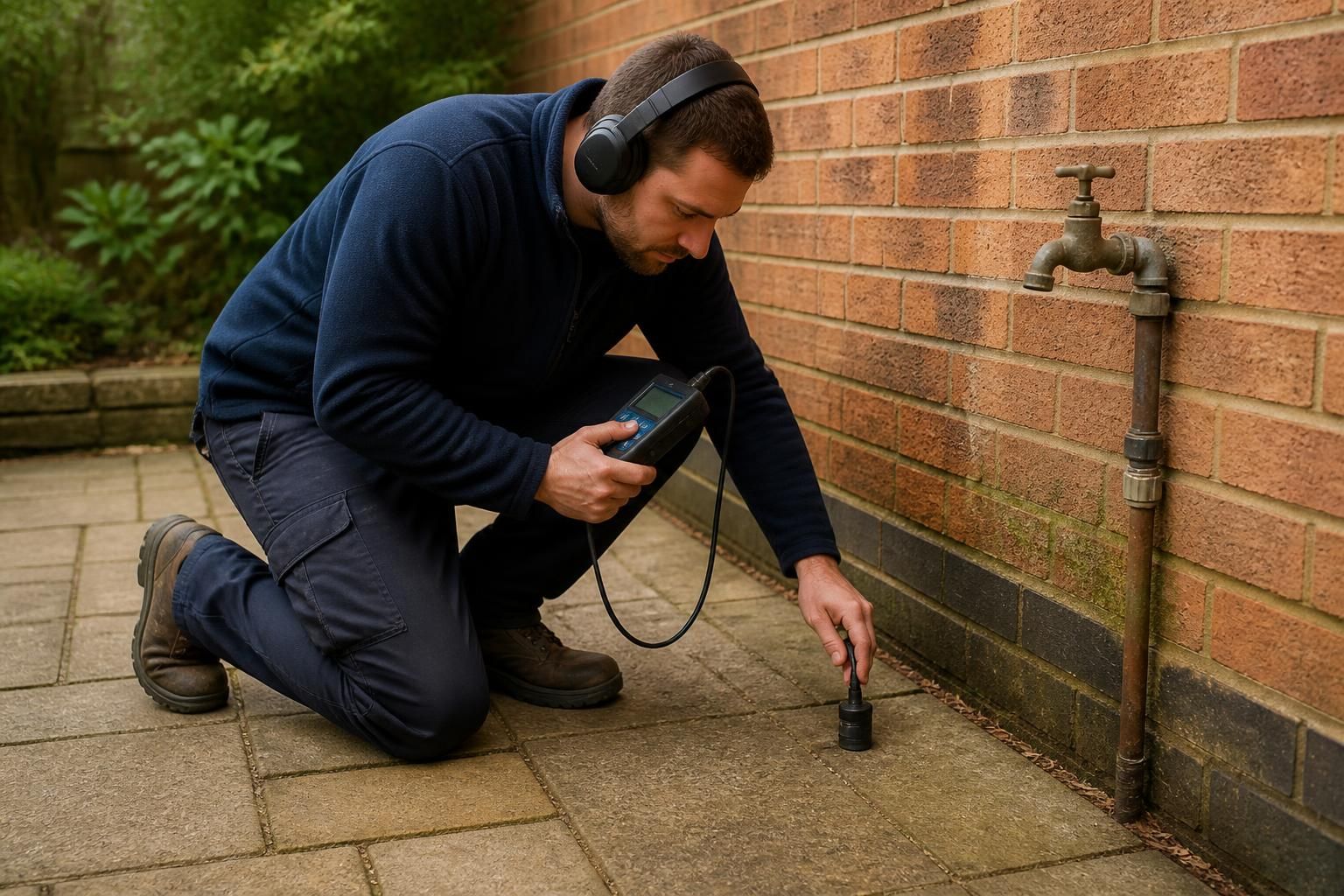
If the visible fittings appear sound, the underground section can be assessed through the available access points. This might include the outdoor tap connection, an internal isolation valve or another accessible point on the same branch of pipework. Pressure behaviour can indicate whether water is escaping from the isolated section, while acoustic equipment may help identify the position of water moving through or from a pressurised pipe. The results are interpreted alongside the pipe route, surface conditions and the location of damp areas.
When is non-invasive detection most effective? It is generally more useful when the pipe route is known, the pipe can be isolated for testing and the leak is producing a measurable change in pressure or sound. It can also help where the paving is intact and the suspected leak is beneath a patio, path or driveway. A diagnostic assessment may narrow the search to a particular section rather than requiring broad excavation.
Detection is less certain where several pipes share the same route, the leak is very small, the pipe is not accessible for testing or background noise affects acoustic readings. Water can also travel through soil, bedding material or construction joints, so the wettest visible area is not necessarily directly above the leak. A professional should therefore treat surface dampness as a clue rather than proof of the exact break point.
Why might paving still need to be lifted? Surface removal may be necessary when the suspected location cannot be confirmed closely enough for a targeted repair, or when the pipe and fittings cannot be reached through an existing access point. It may also be required if the tap has been installed below a solid surface with no accessible isolation valve. In these circumstances, accurate detection can still reduce unnecessary disturbance by indicating where access is most likely to be needed.
The repair method depends on what the inspection finds. A worn internal component or exposed connection may be repaired at the tap itself. A damaged buried section could require a localised excavation, replacement of a fitting or renewal of part of the supply pipe. The paving is normally dealt with as an access issue after the plumbing fault has been assessed, rather than being removed as the first step.
What happens during an inspection?
- The plumber establishes which pipework supplies the outdoor tap and checks accessible valves and connections.
- The tap is examined for signs of leakage when open and closed, including moisture that may be tracking along the wall or fitting.
- The relevant section is isolated where possible and tested for pressure loss or other signs of escaping water.
- Acoustic or other suitable detection equipment may be used to refine the suspected position.
- The findings are explained, including whether a repair can be made through existing access or whether limited lifting of paving is required.
Before work starts, it is sensible to tell the plumber about recent landscaping, extensions, previous repairs and any known route of the outdoor water pipe. Keeping the tap area and accessible isolation valves clear can also make the assessment easier. If the leak is causing persistent dampness, unexplained water use or soft ground, the water supply to the tap should be isolated if this can be done safely without affecting essential household plumbing.
In short, paving does not automatically need to be lifted to investigate an outdoor tap leak. The likelihood of avoiding surface disturbance depends on access, pipe layout, leak characteristics and whether the suspected point can be confirmed sufficiently for a safe repair.