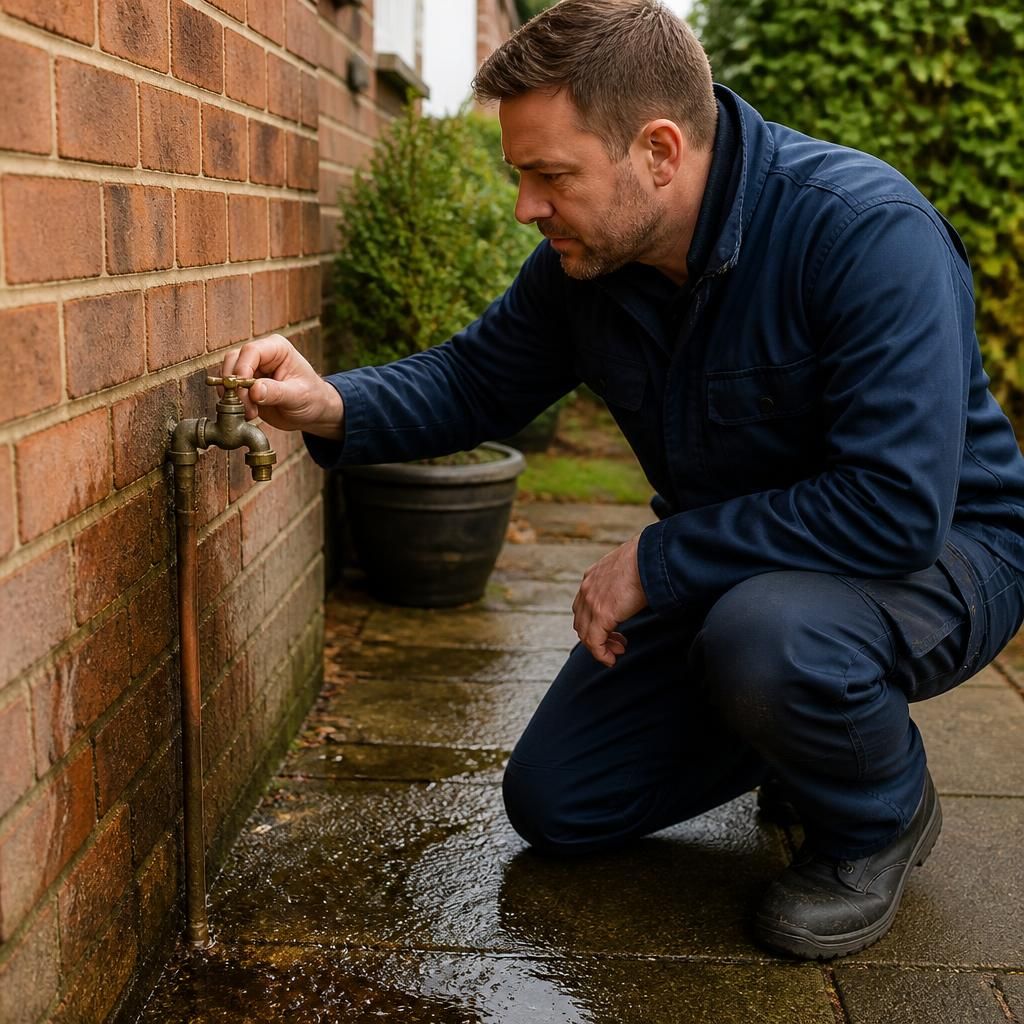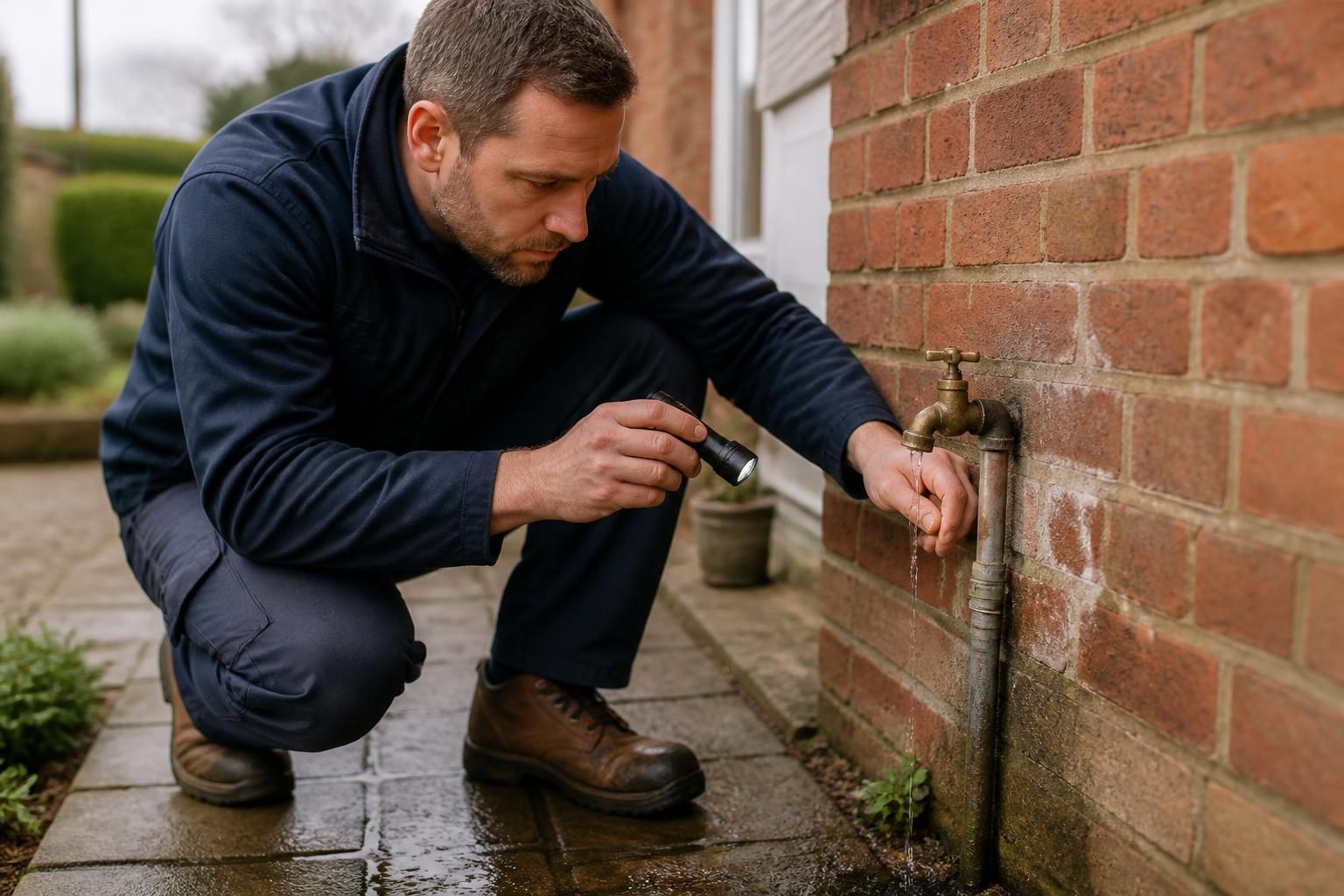
Professional leak detection is appropriate when an outdoor tap is losing water in a way that cannot be explained by a worn washer or loose visible fitting, or when the leak may extend into the wall, ground or connected pipework. The key issue is not only the drip rate: the location of the escaping water, whether the supply can be isolated, and any effect on nearby materials determine whether specialist investigation is justified.
Arrange an inspection if you notice:
- Water emerging from the tap body, handle, wall connection or pipe rather than solely from the outlet when it is closed.
- A tap that becomes wet again after being dried, particularly around joints or the point where the pipe enters masonry.
- Flaking paint, soft pointing, mould, discolouration or a persistent musty smell close to the fitting.
- Unexplained movement on the water meter while every indoor and outdoor outlet is turned off.
- A drop in pressure, intermittent flow or a sound of running water when no tap or appliance is being used.
- A tap that has been damaged by impact, corrosion or freezing, as the visible fitting may not be the only affected component.
- Water collecting in a location that does not correspond with the tap itself, such as beside a path, patio or wall base.
A visible drip from the spout often points to an internal valve component, but replacing that part without checking the rest of the installation can leave an inlet or concealed leak unresolved. A professional assessment is particularly sensible where the tap is connected to pipework inside a wall, beneath paving or below ground level. In these situations, removing surfaces simply to search for the fault can cause unnecessary disruption.
During leak detection, a plumber normally examines the tap, isolation valve and accessible connections before checking how the water supply behaves when sections are isolated. Pressure testing can help establish whether water is escaping from the supply. Where the route is concealed, acoustic or other non-invasive detection methods may help narrow down the position before any repair or access work is considered. The precise method depends on the construction, pipe material and symptoms.
Professional detection is not always necessary for a small, clearly located drip from the outlet where the tap can be isolated and the cause is straightforward. It becomes more important when the fault returns after a basic component has been changed, when water is entering the building fabric, or when the source cannot be located confidently. Finding the origin first helps distinguish between a tap repair, replacement of a valve or connection, and work to concealed supply pipework.
Until the fault is assessed, avoid repeatedly operating a stiff or damaged handle and do not excavate paving or wall surfaces based only on where water appears. If safe access is available, isolate the outdoor supply or the relevant internal shut-off valve, keep the area clear, and note when the dampness or dripping occurs. These observations can help identify whether the leak is continuous or linked to use of the tap.
For a rented property, the tenant should report the issue to the landlord or managing agent and follow the agreed repair procedure, while taking reasonable steps to limit further water loss. A qualified plumber can then investigate the installation and provide a repair recommendation based on the confirmed source rather than the most obvious wet spot.