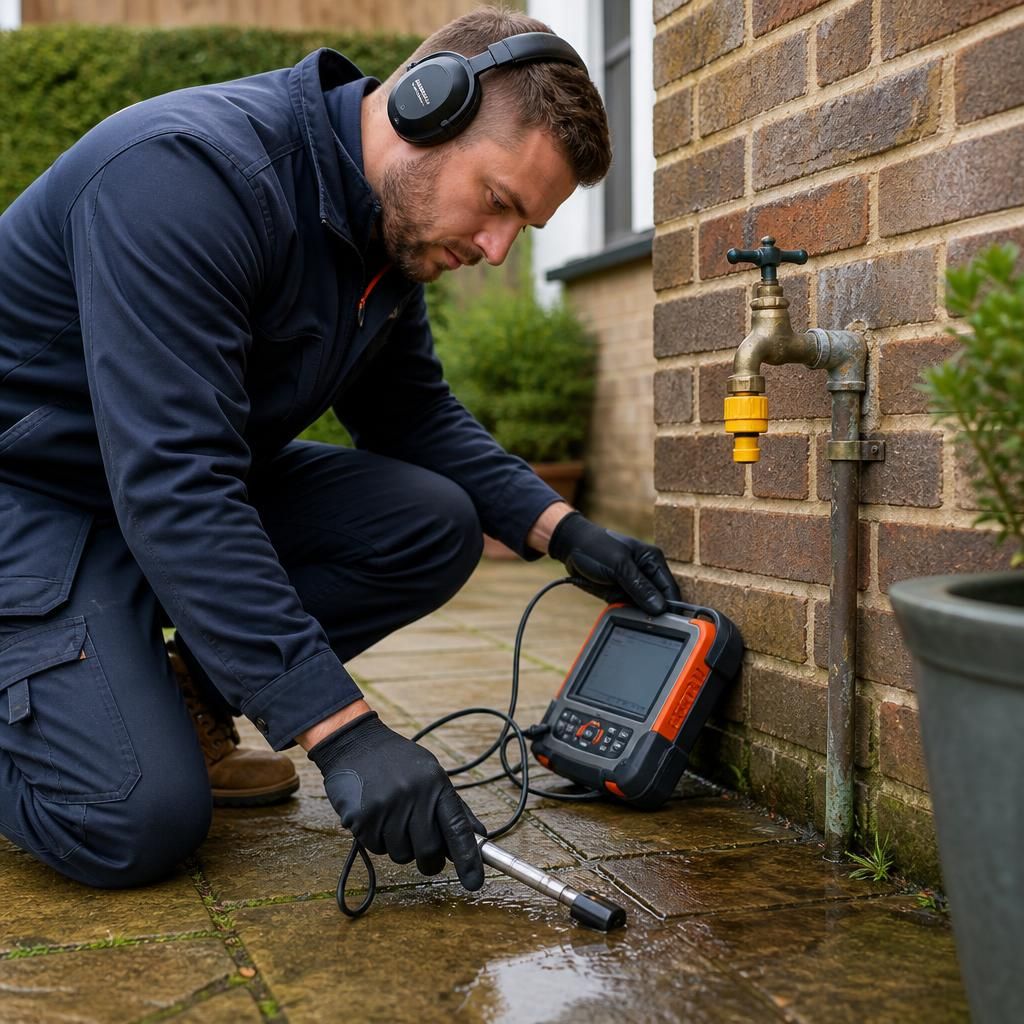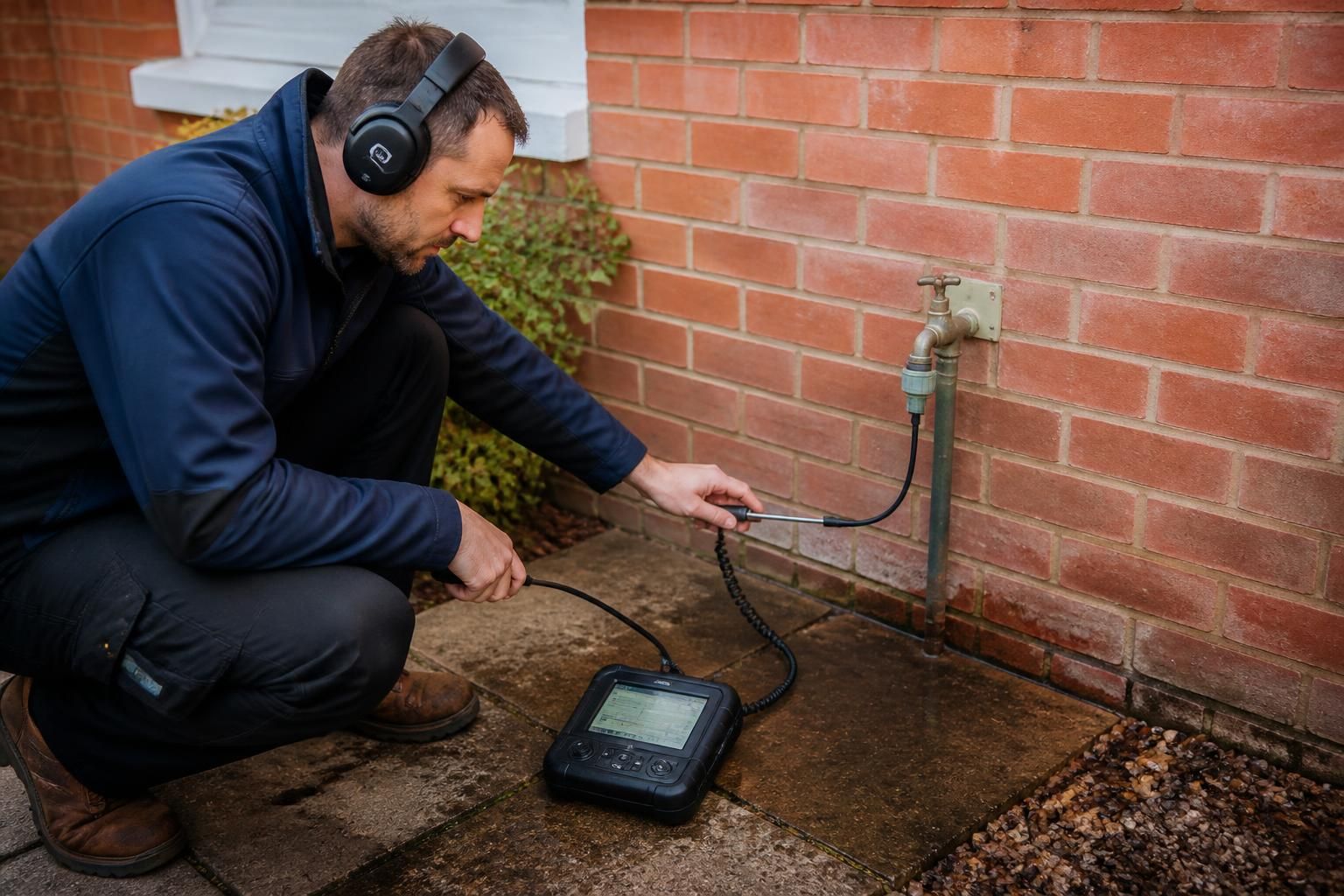
Outdoor tap leak detection does not have a single fixed price. The cost depends on whether the leak is visible at the tap, hidden within the connected pipework or underground, and how much access is needed to trace it. A professional quotation should separate the detection work from any repair, replacement or access work required afterwards.
A straightforward inspection may involve checking the tap body, spindle, washer or cartridge, threaded connections and hose fitting. If water is escaping from one of these visible points, the source can often be identified without specialist investigation. A concealed leak may require additional diagnostic work, particularly where the outdoor tap is connected to pipework beneath paving, a wall or an extension.
Several factors influence the final charge:
- Location of the leak: A leak at the tap is generally simpler to investigate than one along the supply pipe or beneath a paved area.
- Accessibility: Tight spaces, fixed structures, buried pipework and restricted access can increase the time needed for inspection.
- Equipment: Specialist acoustic or other non-invasive detection methods may be appropriate where the leak cannot be seen directly.
- Water pressure and symptoms: Damp ground, unexplained water usage, reduced pressure or water appearing some distance from the tap can make tracing more involved.
- Surface access: If the pipe route cannot be confirmed without removing paving, the quote should explain whether lifting, storing and reinstating the surface are included.
- Repair requirements: Replacing a washer, tap or section of pipe is a separate task from locating the leak and may carry its own parts and labour costs.
Before agreeing to the work, ask for a written breakdown covering the inspection or call-out charge, the methods that may be used, labour, equipment and any likely access costs. It is also sensible to confirm whether the price covers only identifying the leak or includes a basic repair where the fault is clear. If the plumber needs to carry out further investigation, you should be told before additional chargeable work begins.
The cheapest initial option is not always the lowest overall cost. An inspection that identifies only the visible symptom may leave a concealed leak unresolved, while unnecessary excavation can add avoidable expense. A suitable detection method should match the evidence available: visual checks for an exposed tap, pressure testing or other diagnostic work for connected pipework, and carefully planned access where the supply is buried.
For a rented property, the tenant should normally report the leak to the landlord or managing agent before authorising chargeable work, unless the tenancy arrangements state otherwise. Homeowners should check whether the external tap is connected to a stopcock, internal pipework or an irrigation system, as this information can help define the inspection required.
To obtain a more useful estimate, provide the plumber with photographs of the tap and surrounding ground, describe when the leak occurs, and explain whether water continues to escape when the tap is turned off. Details such as recent freezing weather, plumbing alterations or paving work may also help identify the likely source. Ideal Plumbing Services provides outdoor tap leak detection for residential customers in Birmingham and the wider West Midlands, with the final cost confirmed according to the property and the work involved.