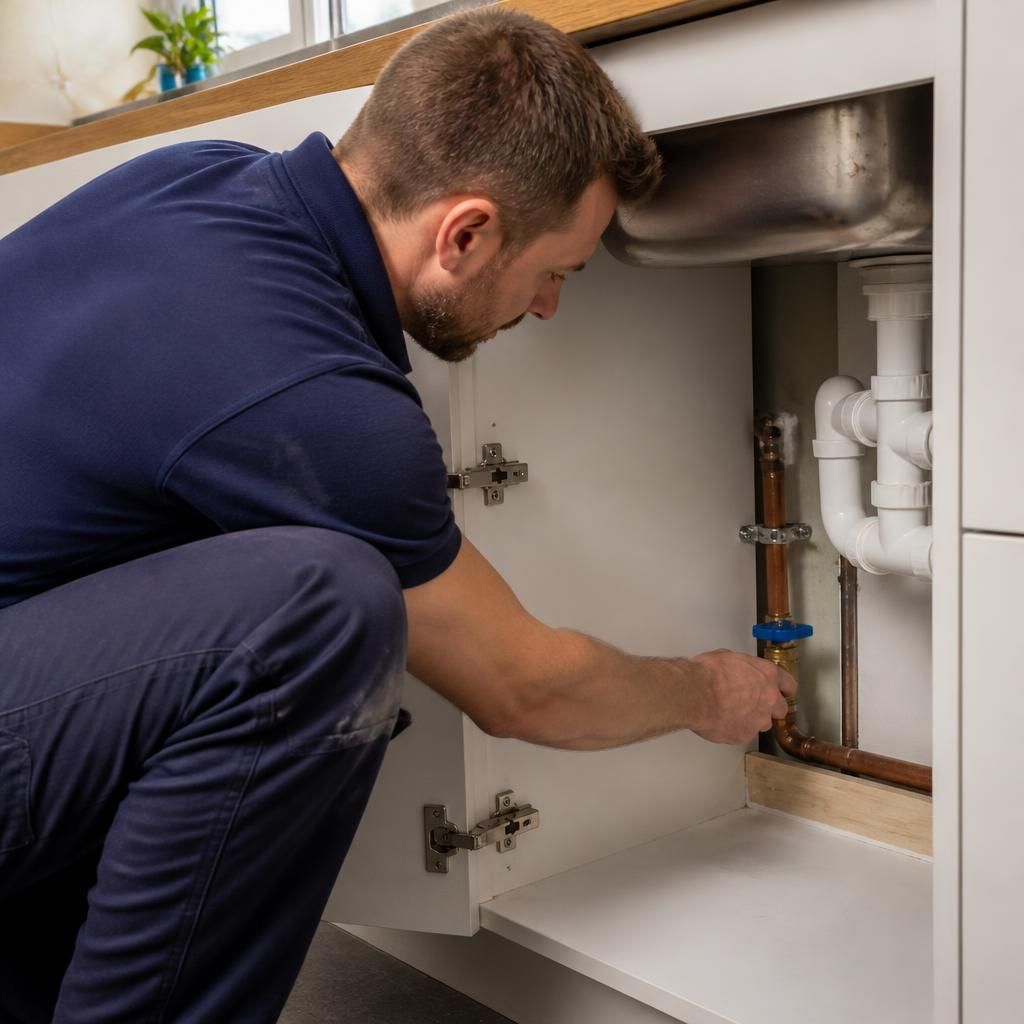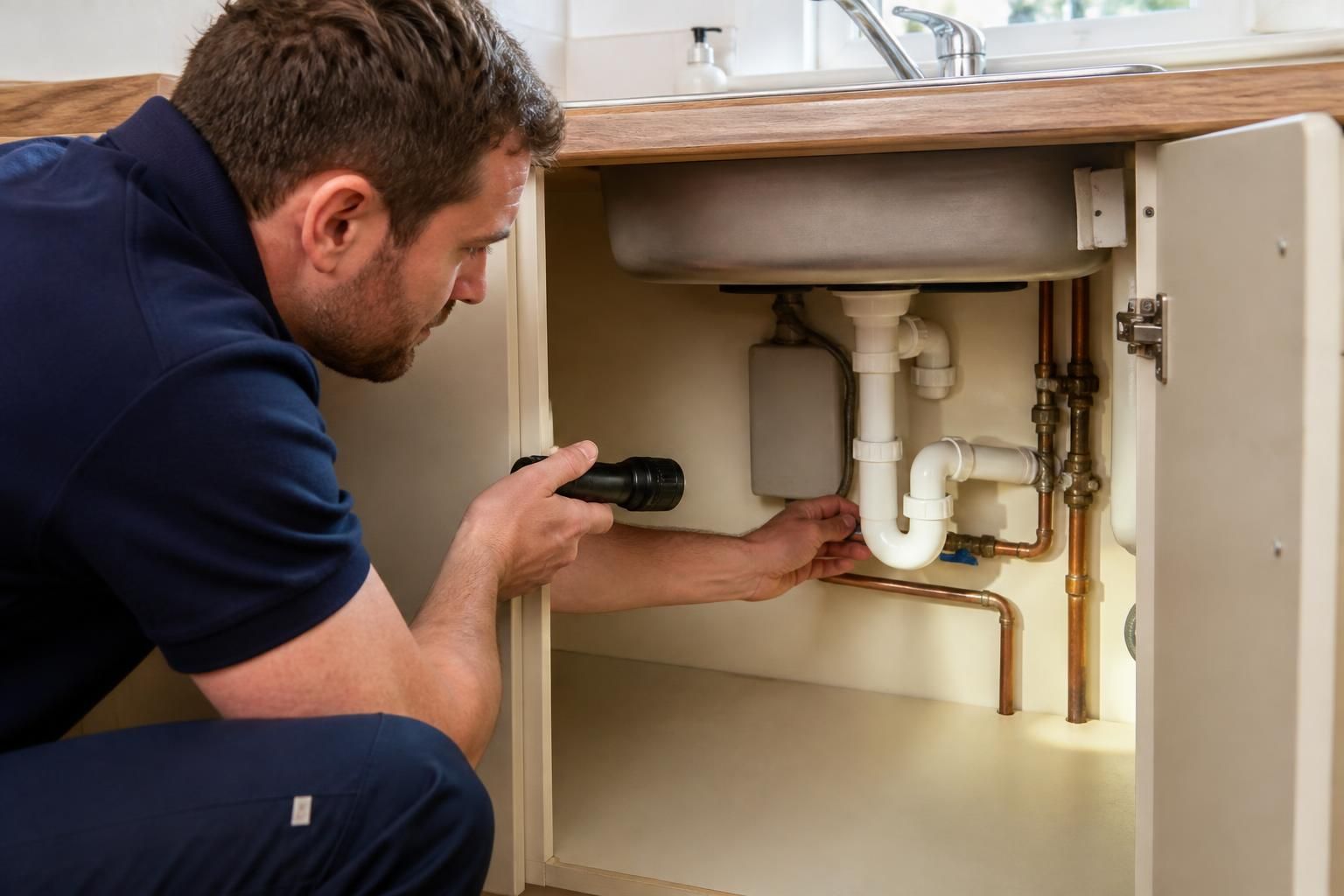
Before stop tap leak detection, prioritise safety, prevent further water damage and preserve evidence of where the water is coming from. Do not force a stiff or damaged stop tap, attempt an improvised repair or remove flooring and panels before the inspection, as this can worsen the problem or obscure the original source.
Take sensible safety precautions
- Keep children and pets away from wet areas, exposed pipework and any tools or equipment.
- If water has reached sockets, appliances, consumer units or other electrical equipment, avoid contact with the wet items. Switch off the electricity only if the supply can be isolated without standing in water or touching unsafe equipment.
- Move valuables, furniture and stored items away from the affected area where it is safe to do so. Use a container or absorbent material to catch water, but do not place anything where it could create a trip hazard.
- If the stop tap handle is broken, seized or leaking around its spindle, leave it alone rather than using pliers or excessive force. A damaged fitting may need careful assessment before the water supply can be isolated.
Preserve useful evidence
Photographs or short videos can help show the condition of the stop tap, nearby joints, flooring, cupboards or walls before they dry out or are moved. Include a wider view showing the location as well as close-ups of staining, corrosion, drips or pooled water. If the problem is intermittent, record the circumstances surrounding it, such as whether it appears after a toilet is flushed, a tap is used or an appliance runs. This is different from making a repair: the purpose is to provide an accurate record for the inspection.
Do not apply plumber’s tape, jointing compound, sealant or temporary clamps unless a qualified professional has specifically advised you to do so. Tightening a connection may stop a visible drip while leaving the underlying leak unresolved, and sealing the wrong point can make later tracing more difficult.
Prepare information about the property
- Note whether the stop tap is inside the property, in an outside boundary box or connected to a shared supply.
- Make a note of any previous plumbing work, recurring dampness, unusual sounds or changes to the water supply.
- Identify whether the affected area is near a water meter, boiler, washing machine, dishwasher, bathroom or kitchen fitting.
- Have details of any recent decorating, flooring, building or plumbing work available, as concealed pipework may have been altered.
If you rent the property, inform the landlord or managing agent before authorising intrusive investigation or remedial work. They may need to approve access, lifting finishes or changes to the plumbing. Tenants should still take reasonable steps to protect belongings and report active water damage promptly.
Arrange for the relevant rooms and access points to be available for the appointment, including any cupboard, meter area or service route connected with the stop tap. Avoid starting washing machines, dishwashers or other water-using appliances while waiting if doing so appears to trigger the leak. The plumber can then compare the reported symptoms with the condition of the installation and select an appropriate non-invasive or targeted detection method before discussing any repair.