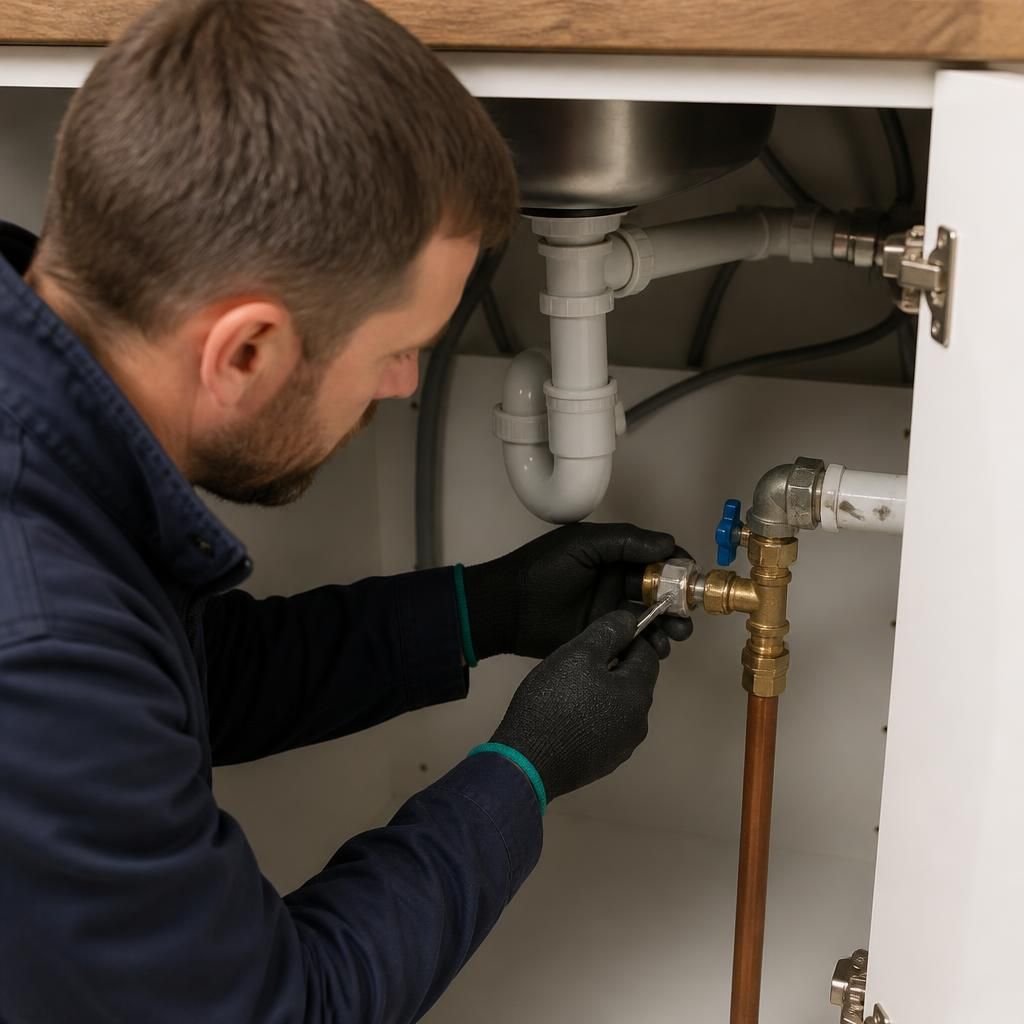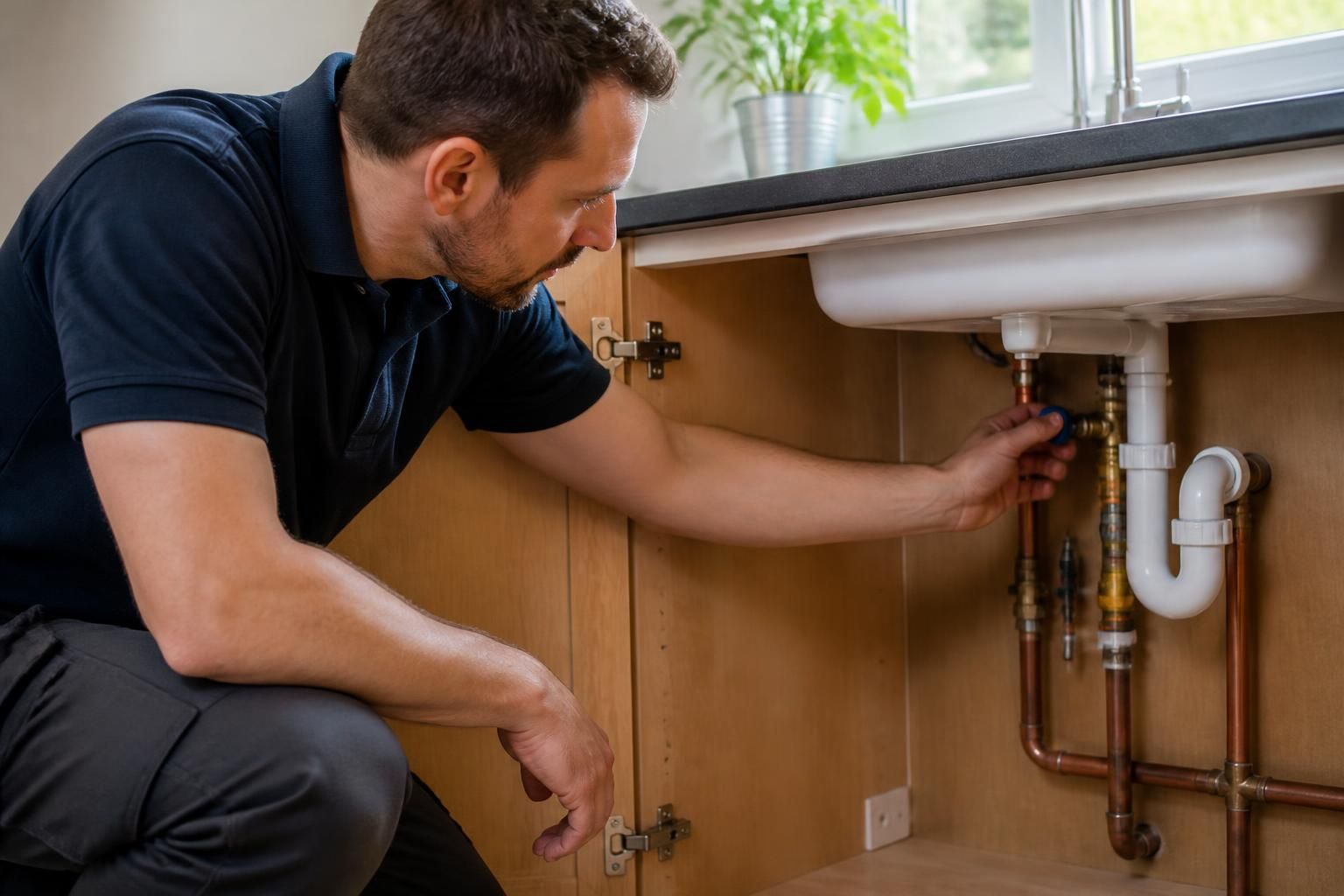
Stop tap leak detection should not significantly disrupt your plumbing because the work is focused on identifying the source of water loss rather than dismantling the system. The plumber will normally assess the stop tap, nearby pipework and relevant connections, then use suitable diagnostic checks to determine whether the leak is at the fitting, on the supply pipe or elsewhere.
The main practical effect is that normal water use may be temporarily restricted while readings or checks are carried out. This helps produce more reliable results and reduces the risk of water being used while a leak is being assessed. Taps, toilets, washing machines and other water-dependent appliances may therefore need to remain unused until the inspection is complete.
Depending on the suspected fault, detection may involve:
- Visual inspection of the stop tap, joints, valves and exposed pipework.
- Checking for dampness, staining, corrosion or other signs of water escape.
- Pressure or flow checks to identify abnormal water loss.
- Listening or other non-invasive testing where the leak may be concealed behind a surface.
These checks are intended to narrow down the location without unnecessarily opening walls, floors or units. If the evidence points to a hidden leak, some investigation of the surrounding area may eventually be needed. That does not necessarily mean extensive damage: the access required depends on the pipe layout, the construction of the property and how clearly the leak can be isolated.
Detection and repair are separate stages. Finding the leak may cause little physical disturbance, while repairing it can require more access if a damaged section of pipe, connection or stop tap needs to be removed. A plumber should explain the proposed repair, the access required and any expected effect on water use before carrying out intrusive work.
To keep disruption to a minimum, clear items from the area around the stop tap and provide access to nearby cupboards, utility spaces or inspection points. If the stop tap is stiff, damaged or difficult to operate, do not force it, as this can worsen the fault or cause damage to the fitting. Mention any previous leaks, unusual sounds, damp patches or changes in water pressure, as these details can help direct the investigation.
After the checks, the plumber should explain whether the stop tap itself is leaking, whether the problem is further along the supply pipe and whether a repair is recommended. Once any necessary work has been completed, the affected fittings and connections should be checked for signs of continuing leakage before normal use resumes.
For homeowners, landlords and tenants, the key consideration is whether the suspected leak is active or concealed. A small amount of inconvenience during testing is generally preferable to leaving an unidentified leak to affect flooring, cupboards, walls or adjoining areas. If access could affect a rented property, the occupier should also confirm who is responsible for authorising any repair beyond the initial inspection.