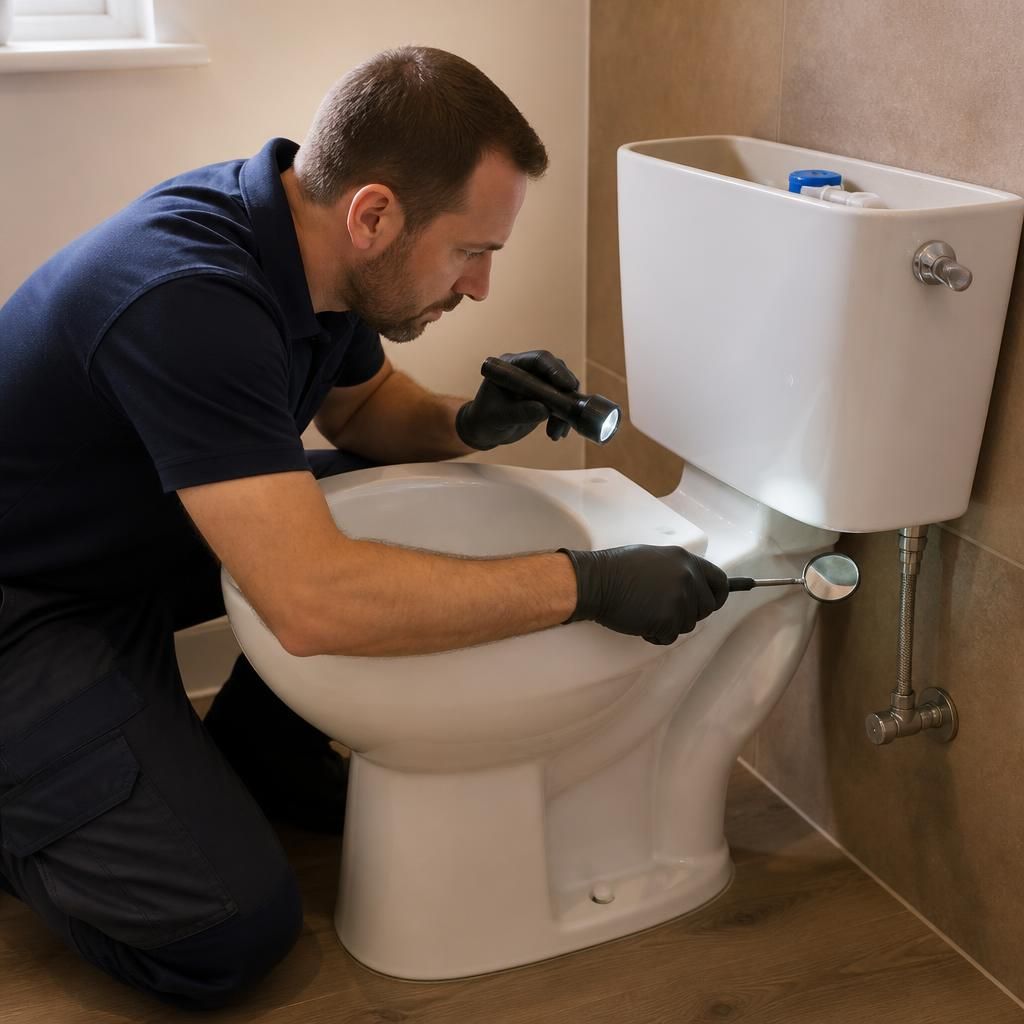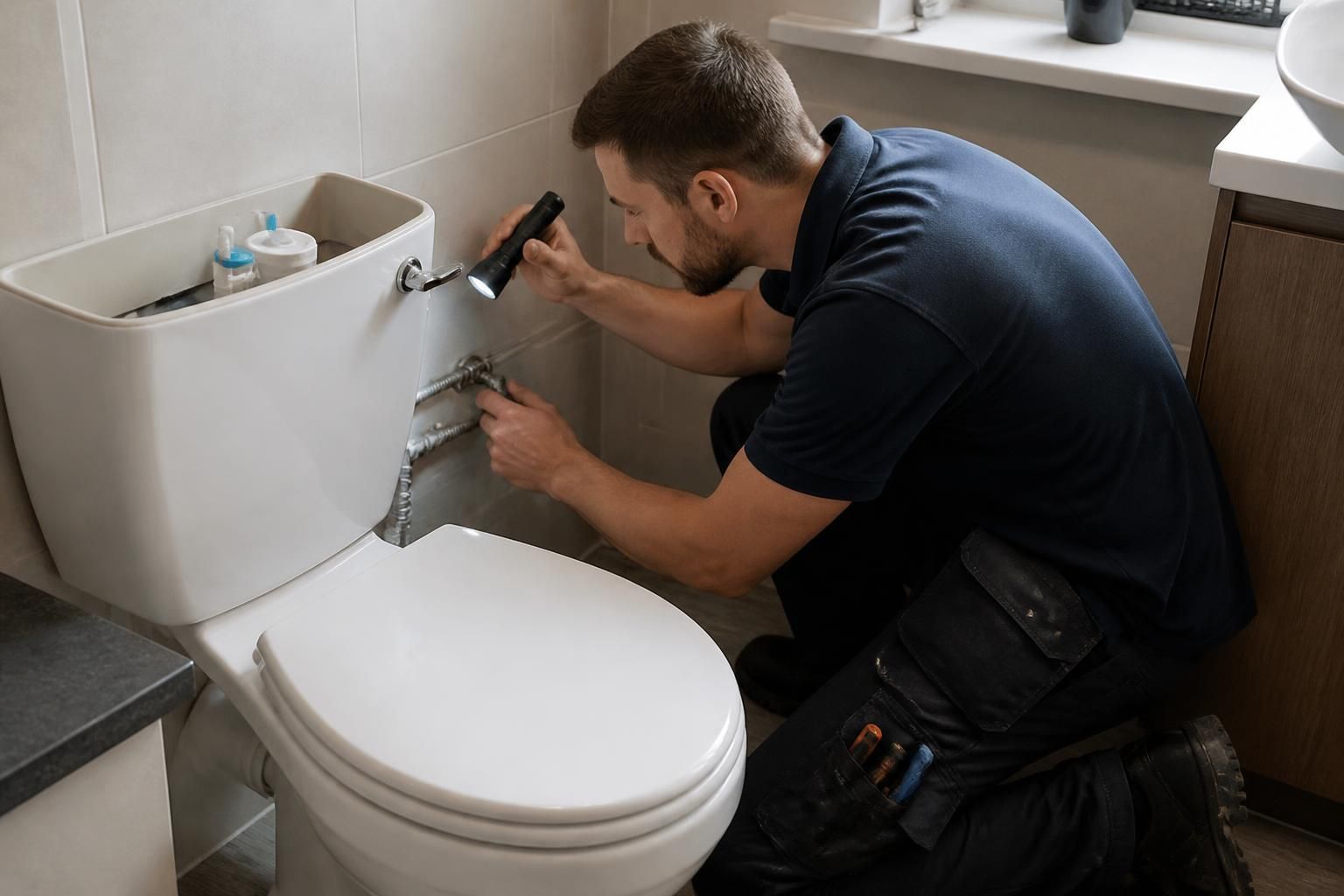
Access during toilet leak detection is managed by using the least disruptive route to the suspected source, while protecting the bathroom and confirming any work that may require closer access. The inspection normally begins with the toilet itself and then follows the visible connections, seals and pipework before considering surrounding fixtures or concealed areas.
Before starting, the plumber will usually confirm which toilet is affected, ask when the leak occurs and identify any areas that must remain accessible. The floor around the toilet should be kept clear of toiletries, mats and stored items. Children and pets should also be kept away from the work area so that the inspection can be carried out safely.
- Toilet pan and base: access is maintained around the foot of the toilet to check for water appearing after flushing, movement, damaged seals or moisture tracking across the floor.
- Cistern: the flush handle, buttons, inlet connection and underside of the cistern may need to be viewed. Any lid or cover is handled carefully and placed securely rather than left where it could be knocked or damaged.
- Supply and waste connections: space behind or beside the toilet may be required to inspect the isolation valve, flexible connector, pan connector and visible waste pipe.
- Adjacent areas: skirting, boxing, access panels or the room below may be considered where water movement suggests that the leak is travelling beyond the toilet.
If the water supply needs to be isolated to prevent further escape while checks are made, this should be explained before the valve is operated. Where a component, panel or stored item needs to be moved, the owner or occupier should be informed first. Access to a rented property should be arranged with the relevant tenant or landlord so that permission and responsibility are clear.
Concealed pipework requires particular care. A damp patch on a wall, ceiling or floor does not by itself identify the exact source, because water can travel along a surface or behind boxing before becoming visible. A sensible inspection therefore avoids opening walls, lifting flooring or dismantling fixed units unless the available evidence indicates that this is necessary. If more intrusive access is being considered, the likely location, reason and practical implications should be discussed before proceeding.
Protective measures can include using clean floor protection, keeping tools together, avoiding contact with painted or tiled surfaces and maintaining a clear route in and out of the bathroom. Electrical items should be kept away from any water, and the area should not be used normally if the floor is becoming slippery or water is reaching nearby fittings.
After the inspection, removed covers and accessible fittings should be put back only when it is safe to do so. The affected area can then be checked for remaining moisture, while any limitations—such as pipework that could not be viewed without opening a wall or floor—should be recorded. This gives the homeowner, landlord or tenant a clear understanding of what was inspected and whether further access may be needed for a repair.