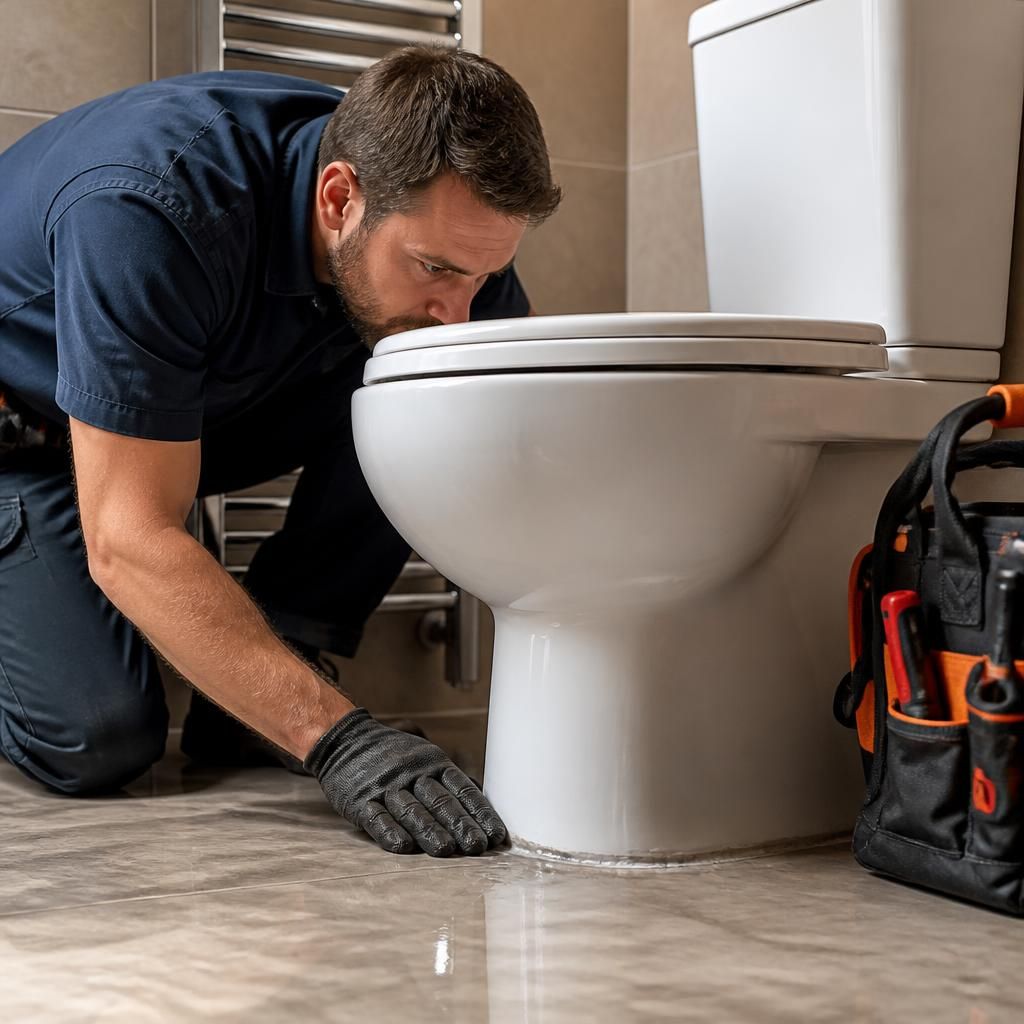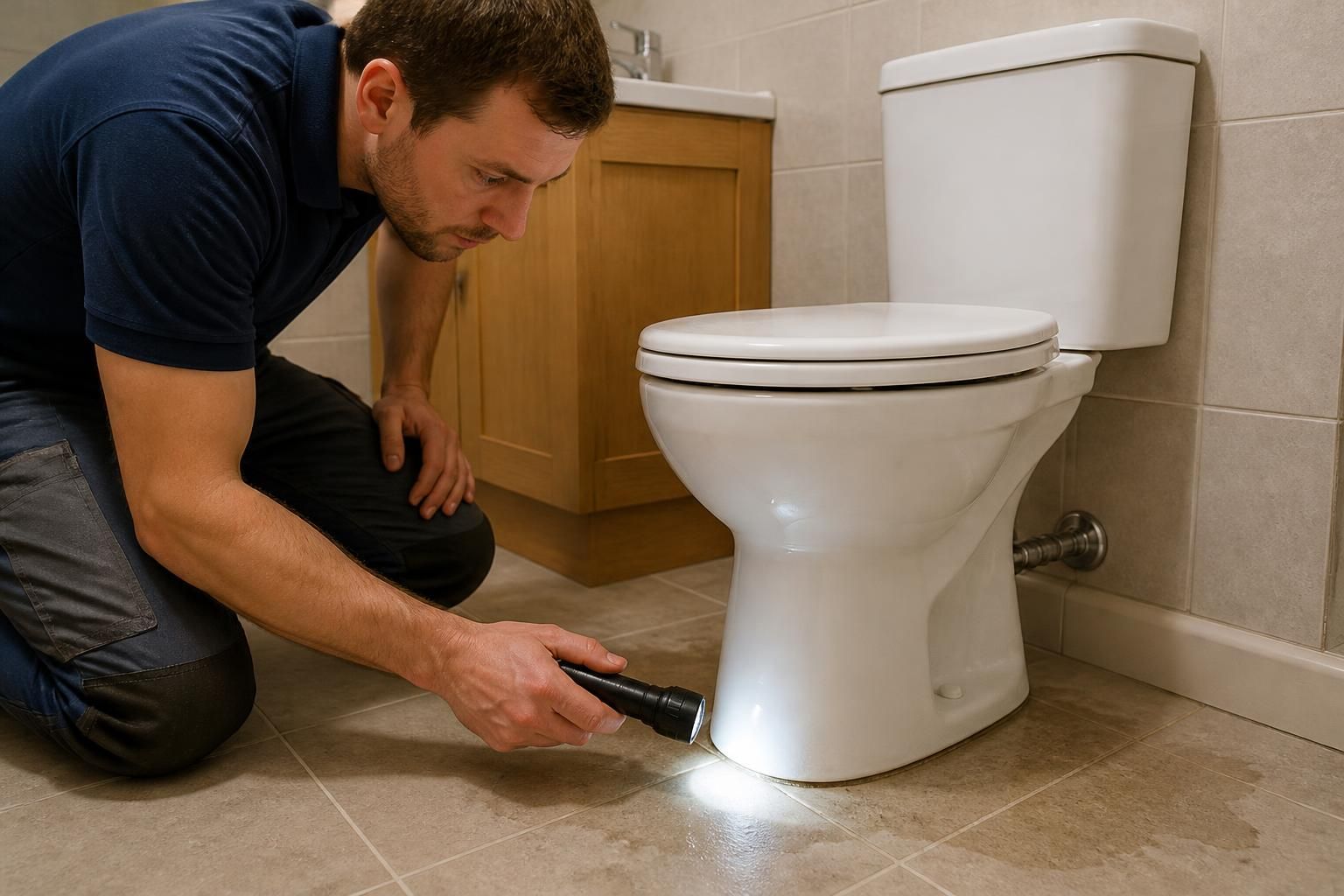
Arrange toilet leak detection when there is a reasonable possibility that water is escaping from the toilet or its connections, even if the source is not obvious. Early inspection is particularly important where the leak is intermittent, concealed beneath flooring or occurring inside the cistern, because visible damage may appear only after moisture has affected surrounding materials.
Some situations warrant more urgent attention than others:
- Active or spreading water: arrange an inspection promptly if water is reaching flooring, skirting boards, a ceiling below or nearby electrical fittings. If it is safe to do so, isolate the toilet’s water supply and avoid using it until the source has been assessed.
- Wastewater or foul odours: treat suspected waste leaks as a priority. Contaminated water can damage finishes and create hygiene concerns, particularly where it is entering porous flooring or concealed spaces.
- An intermittent problem: arrange detection even when the toilet appears dry during a quick check. A leak may occur only after flushing, while the cistern refills, or when the toilet is used repeatedly.
- A loose or recently disturbed toilet: movement can place strain on seals and connections. Inspection is sensible before the problem develops into a more substantial leak.
- Repeated minor repairs: if adjustments or replacement parts have not resolved the problem, detection can establish whether the apparent fault is actually coming from another component.
It is also sensible to arrange detection before repairing cosmetic damage. Replacing flooring, sealing around the toilet or repainting a stained ceiling without confirming the source can conceal an ongoing leak. The underlying moisture should be investigated first, then the necessary plumbing repair and any drying or building work can be considered separately.
A professional inspection can be useful where the toilet has recently been installed, altered or moved, especially if dampness began afterwards. It can also help when a property is being prepared for sale or letting and there is concern about previous water damage. Landlords should arrange an assessment when a tenant reports unexplained dampness, while tenants should report the issue promptly and avoid dismantling the toilet themselves.
Do not rely on the absence of a visible puddle as proof that there is no leak. Water can travel beneath flooring, into the toilet surround or through a ceiling before the original source becomes clear. A qualified plumber will normally check the toilet’s base, cistern, flush components, supply connection and waste pipe, then use the findings to identify whether the issue needs a seal, valve, connection or other repair.
For minor suspected leaks, detection should still be arranged before the condition worsens. For active water escape, wastewater contamination, damage to adjoining areas or a toilet that cannot be used safely, contact a plumbing professional without delay. Ideal Plumbing Services provides toilet leak detection and related repairs for homes across Birmingham and the wider West Midlands.