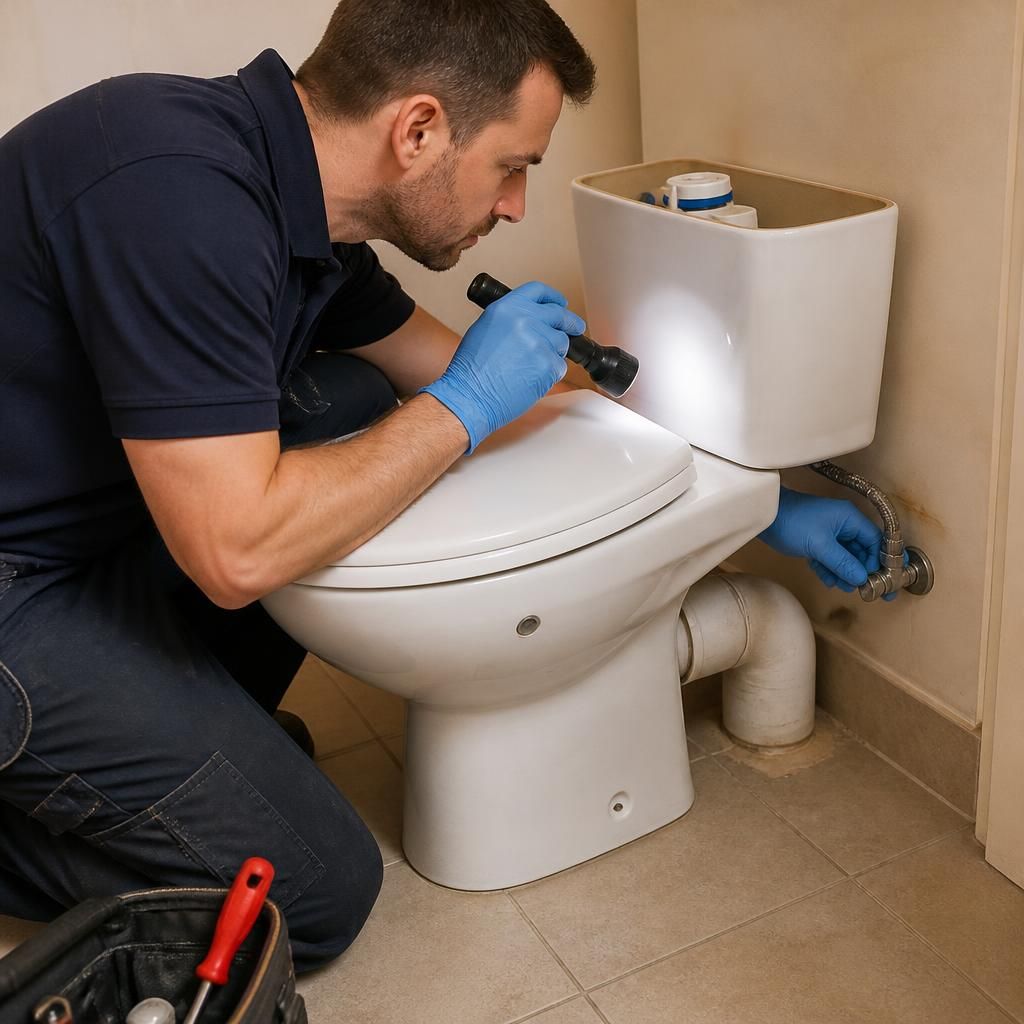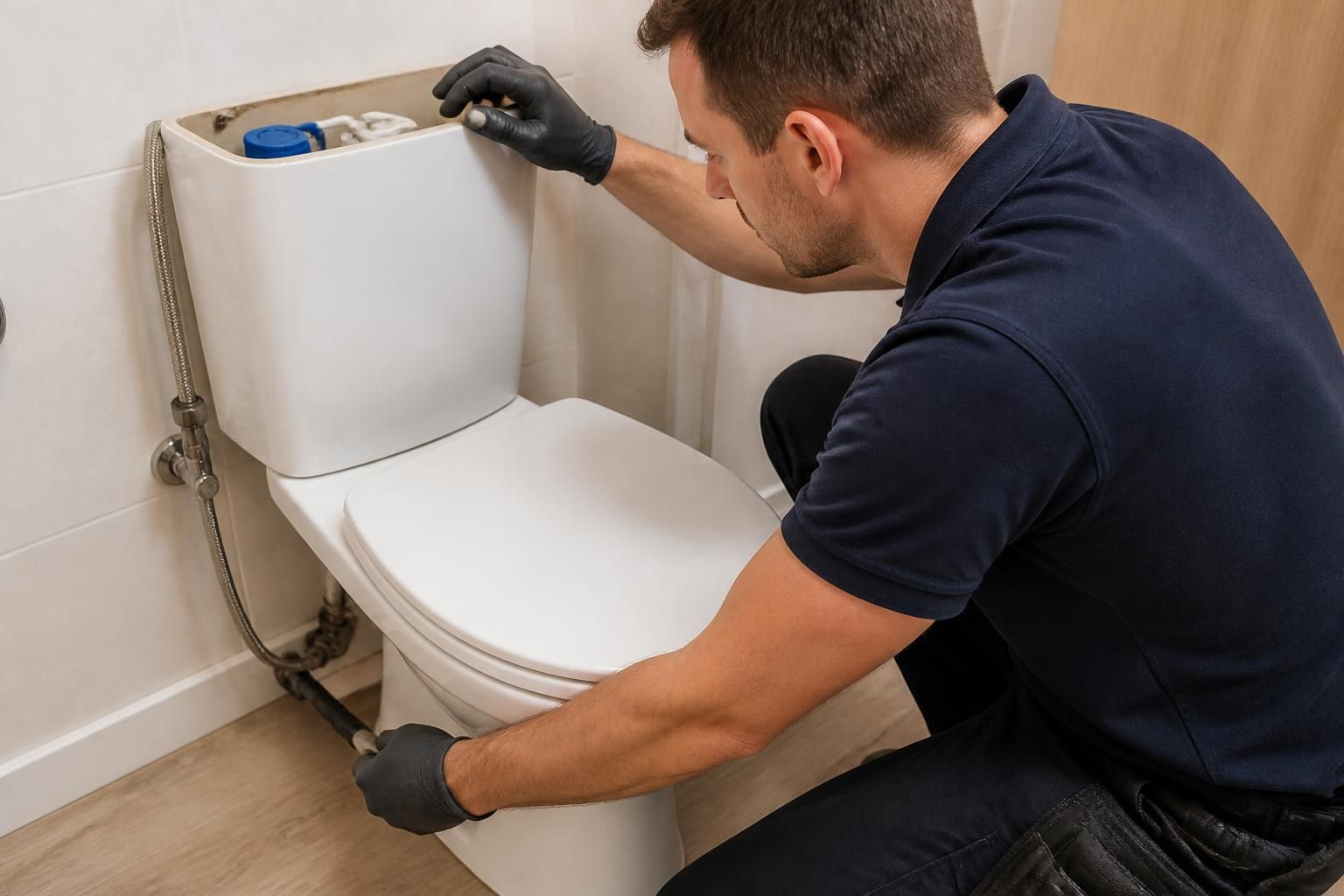
A professional toilet leak detection inspection is a staged process used to identify where water is escaping, distinguish the source from any secondary damage and determine what repair is required. The plumber normally starts by discussing the symptoms, then carries out controlled checks and records the findings before explaining the recommended solution.
1. Initial assessment
The inspection begins with questions about when the leak was noticed, whether it occurs during flushing or while the toilet is unused, and whether the water appears clean or contaminated. Information about recent repairs, unusual smells, changes in flushing performance or dampness in an adjoining room can help narrow down the likely source.
The plumber will also establish whether the problem is continuous or intermittent. A cistern that slowly refills, for example, points towards a different fault from water appearing around the toilet only when it is flushed. Understanding the pattern helps ensure that the investigation tests the relevant components rather than relying on a superficial visual assessment.
2. Preparing the toilet and surrounding area
Where appropriate, the water supply to the toilet may be isolated before components are examined. This controls the flow while connections, valves and seals are assessed. Accessible surfaces may be dried so that new moisture can be distinguished from water that has already spread beneath the toilet or along nearby flooring.
The inspection may include the floor around the pan, skirting boards, flooring joints, the wall behind the toilet and the ceiling below where there is a room underneath. These areas can show the direction in which water has travelled, but dampness alone does not necessarily identify the original point of escape.
3. Controlled testing
Different tests may be used according to the reported symptoms and the toilet's installation. A plumber may:
- operate the flush and observe the pan, cistern, flush connection and external joints;
- check whether water continues entering the pan after the cistern should have finished filling;
- examine the isolation valve, flexible connector and other supply-side joints for seepage;
- test the waste connection for signs that water is escaping only during discharge;
- use a moisture meter or another suitable non-invasive method to assess dampness in surrounding materials; and
- carry out a dye or other targeted test where this can help confirm the route of water movement.
Not every test is needed for every installation. The choice depends on whether the suspected fault is in the cistern, at the toilet base, within the supply pipework or around the waste connection. Testing is normally repeated after the area has been dried or the suspected component has been isolated, because a single observation can be misleading when water has pooled or travelled underneath a surface.
4. Separating the source from secondary damage
Water can move along flooring, pipework or concealed building materials before becoming visible. As a result, the dampest area is not always directly above the leak. A professional assessment considers the pattern of moisture, the timing of the water loss and the result of controlled flushing or filling tests together.
This distinction is important where a ceiling below is stained or a floor has become swollen. Those signs may indicate the effect of a leak, but further testing is needed to establish whether the toilet itself, a connection or another nearby pipe is responsible. If the visible evidence is inconclusive, the plumber should explain what has been established and what remains uncertain rather than treating an assumption as a confirmed diagnosis.
5. Assessing access and possible disruption
Many toilet leaks can be investigated from exposed fittings and accessible surfaces. If the suspected source is concealed behind boxing, beneath flooring or within a wall, the plumber will assess whether additional access is necessary. The least disruptive practical approach should be considered first, while recognising that a concealed leak may not be conclusively confirmed without reaching the affected pipe or connection.
Before any opening-up work, the likely location, purpose and implications should be explained. Detection and repair are separate stages: locating the leak does not automatically authorise removal of tiles, flooring or boxing. Where further access is required, the homeowner, landlord or tenant can then make an informed decision about the next step.
6. Explaining the findings
At the end of the inspection, the plumber should identify the confirmed or most likely source, explain the evidence supporting that conclusion and distinguish it from any damage caused by the escaping water. The findings may indicate a straightforward component replacement, resealing, adjustment, repair to a supply or waste connection, or further investigation where the source remains concealed.
A clear explanation should also cover whether the toilet can continue to be used safely, whether its water supply should remain isolated and whether surrounding materials need separate drying or inspection. If more than one fault is present, each issue should be described separately so that the required work is not confused with unrelated maintenance.
7. What to have available before the inspection
- Note when the leak occurs, particularly whether it follows flushing, refilling or periods of non-use.
- Identify any rooms, ceilings or cupboards where dampness or staining has appeared.
- Keep the area around the toilet reasonably clear so the fittings and adjacent surfaces can be examined.
- Tell the plumber about previous work, recurring blockages or changes in the toilet's performance.
- If possible, avoid covering fresh signs of water with sealant before the inspection, as this may obscure the original route.
The inspection is complete when there is enough evidence to explain the likely point of escape and set out the appropriate next action. If the source cannot be confirmed without intrusive access, that limitation should be stated clearly, along with the options for progressing the investigation.