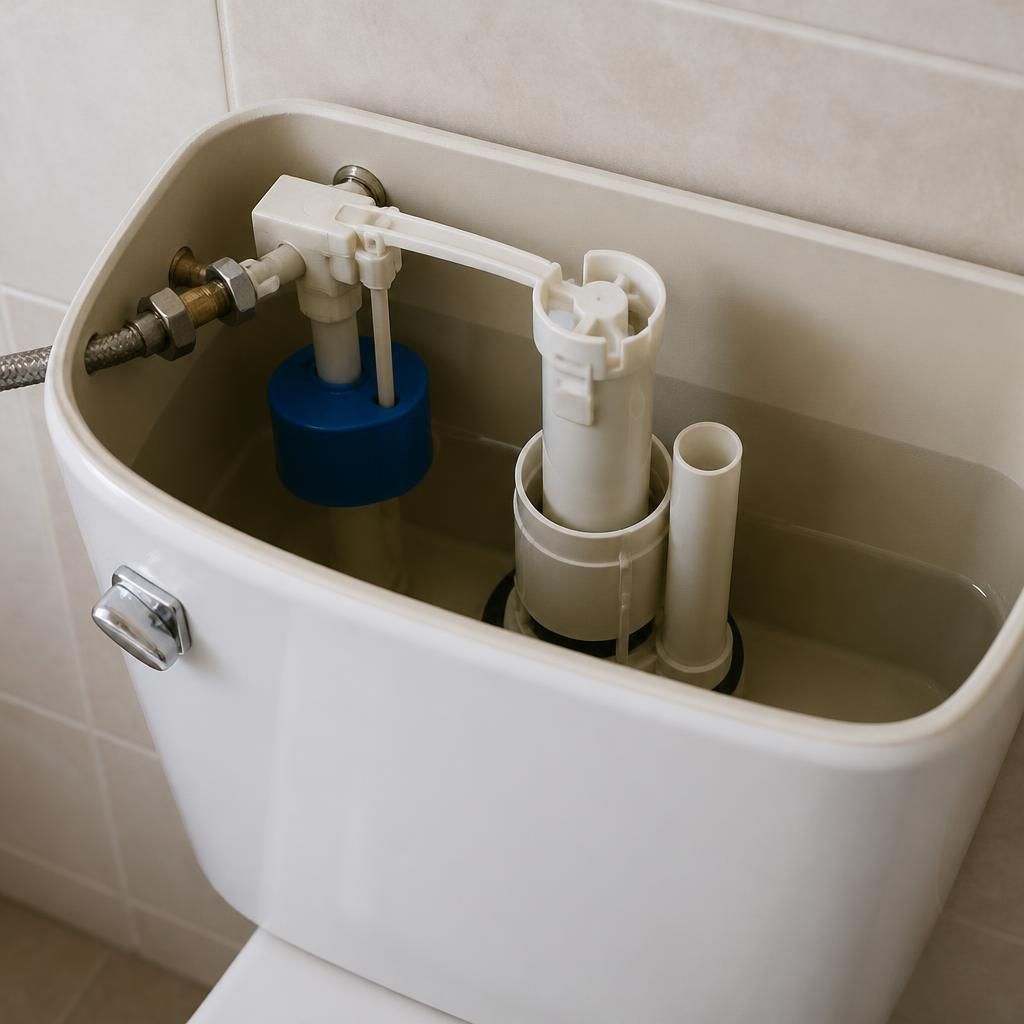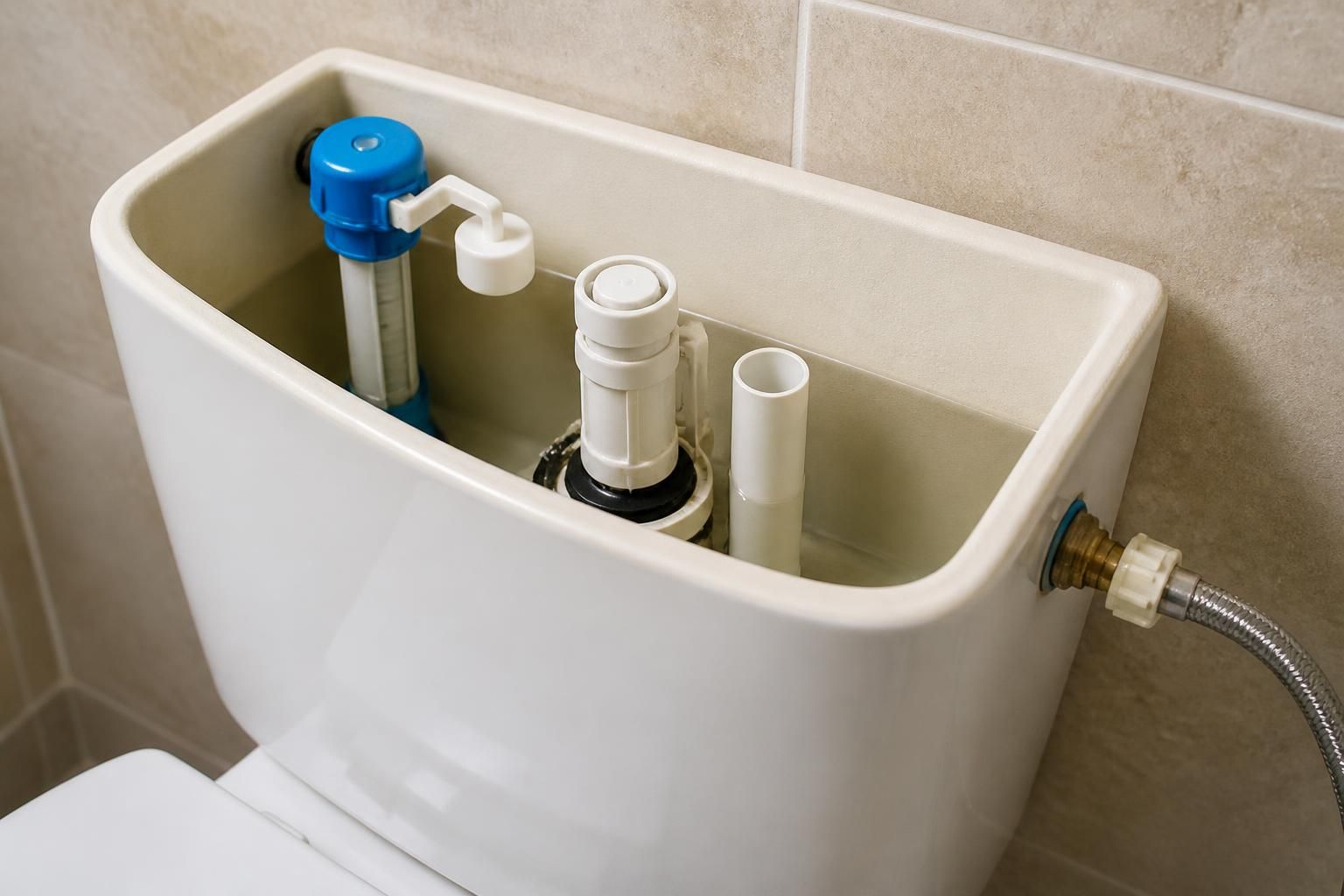
A toilet cistern usually leaks because water is either escaping from an internal seal or joint, rising above its intended level, or passing through a damaged cistern body. The source is not always where the water appears: it may travel along the underside of the cistern before dripping onto the floor, or flow silently into the pan without producing an obvious external puddle.
Common causes include:
- An incorrectly adjusted float or water-level control: If the water level is set too high, water can enter the overflow route and run continuously into the toilet pan. This may happen after maintenance, movement of the mechanism or gradual adjustment of the float.
- A worn overflow assembly: The overflow tube or its connection can deteriorate, become displaced or fail to direct excess water correctly. In some cisterns, the overflow is built into another component, making the fault less visible.
- A failed cistern-to-pan seal: Where the cistern is mounted directly above the pan, a seal between the two sections prevents water escaping during flushing. Deterioration, incorrect positioning or movement between the components can cause water to appear at the rear of the pan.
- Damaged mounting hardware: Cistern bolts, brackets or fixing points can corrode or loosen. Movement when the toilet is used can then place stress on the surrounding seals and create an intermittent leak.
- A split or distorted plastic component: Older plastic cisterns can become brittle, while excessive tightening during installation can distort a connection. Small splits may only release water when the cistern is filling or when the flush is operated.
- Condensation on the outside: Cold mains water can make the external surface of a cistern wet, particularly in a warm or poorly ventilated bathroom. Condensation tends to form broadly across the surface, whereas a plumbing leak usually leaves a concentrated trail from one joint or fitting.
To identify the source, dry the outside of the cistern and surrounding floor thoroughly. Observe what happens while the cistern fills, once it is full and during a flush. A leak that starts during filling often points towards the inlet connection or water-level control. Water appearing only during flushing is more suggestive of a seal, outlet or cistern-to-pan connection. A steady trickle into the pan with no visible external water indicates an internal fault or an overflow problem.
Look underneath the cistern with a torch, but do not put force on fittings or cistern fixings. Check whether moisture begins at the base, around a connection or beneath the cistern itself. Food colouring added to the cistern water can help confirm that water is passing into the pan, although it will not identify every internal fault and should not be used as a substitute for inspection.
If water is reaching the floor, close the toilet's isolation valve if it can be operated safely, then avoid using the toilet until the source is understood. Do not overtighten plastic nuts or bolts in an attempt to stop the leak. This can distort seals or crack the cistern, turning a minor fault into a replacement requirement. Dry nearby flooring and check for swelling, staining or damage to flooring and fittings.
The appropriate repair depends on the failed part. It may involve readjusting the water level, replacing an internal mechanism, renewing a seal, securing the cistern correctly or replacing a damaged section. A cracked ceramic or plastic cistern generally requires replacement rather than a lasting patch. Hidden or enclosed cisterns can require controlled access before the cause can be confirmed.
Professional toilet leak detection is useful when the visible water does not match the apparent source, when the leak is intermittent, or when access to the cistern connections is restricted. Ideal Plumbing Services can assess the leak and explain whether a component repair, resealing or cistern replacement is the more suitable option for the installation.