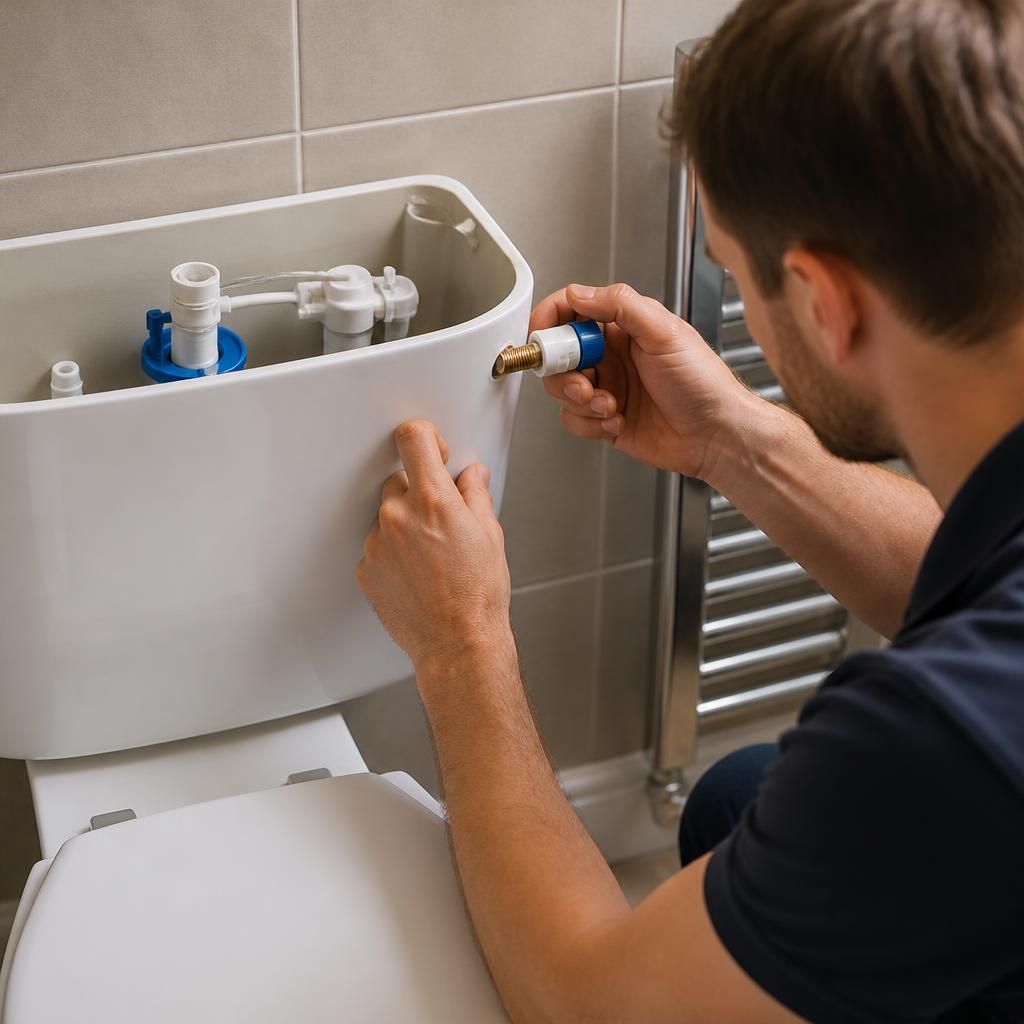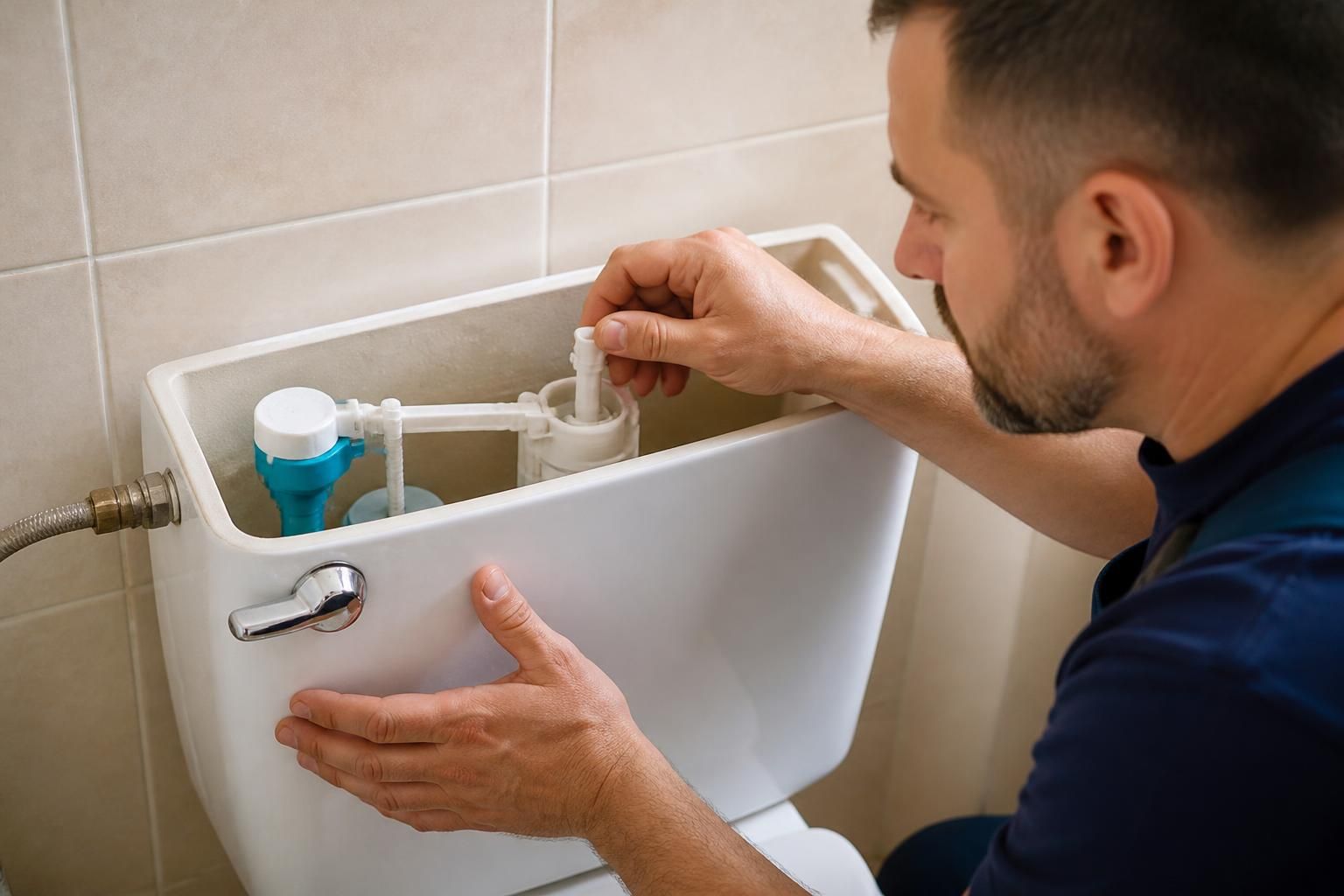
Repairing a leaking toilet cistern usually means identifying the failed component and renewing it, rather than removing the entire tank. The appropriate repair depends on where the water is escaping, whether the cistern is close-coupled or concealed, and the condition of the surrounding fittings.
Common repairable faults include:
- Inlet valve problems: a worn diaphragm or faulty float mechanism can allow water to continue entering the cistern, causing it to run into the bowl or overflow.
- Flush valve faults: a damaged seal can let water pass into the pan after flushing. Replacing the seal or the flush valve assembly may resolve the leak.
- Washer and seal deterioration: seals around the flush pipe, inlet connection, handle or cistern bolts can harden, split or lose their watertight fit.
- Loose or damaged connections: tightening a suitable connection or replacing a connector can stop water escaping around the pipework.
- Overflow issues: an incorrectly adjusted float or defective inlet valve may raise the water level until it reaches the overflow outlet.
A plumber will normally isolate the water supply, remove the cistern lid where accessible and inspect both the internal mechanism and external connections. The cistern is then tested to establish whether the leak occurs while it is filling, during flushing or when it is standing full. This distinction matters because a running cistern often indicates an internal valve or seal fault, while water appearing on the floor may point to a connection, bolt seal, flush pipe or crack.
For a minor component fault, the repair may involve draining the cistern, removing the defective part, cleaning the contact surfaces and fitting a compatible replacement. The cistern is refilled and flushed several times to check that the valve shuts correctly, the flush operates properly and no water remains around the joints. Simply tightening a fitting is not always suitable: overtightening plastic or ceramic connections can cause further damage.
Replacing the whole cistern becomes more likely when the ceramic or plastic tank is cracked, distorted, badly stained around a failed seal, or no longer provides a sound fixing for its fittings. Replacement may also be considered if several internal parts have deteriorated and the existing model is obsolete, making individual components difficult to match. A visible hairline crack should not be sealed as a permanent solution, particularly if the tank is under water pressure.
Before attempting a repair, turn off the cistern's isolation valve if one is fitted and avoid repeatedly flushing it. Place towels around the base to protect flooring, but do not dismantle fittings while the tank is full. If the isolation valve does not work, the leak is reaching the floor or ceiling below, or the source cannot be identified, a qualified Birmingham plumber can inspect the cistern and establish whether a component repair or replacement is the more suitable option.