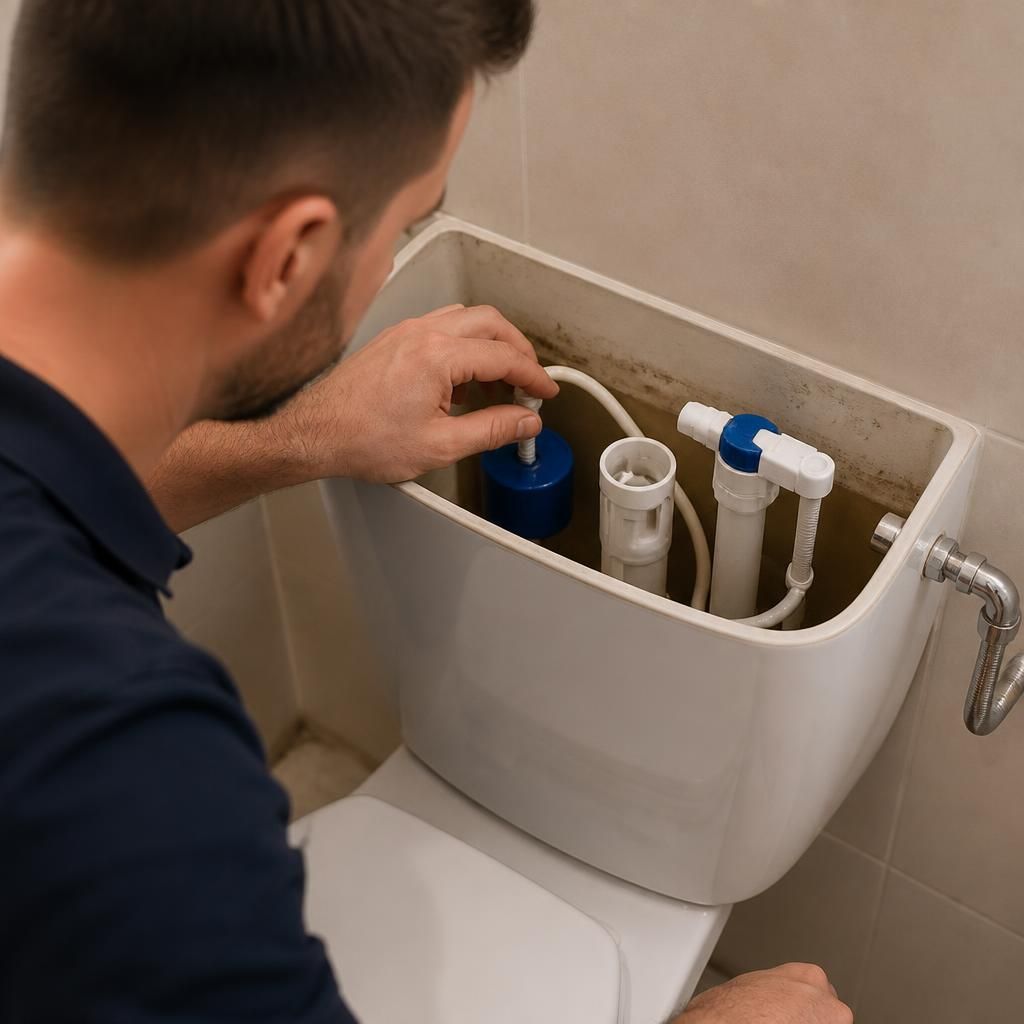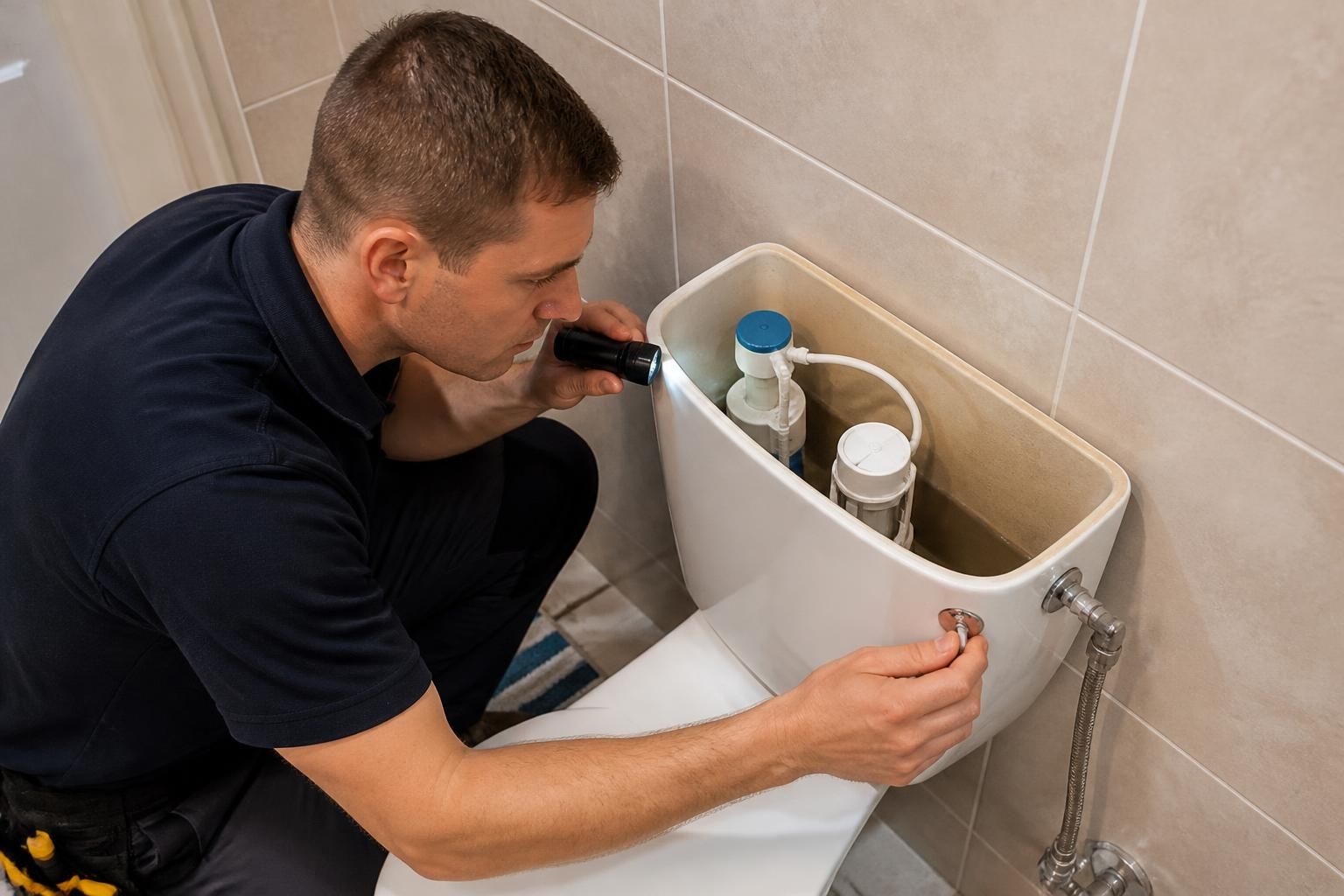
Toilet cistern leak detection costs vary according to the type of fault, how easy the cistern is to inspect and whether the leak can be repaired during the same visit. A straightforward internal leak may need only a short inspection and a replacement component, while a concealed, intermittent or difficult-to-access leak can require more investigation. The most accurate price comes after the source has been identified and the required work has been assessed.
What the detection cost may include
- Visual inspection of the cistern, pipework, isolation valve and surrounding fittings
- Checks for water escaping into the toilet pan, which can be difficult to spot because there may be no visible puddle
- Testing of components such as the inlet valve, flush valve, overflow and seals
- Inspection for external leaks around the cistern, connections and supply pipe
- Further investigation where the source is hidden behind a panel, within a boxed-in area or beneath nearby flooring
In some cases, detection is relatively simple because the fault is visible or the cistern is continuously refilling. A silent leak into the pan may require more careful testing, particularly if it happens intermittently. The condition of the fittings and the age of the toilet can also affect how long the assessment takes.
Detection and repair are often linked. Common repairs include replacing a worn inlet valve, flush valve, washer, seal or overflow component. If the defective part is accessible and suitable for replacement, the total cost may consist of the inspection, labour and the required part. A repair may cost more when several components have deteriorated or when access is restricted.
A complete cistern replacement is not automatically necessary. Many leaks can be resolved by replacing an individual mechanism or seal. Replacement of the whole tank may be considered where the cistern is cracked, severely damaged, incompatible with available parts or difficult to repair reliably. This should be explained before any additional work is carried out.
When comparing toilet cistern leak detection costs, check whether the price covers inspection only or includes the labour and parts for an agreed repair. It is also sensible to ask whether any further investigation, removal of panels or replacement work would be priced separately. A clear written explanation helps distinguish the cost of finding the fault from the cost of correcting it.
Leaving a cistern leak unresolved can waste water and may allow moisture to affect nearby flooring, skirting or fittings. Signs that warrant an inspection include a toilet that runs after flushing, a constant hissing sound, water appearing around the base or supply connection, dampness near the cistern, or unexplained water use. Identifying the cause early can make it easier to choose between a minor component repair and more extensive work.
For homeowners, landlords and tenants in Birmingham and the wider West Midlands, Ideal Plumbing Services can assess the leak, explain the repair options and provide a clear price before agreed work begins, with no hidden charges.