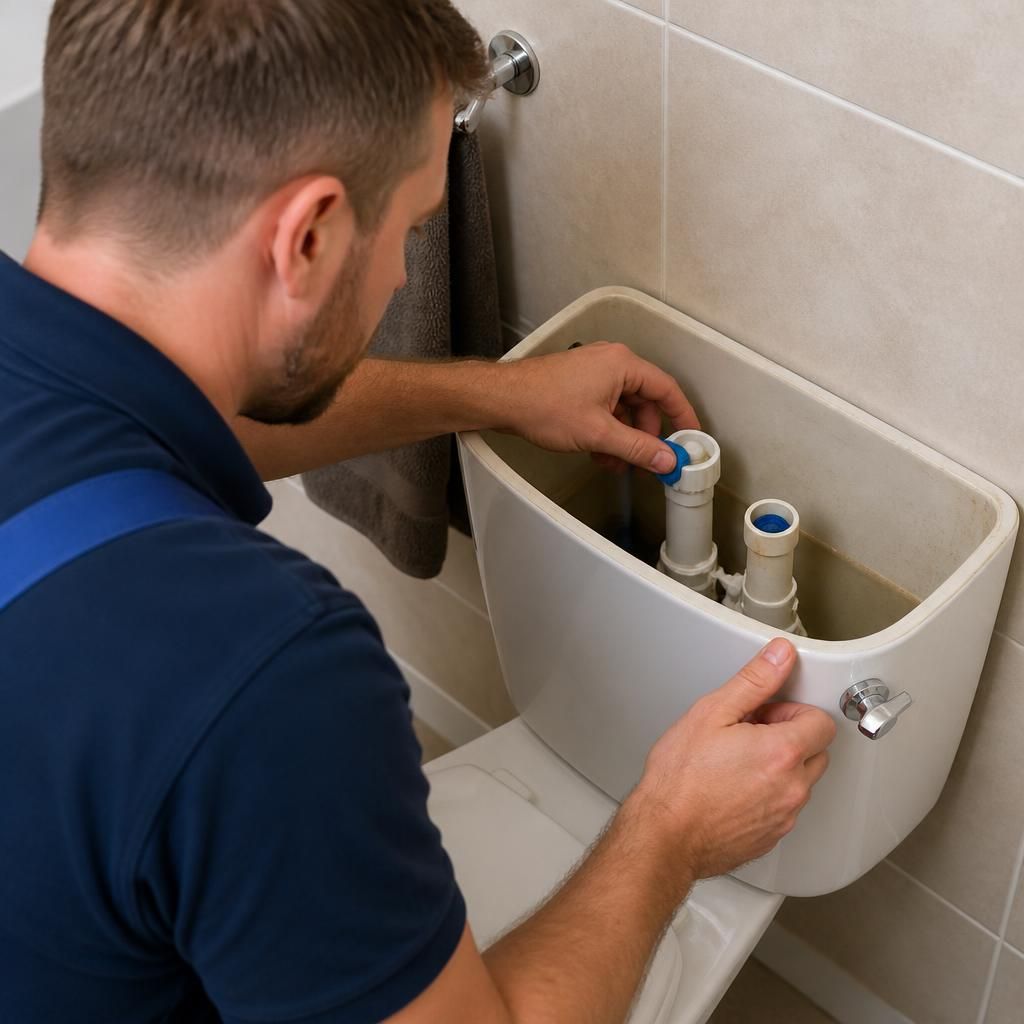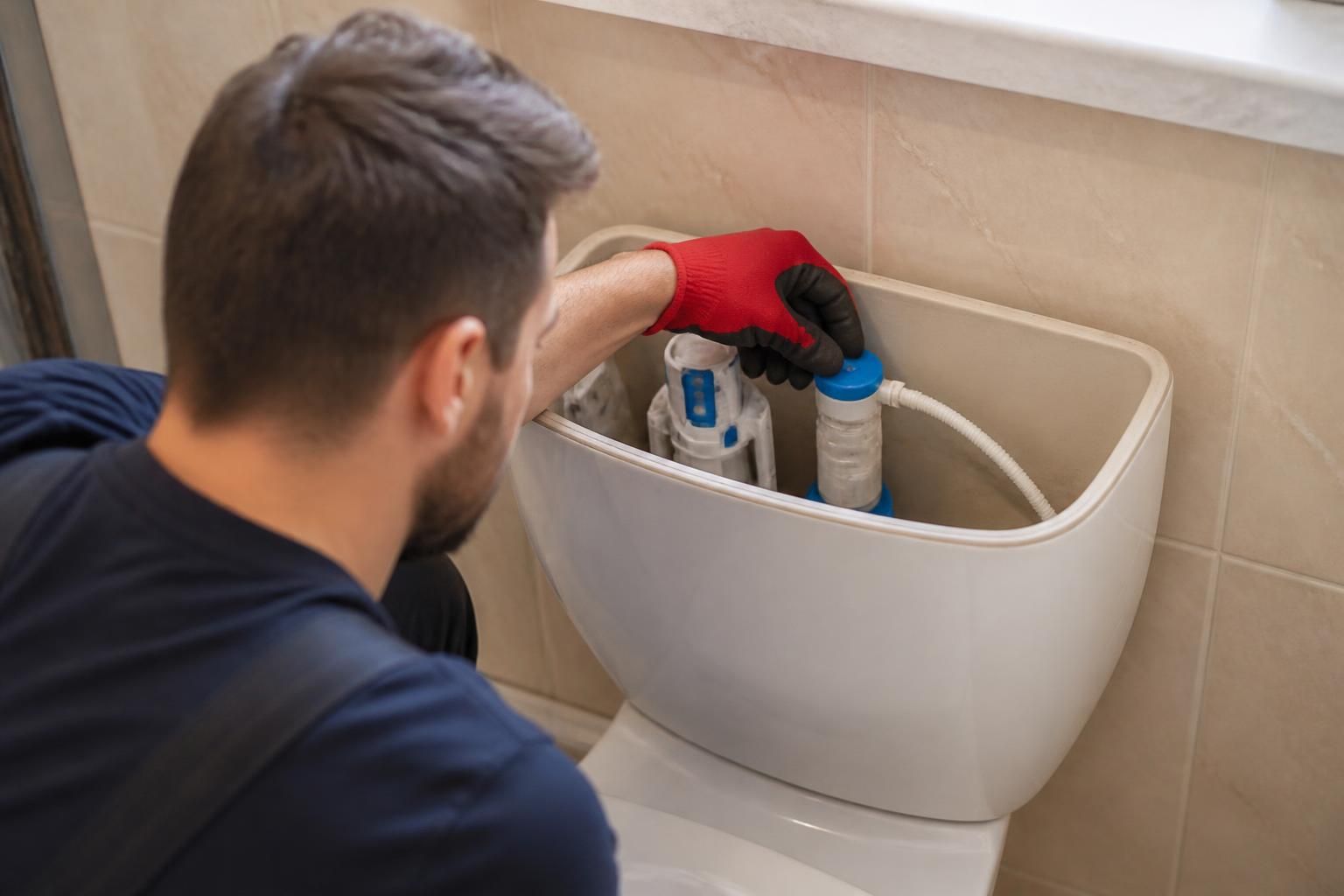
A toilet cistern leaks when water escapes from the tank, overflow system, flush mechanism or surrounding fittings instead of remaining contained. Some leaks are external and leave water on the floor, while others run silently into the toilet pan or discharge through the overflow. The underlying cause may be incorrect water-level adjustment, a sticking operating mechanism, movement in the cistern or condensation rather than a failed tank itself.
Incorrect water level or overflow discharge
The float may be set too high, allowing the water level to rise above the recommended mark. Water then enters the overflow route and may run continuously into the pan or escape through an overflow outlet. A float can also become obstructed by the cistern wall, the flush mechanism or internal fittings, preventing it from reaching its shut-off position. This type of fault is often mistaken for a conventional leak because the toilet may appear to flush normally.
A sticking flush button, handle or cable
On push-button cisterns, the button mechanism can remain partially pressed or a cable can become restricted. Lever-operated toilets may have a handle that does not return fully. In either case, the flush mechanism may not close completely after use, producing a persistent trickle into the pan. The issue may be caused by misalignment, debris or a poorly adjusted operating rod rather than a problem with the cistern itself.
Movement or stress around the cistern
A cistern that has been fitted unevenly can place strain on its mounting points and connected components. Excessive tightening during installation can also put stress on ceramic or plastic parts. Repeated movement when the toilet is used, cleaning equipment is knocked against the tank, or the cistern is supported incorrectly can gradually create a route for water to escape. A hairline fracture may be difficult to see until the cistern is full, so the leak can appear intermittent.
Condensation mistaken for a leak
Cold water entering the cistern can cause moisture to form on the outside surface, particularly in a warm, humid bathroom. This condensation may run down the tank and collect around the base, giving the impression that the cistern is leaking. Condensation usually appears as an even film or droplets across the outer surface, whereas an actual leak tends to create a persistent trail from one particular point. Drying the cistern thoroughly and checking it again after filling can help distinguish the two.
Problems caused by installation or previous repairs
A cistern may leak after a repair if a component has been positioned incorrectly, an old fitting has been reused, or parts that should move freely have been assembled under tension. Incompatible replacement parts can also prevent the flush or filling mechanism from seating correctly. This is more likely where a toilet has had several repairs or where access is restricted and fittings have been adjusted without removing the cistern.
How the source is identified
A proper inspection normally starts by drying the outside of the cistern and checking whether water reappears while the toilet is unused. The water level, overflow route, operating mechanism, mounting points and floor around the toilet can then be examined separately. A small amount of food colouring in the cistern can help reveal water passing into the pan, although it will not identify every external leak. The inspection should also consider whether water is coming from the supply pipe, the base of the toilet or condensation rather than from the tank.
Until the cause is clear, avoid repeatedly tightening fittings or applying sealant around the outside. These measures can conceal the source, place further stress on the ceramic and make a later repair more difficult. If water is reaching the floor, isolate the toilet's supply where possible, dry the area and arrange a plumbing inspection. Ideal Plumbing Services can assess the cistern, identify the actual escape route and advise whether adjustment, a component repair or replacement of the cistern is appropriate.