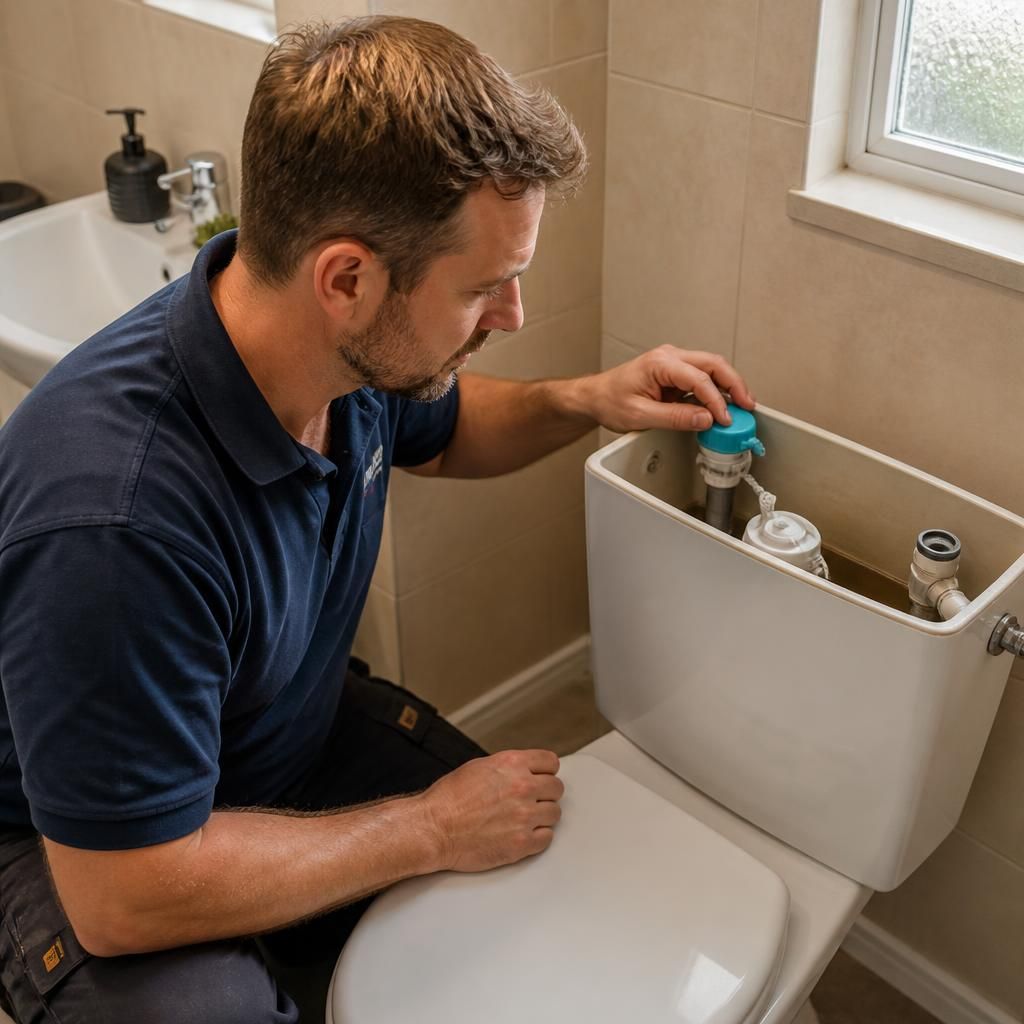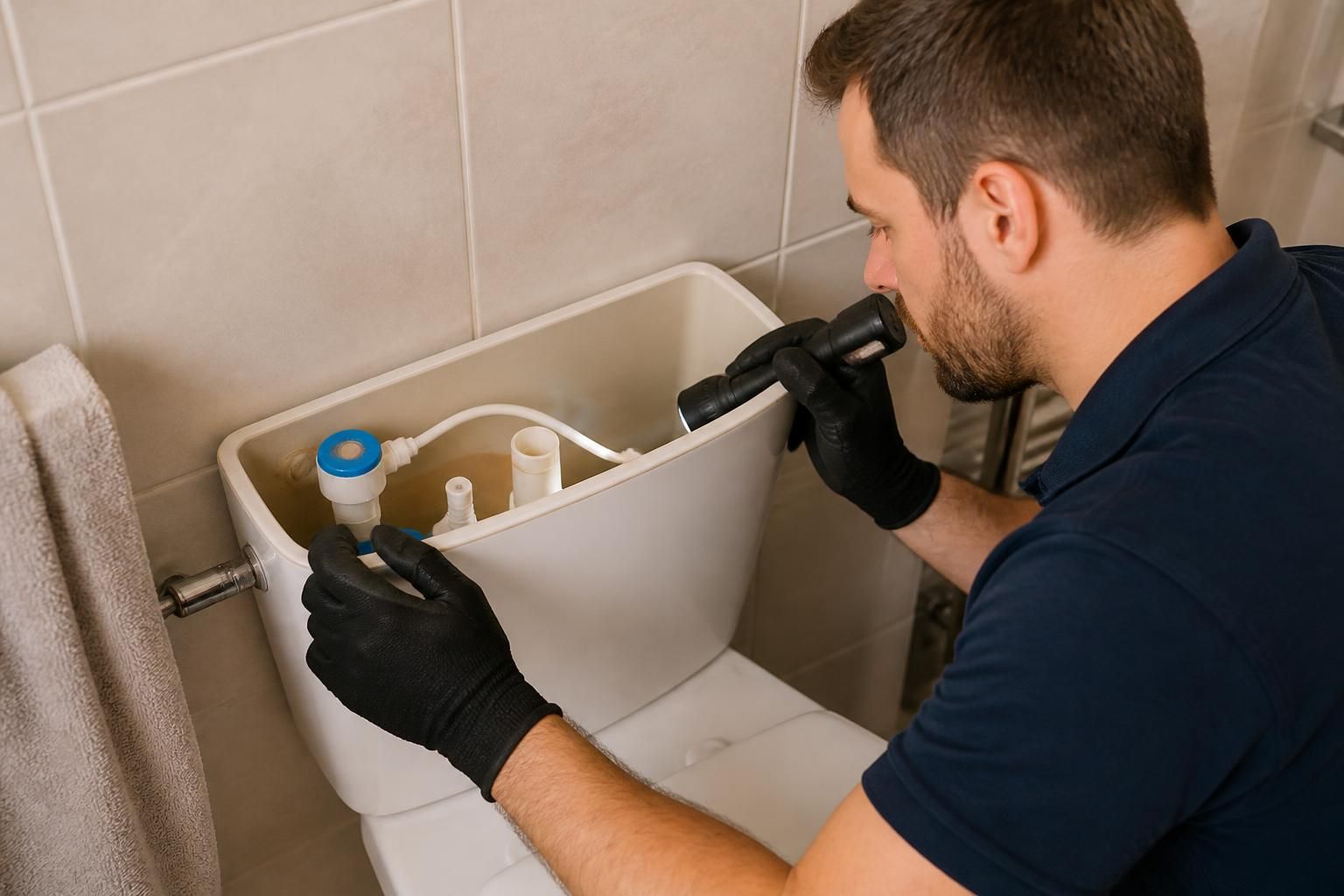
The disruption from investigating a toilet cistern leak depends mainly on where the escaping water is coming from and how accessible the cistern and connecting pipework are. A straightforward inspection can often be completed with access to the toilet, the cistern lid and the nearby supply connection, whereas a concealed leak may require additional investigation before its source is confirmed.
Before the inspection, clear toiletries, cleaning products and other items from around the toilet. This gives the plumber room to examine the inlet valve, flush mechanism, overflow, cistern-to-pan connection, isolation valve and visible pipework. If the toilet is enclosed by boxing, fitted furniture or a removable access panel, these areas may also need to be opened carefully.
Typical inspection work may include:
- checking for moisture around the base of the cistern, flush pipe and supply connection;
- examining internal components for worn washers, faulty valves or damaged seals;
- testing whether water is entering the pan continuously through the flush or overflow system;
- isolating the water supply while individual components are assessed; and
- checking adjacent flooring, skirting boards or ceilings for signs that water has travelled beyond the toilet.
There may be brief periods when the toilet should not be used, particularly while the water supply is isolated or when a seal or connection is being tested. The plumber should explain what is required before carrying out any work. Covering the immediate floor area and keeping tools beside the toilet rather than elsewhere in the room can also help keep the work area controlled.
More noticeable disruption is possible where the leak is not visible at the cistern itself. For example, water may be tracking behind a wall, beneath flooring or through a boxed-in pipe. In these cases, the inspection may need to extend beyond the toilet, and limited access may be necessary to follow the route of the water. This is different from replacing the entire toilet or cistern; opening an access panel or a small section of surrounding material is only considered where it is needed to locate the source.
Detection and repair are separate stages. Once the cause is identified, a plumber can explain whether the issue is likely to involve an adjustable component, a seal, a supply connection or a damaged cistern. Some repairs involve changing an internal part, while others may require removal of the cistern or further work to the surrounding area. Any proposed repair should be explained before it begins, including the expected effect on use of the toilet.
After the work, the area should be checked for continued seepage and the cistern should be tested through several flush and refill cycles. Drying any accessible moisture and monitoring nearby flooring or ceilings is sensible, particularly if the leak had been present for some time. Ideal Plumbing Services provides leak detection and plumbing repairs for homes, landlords and tenants in Birmingham and across the West Midlands, with clear information about the work required and its likely effect on the property.