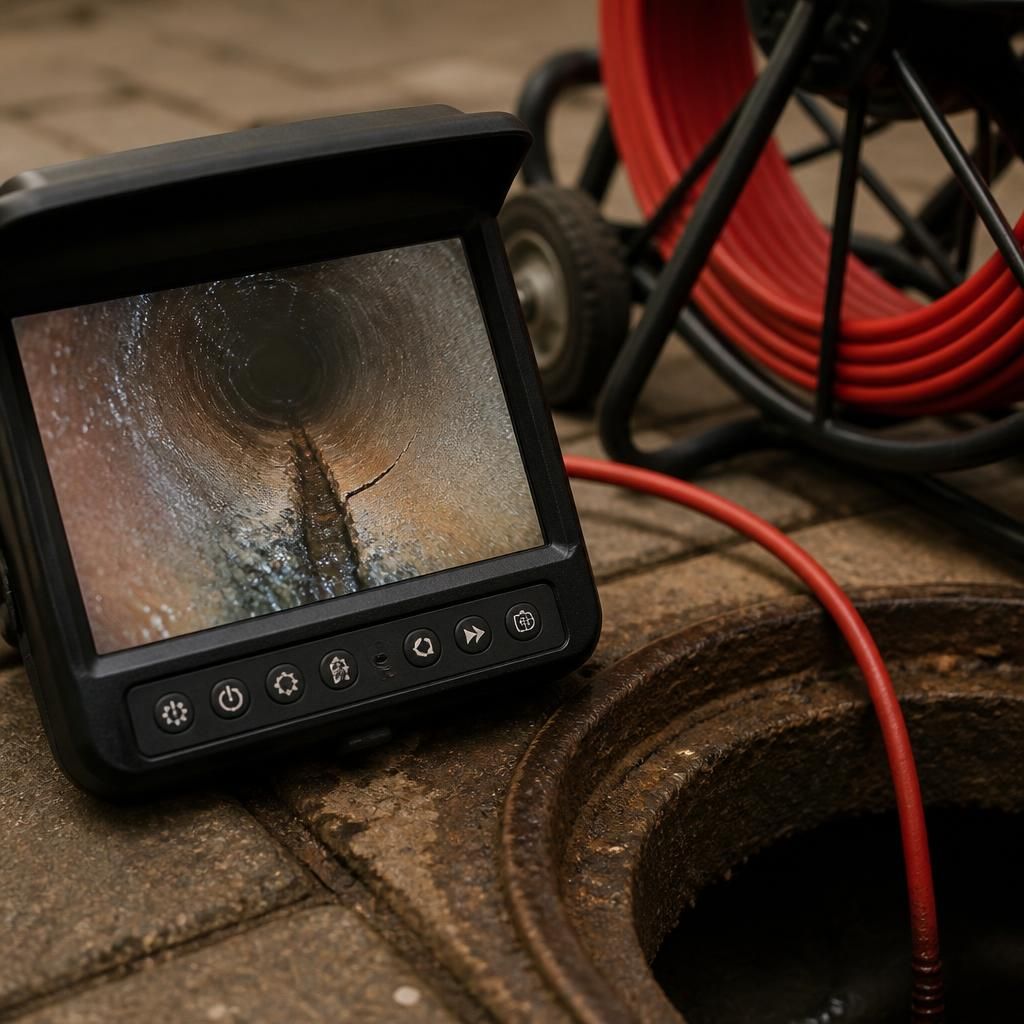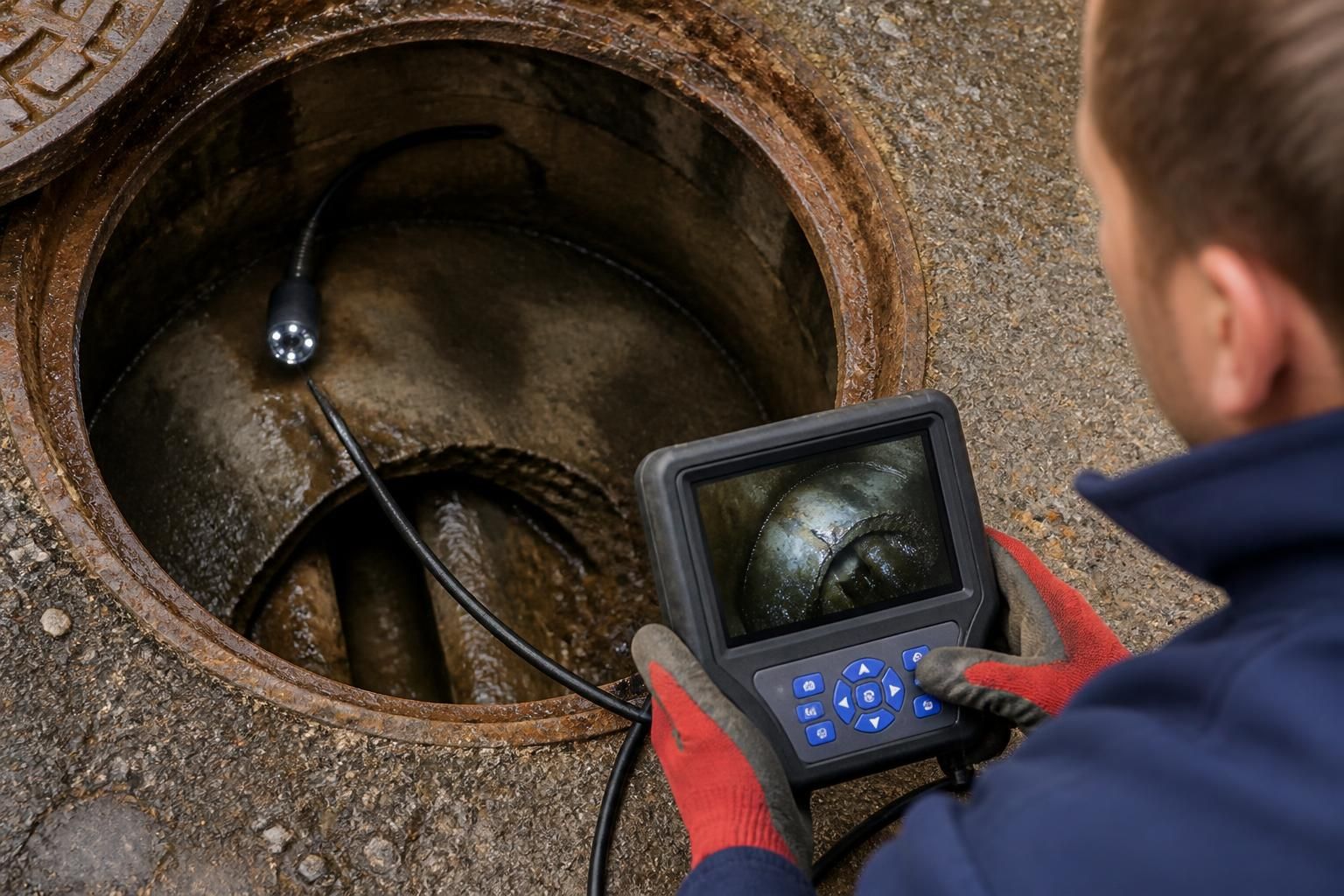
Yes. A sewage leak beneath a property can usually be investigated by inspecting the drainage system from an accessible inspection point and tracing the route of the defective pipe. This can establish whether the problem is a cracked pipe, failed joint, displaced section, root intrusion, or a more serious collapse before the ground is opened.
Sewage leaks do not always produce a visible pool of wastewater. Depending on the depth, soil type and position of the defect, the sewage may disperse underground or follow the pipe trench. Possible signs include:
- Persistent foul odours around paving, patios, gardens or internal floors
- Repeatedly slow or blocked toilets, sinks or drains
- Unusually damp ground or areas of lush, fast-growing vegetation
- Soft spots, subsidence or small depressions above the drainage route
- Wastewater backing up into an inspection chamber or overflowing outside
- Insects or contamination around a drain connection
These signs can also be caused by a blocked drain, surface-water problem or leaking clean-water pipe, so they do not confirm a sewage leak on their own. A drainage inspection is needed to identify the source and determine whether the defect is beneath the property or in a nearby shared or external drain.
How the investigation works
An engineer will normally begin by reviewing the symptoms, locating inspection chambers and establishing which fixtures discharge into the suspected drain. A small drainage camera can then be guided through the pipe. The footage may show standing water, fractures, open joints, displaced connections, deposits, root growth or a section where the pipe has lost its shape.
Where the camera identifies a defect, a tracing device can help relate its position to fixed features such as walls, paving or the edge of a building. This is important because a camera shows the condition inside the pipe, while tracing helps establish where that section lies underground. If access is restricted or the pipe cannot be followed, additional testing may be appropriate, such as controlled dye testing or a targeted inspection from another access point.
Can it identify sewage specifically?
Often, yes. The drainage route, the condition of the pipe and the presence of foul-water flow can help distinguish a sewage defect from a clean-water leak. Dye testing may also show whether water discharged from a particular toilet, sink or appliance reaches the suspected outlet. However, shared drainage, undocumented alterations and cross-connections can make the findings less straightforward. A competent assessment should account for the layout of the property rather than assuming that the nearest damp patch is directly above the leak.
What happens after the leak is located?
The inspection findings should be explained alongside the affected pipe section and the likely repair requirements. Depending on the damage and its position, suitable work may include:
- Repairing or replacing a short damaged section
- Renewing a failed joint or connection
- Removing roots or obstructions before carrying out a permanent repair
- Using a trenchless lining or patch repair where the pipe is suitable and excavation can be avoided
- Excavating and replacing a collapsed or badly displaced section
The most appropriate method depends on the pipe material, depth, access, extent of damage and whether the drain serves one property or several. A camera survey can reduce unnecessary excavation, but it cannot make an unsuitable pipe repairable; serious structural damage may still require the ground to be opened.
Until the cause is confirmed, avoid digging around a suspected leak or repeatedly flushing affected toilets, particularly if wastewater is backing up. Keep people and pets away from contaminated areas, ventilate affected rooms and use a qualified professional to assess any sewage entering the property. The inspection record and camera footage can also provide useful evidence when discussing responsibility for a shared drain or planning the repair.