Before excavation is authorised, an underground sewage leak should be supported by several matching pieces of evidence rather than a damp patch or unpleasant odour alone. The assessment normally establishes that the pipe is carrying foul water, identifies the defect responsible for the escape, confirms the pipe’s route and records the position and depth sufficiently for targeted digging.
The first stage is to assess the drainage system as a whole. The plumber may inspect accessible chambers, manholes, rodding points and internal connections, noting whether the flow is normal, restricted or backing up. The condition of nearby ground is also relevant. Persistent wetness, subsidence, foul smells or unusually lush vegetation can indicate a problem, but these signs do not prove the source because rainwater, supply-pipe leaks and damaged land drains can produce similar symptoms.
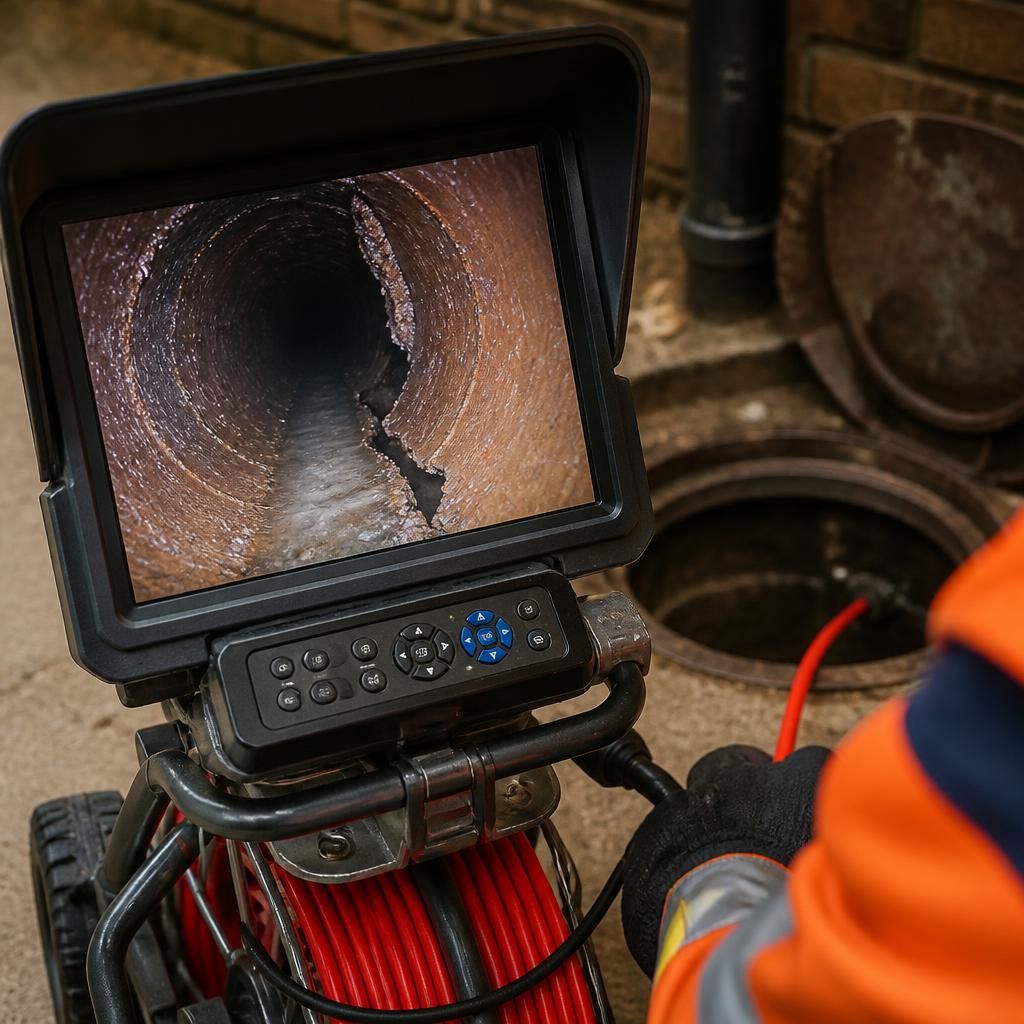
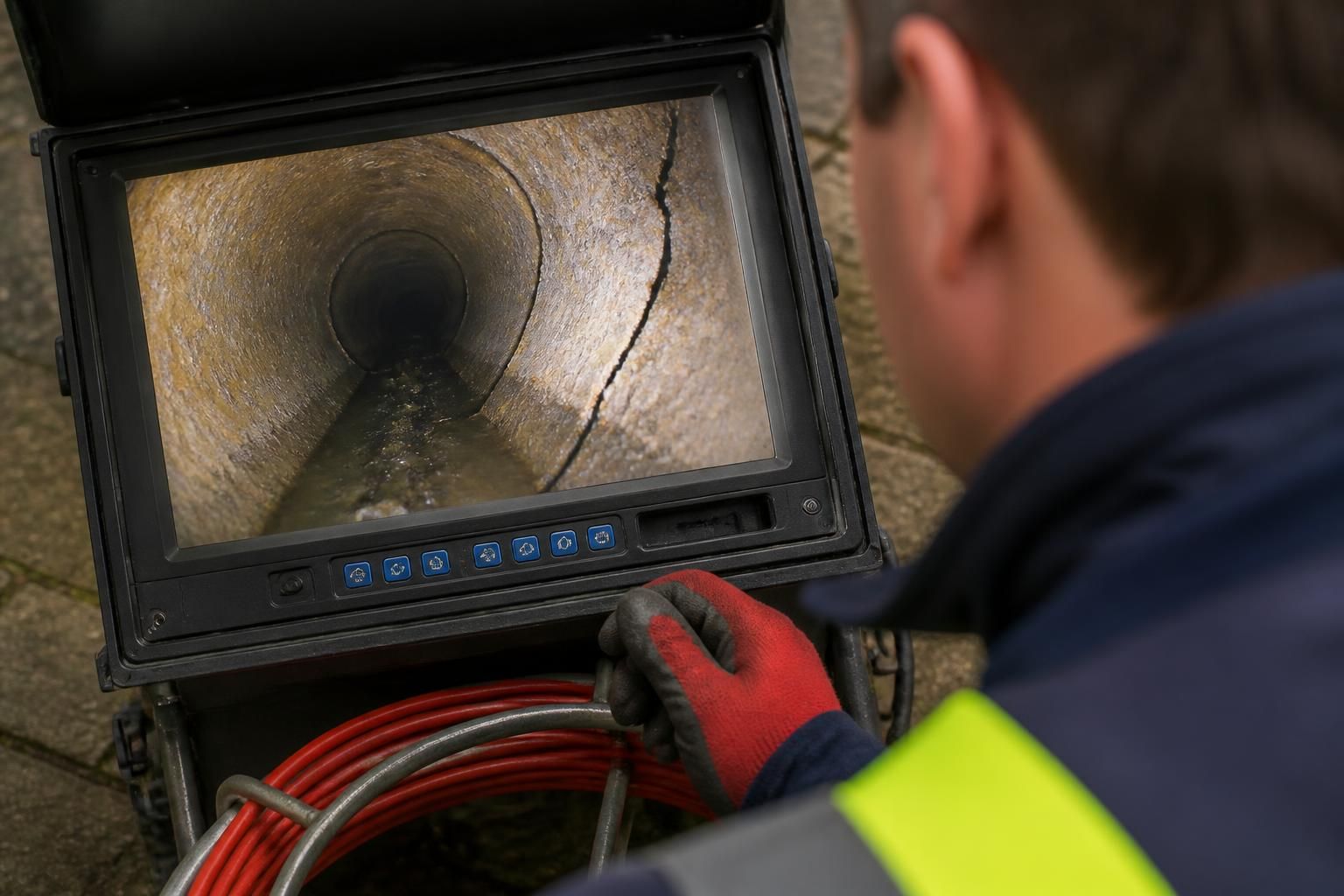
Inspection equipment is then used to examine the foul-water pipe from an appropriate access point. The recorded footage is reviewed for findings such as:
- Cracked, fractured or collapsed pipe sections
- Open or displaced joints where sections no longer meet correctly
- Root ingress, corrosion or missing pipe material
- Connections that have been poorly formed or damaged
- Heavy deposits, standing water or deformation that could conceal a defect
- Evidence that the pipe is allowing sewage to escape into surrounding soil
A visible defect inside the pipe is important, but it must be interpreted carefully. A camera can show damage to the internal lining; it does not automatically prove how far liquid has travelled outside the pipe or whether a nearby surface symptom comes from that particular defect. The inspection record is therefore considered alongside the direction of flow, the pipe layout and the location of chambers and connections.
Where the source remains uncertain, a controlled test may be used. A suitable non-harmful dye can be introduced into the relevant sanitary connection and monitored at inspection points or suspected areas. If the coloured water appears where it should not, this can help distinguish a foul-water leak from a clean-water or rainwater drainage problem. Dye testing has to be planned around the drainage arrangement, access and environmental considerations; it is not appropriate to release substances indiscriminately into the ground or a watercourse.
Tracing equipment can then be used to follow the inspected pipe beneath paving, gardens, extensions or other fixed surfaces. Measurements are taken from a known reference point, such as a chamber or building wall, and the estimated depth is checked against the route shown by the inspection. This creates a marked repair area rather than relying on guesswork. In more complex systems, a second access point may be inspected to confirm the same section from the opposite direction.
The evidence is generally strong enough to plan excavation when:
- The suspected pipe is positively identified as a foul-water or combined drainage line
- The inspection shows a defect consistent with sewage escaping or the reported drainage symptoms
- The route has been traced from a reliable fixed reference
- The position has been measured and its depth reasonably assessed
- Alternative sources, such as a leaking water main or surface-water drain, have been considered
There are limits to what can be confirmed without opening the ground. A heavily collapsed pipe may prevent the camera from passing beyond the obstruction, while silt, standing water or a complicated shared drainage system can obscure the view. In such cases, the report should identify the level of certainty and explain whether a small exploratory opening, additional access point or further drainage test is needed. Excavation should be treated as a way to expose and repair an already narrowed-down area, not as the first method of diagnosis.
After the repair location is confirmed, the inspection findings can also help determine the appropriate repair method. A localised defect may be suitable for a targeted repair, whereas extensive collapse, repeated joint failure or poor alignment may require a longer section to be renewed. The condition of surrounding ground and the position of utilities must be considered before digging begins.
For homeowners, landlords and tenants in Birmingham and the West Midlands, a written survey record with footage, marked measurements and a clear explanation of the evidence is useful when arranging repairs or discussing responsibility. Ideal Plumbing Services can assess underground drainage faults and explain whether the available evidence supports targeted excavation.