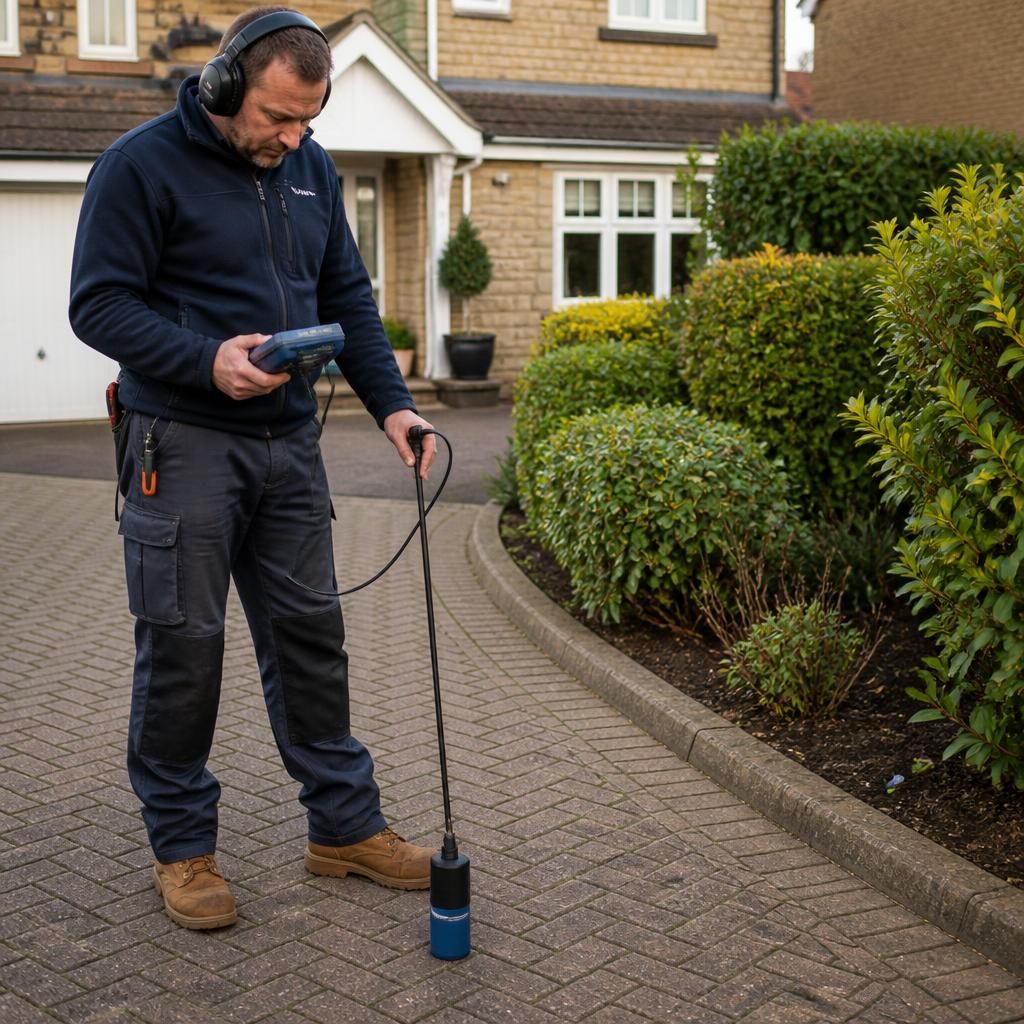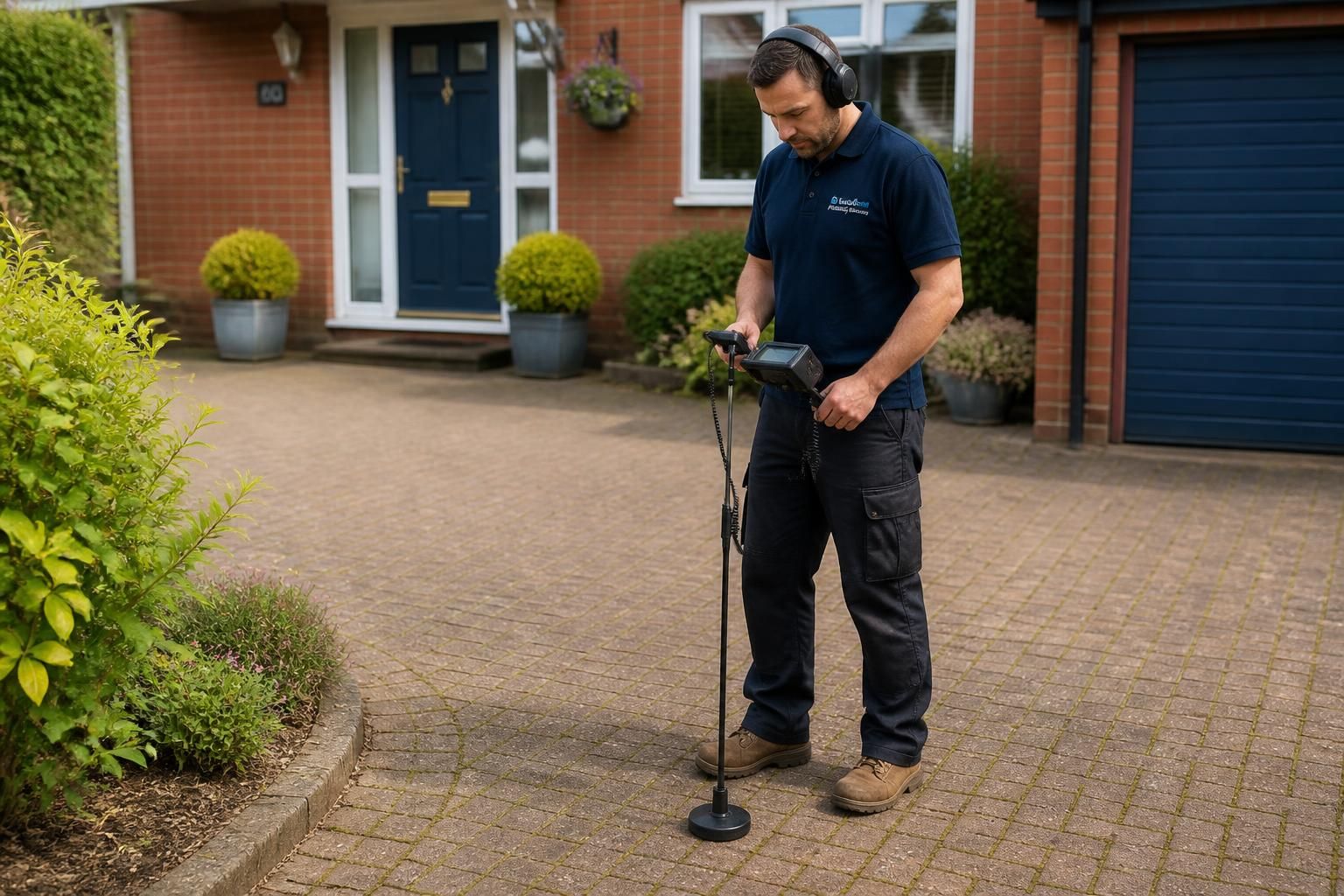
Underground leak detection is designed to identify the likely position of a buried pipe problem before any surface is disturbed. The detection stage itself should not damage a garden or driveway; any disruption usually relates to accessing the pipe for inspection or repair after its location has been established.
Detection and repair are separate stages. A plumber first assesses the symptoms, pipe layout, ground conditions and accessible connection points. This helps determine whether the suspected leak is beneath soil, paving, concrete, tarmac or another surface. The findings can then be used to decide whether repair is possible from an existing access point or whether the surface needs to be opened.
The amount of disturbance depends mainly on:
- the accuracy with which the leak and pipe route can be identified;
- the depth and construction of the buried pipe;
- whether the pipe is beneath planting, lawn, paving, concrete or a driveway;
- the type and extent of the fault; and
- whether there is a suitable access point nearby.
In a garden, careful work may involve lifting turf or removing a limited amount of soil rather than digging across the whole area. Plants, borders and decorative features should be identified before work begins so that the access point can be planned with minimal disruption. Soil removed during the work should be kept separately where practical, as this can make reinstatement easier.
Driveways require a different approach. Block paving or slabs can often be lifted individually and set aside for replacement, although older or damaged materials may not be suitable for reuse. Concrete and tarmac generally need a controlled cut to create access. This can leave a visible repair if the material cannot be matched or if the surrounding surface is already worn, so the proposed method and reinstatement arrangements should be discussed before excavation.
Detection does not remove every risk of surface disturbance. A pipe may be inaccessible, badly damaged, incorrectly mapped or located beneath a fixed structure. In these circumstances, opening the surface may be necessary to confirm the fault and carry out a lasting repair. Even then, the investigation should guide where access is made rather than relying on broad exploratory digging.
Before work starts, ask the plumber to explain the suspected pipe route, the proposed access point and what will happen to removed soil, paving or surfacing. It is also sensible to clarify whether reinstatement is included, what finish can reasonably be achieved and whether you need to move garden furniture, vehicles or other items.
After the repair, the area should be checked for continued signs of moisture, pressure loss or further ground movement before the surface is permanently restored. If water has saturated the ground for a long period, the soil, lawn or driveway may need time to settle even when the pipe itself has been repaired. A professional assessment helps limit unnecessary excavation while ensuring that the underlying leak is properly addressed.