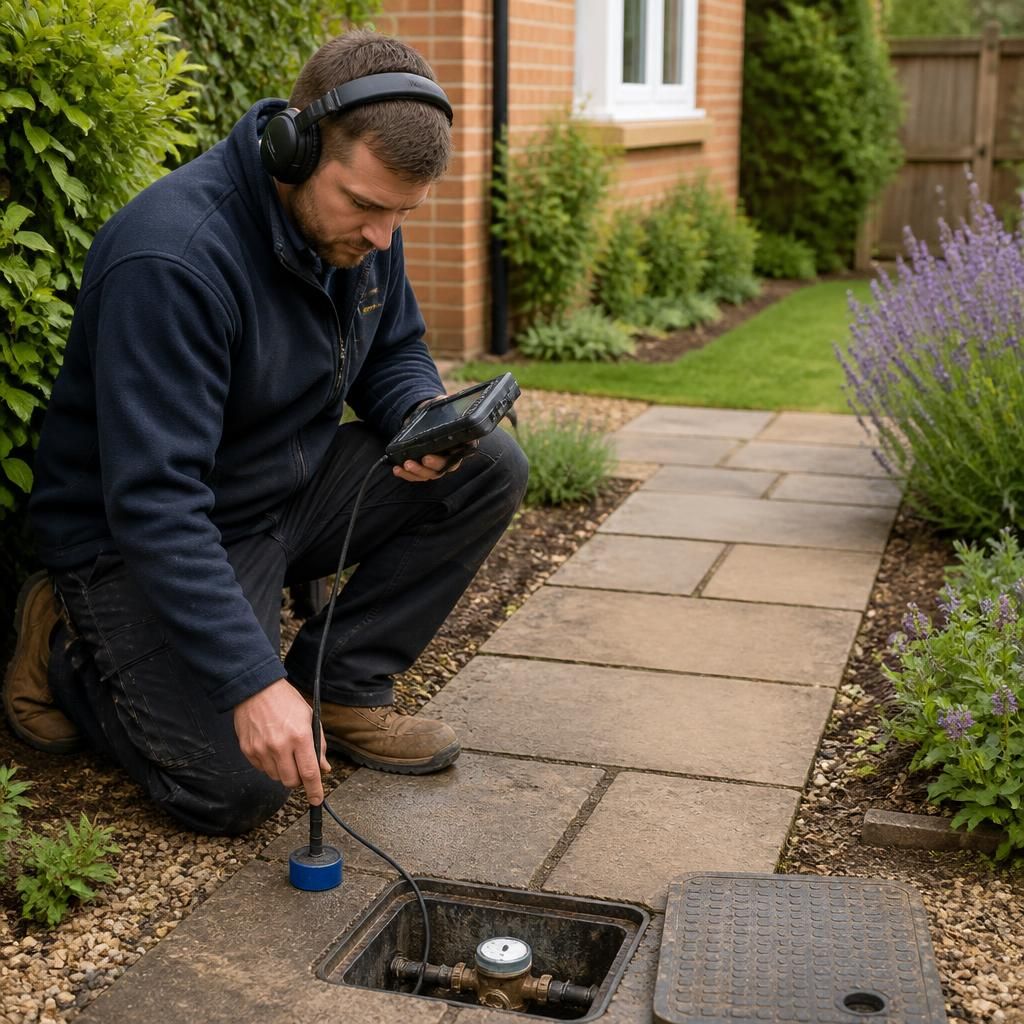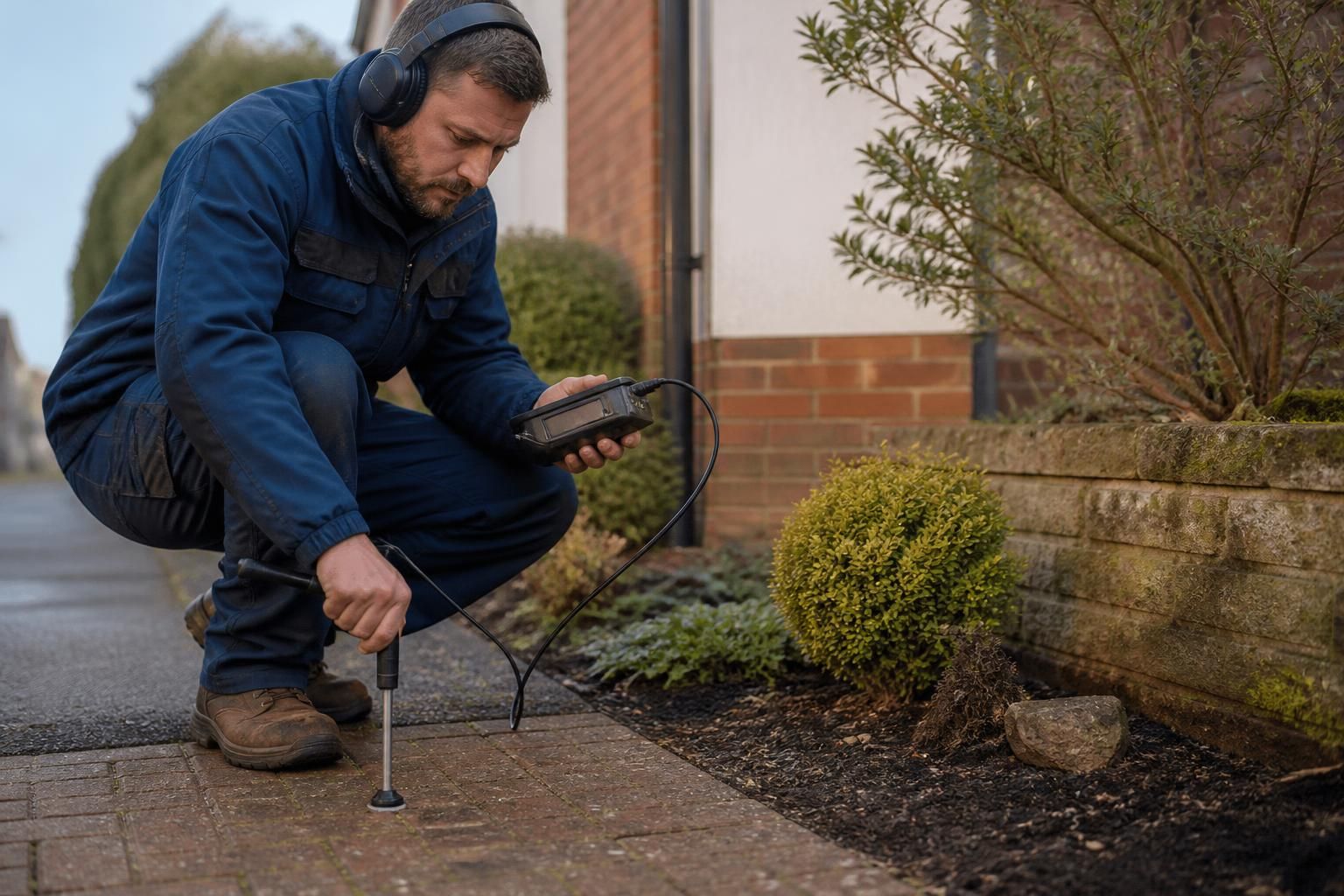
Underground leak detection can identify the likely position of a burst water pipe outside a house without excavating the entire garden, driveway or path. The survey uses pressure checks and specialist listening or tracing equipment to assess the pipe, follow the route of the supply and indicate where the damage is most likely to be.
What the inspection can establish
An external burst may affect the incoming water main, a private service pipe between the boundary and the property, or pipework supplying an outside tap, garage or outbuilding. The first stage is to understand the pipe layout and determine whether the suspected section is carrying pressurised water. This helps distinguish a buried supply-pipe fault from a problem with drainage, surface water or a plumbing installation inside the house.
Detection equipment may identify:
- the route taken by a buried water pipe;
- the approximate position of a break, split or failed joint;
- whether water is escaping from a pressurised pipe;
- whether more than one section needs further investigation; and
- whether excavation is likely to be needed at a particular point.
How underground detection is carried out
- Initial assessment: The plumber reviews the symptoms, checks accessible plumbing points and considers the pipe material, age and likely route. Information about recent building work, landscaping or changes to the water supply can also help identify possible risk areas.
- Isolation and pressure testing: Sections of the installation may be isolated so the technician can assess how the pressure behaves. This can help separate an external fault from a leak within the property.
- Acoustic investigation: Water escaping under pressure can create sound as it moves through the pipe and surrounding ground. Ground microphones and electronic listening equipment can compare sound levels at accessible points and help narrow down the source.
- Pipe tracing: Where the pipe route is uncertain, tracing equipment can help map its position. This reduces the risk of digging in the wrong place, particularly where pipework passes beneath paving, driveways or planted areas.
- Location marking: Findings are assessed together rather than relying on one reading. The suspected area can then be marked out for targeted repair or a carefully positioned excavation.
Detection is normally more precise when the pipe route, access points and construction of the surrounding ground are known. Concrete, dense paving, deep pipework, multiple buried services and high background noise can make the investigation more difficult. In some cases, the survey may establish the affected section but not the exact break until a small excavation is made.
What to do before an inspection
If a burst is suspected, turn off the internal stop tap where this can be done safely and avoid using water until the pipe has been assessed. If the suspected pipe supplies an outside tap or outbuilding, that branch may need to be isolated separately. Keep people away from areas where the ground has become unstable, and take care around submerged electrical equipment or external power supplies.
Do not assume that digging at the wettest point will reveal the break. Water can travel along the outside of a pipe, through bedding material or beneath hard surfaces before reaching the ground above. Excavating without first tracing the route can therefore damage paving, disturb other services and still miss the damaged section.
When professional detection is appropriate
A specialist inspection is particularly useful where the pipe is buried beneath a driveway, patio, conservatory, extension or landscaped area, or where the supply route is not shown on available plans. It is also helpful when the symptoms are intermittent or when a pressure problem needs to be distinguished from a fault inside the house.
Ideal Plumbing Services provides underground leak detection and plumbing repairs for residential properties in Birmingham and the West Midlands. With over 20 years’ experience, the team can use the findings to advise whether targeted excavation, pipe repair or replacement is the more suitable next step. Any repair should be based on the pipe’s condition, access, depth and the extent of the damage rather than on detection readings alone.