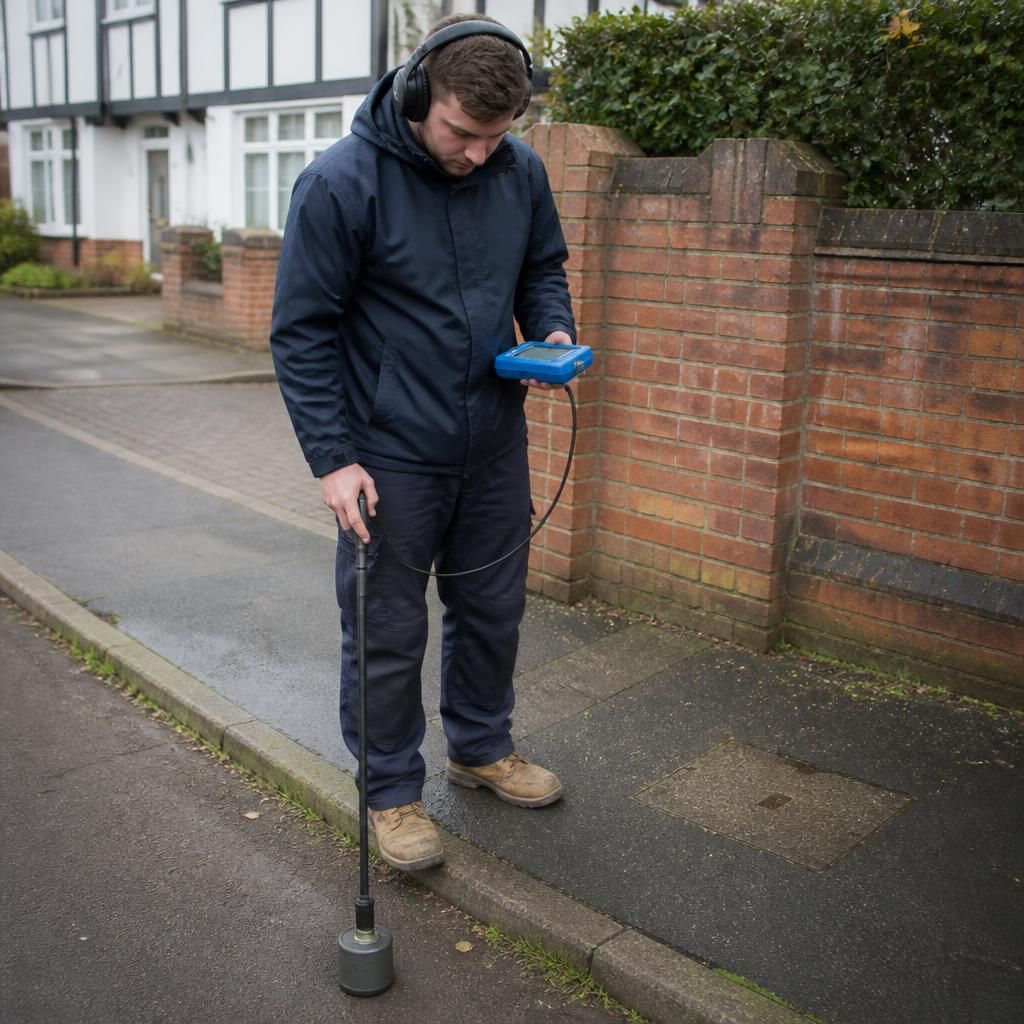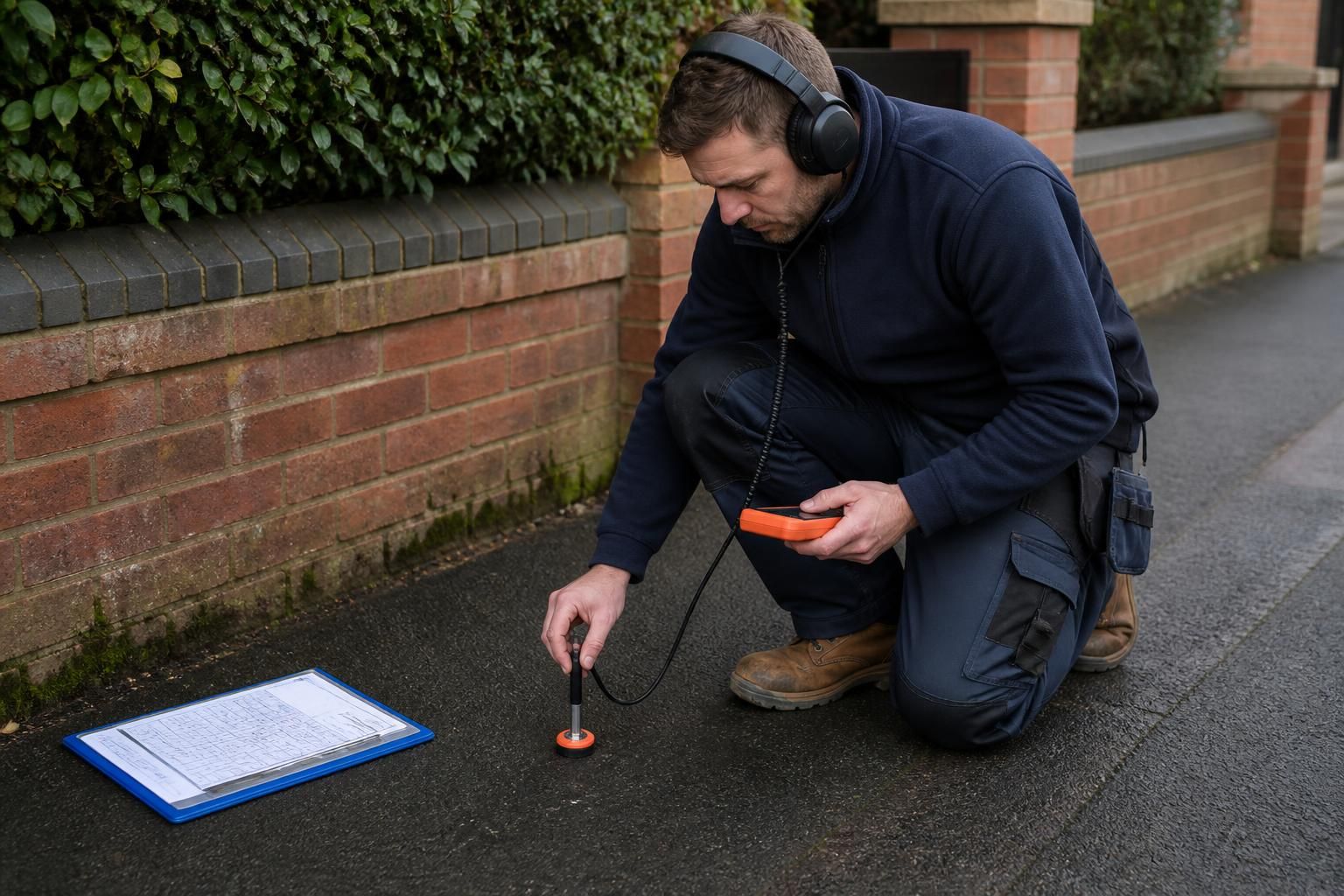
A suspected ground leak is confirmed by establishing that water is being lost, narrowing the affected section of pipe and then verifying the indicated location with specialist testing. A damp patch, unexplained sound or unusually wet soil can point to a problem, but these signs alone do not prove that a buried water pipe is leaking.
The investigation normally begins by separating a possible leak from other causes of moisture. The plumber may check nearby internal plumbing, toilets, heating components, external taps and drainage before concentrating on the underground supply. This matters because a blocked drain, condensation, groundwater or a leaking appliance can create similar symptoms without a buried supply pipe being at fault.
Where appropriate, the water meter is observed while all taps and water-using appliances are turned off. Continued movement indicates that water is passing through the system when it should be static. The property’s incoming supply can then be isolated from internal pipework to establish whether the loss is on the private underground section or within the building.
Pressure testing provides further evidence. A controlled pressure reading is taken, the relevant section is isolated and the reading is monitored. A measurable drop suggests that water is escaping, although the result must be interpreted alongside the condition of the pipework, valves, fittings and any connected equipment. Trapped air, faulty test equipment or a valve that does not fully close can otherwise produce misleading results.
Once a loss has been established, the likely route of the pipe is assessed from its entry point, visible service runs, plans where available and the layout of the property. The detected signal is compared at several points rather than relying on a single reading. This helps distinguish the actual leak from sound travelling through the pipe, valves, paving or surrounding ground.
- Consistent readings: a clear pattern along the same pipe route supports the suspected location.
- Changing ground conditions: soil, tarmac, concrete and paving can affect how sound or gas travels, so readings may need careful interpretation.
- Multiple possible leaks: more than one fault can be present, particularly where an older supply has several joints or repairs.
- Intermittent losses: some leaks become more apparent when pressure changes or when water is being used elsewhere in the property.
Confirmation of the exact point may require a small, targeted opening of the surface or an exposed section of pipe. This is different from excavating the full suspected route: the purpose is to verify the result at the smallest practical area before deciding on a repair. If the pipe is found to be dry or intact at the indicated point, the findings are reassessed and further testing may be needed.
The final assessment should identify whether the leak is on the property owner’s pipework, a shared section or another part of the supply, where this can be established. It should also distinguish a confirmed leak from a suspected route and explain any limitations, such as inaccessible paving, uncertain pipe layouts or background water in the ground.
For homeowners, landlords and tenants, useful evidence to provide includes recent meter readings, when the dampness was first noticed, any changes in water pressure and whether the affected area changes after rain. Ideal Plumbing Services can assess suspected underground leaks in Birmingham and the West Midlands and use the findings to advise whether a focused repair or further investigation is appropriate.