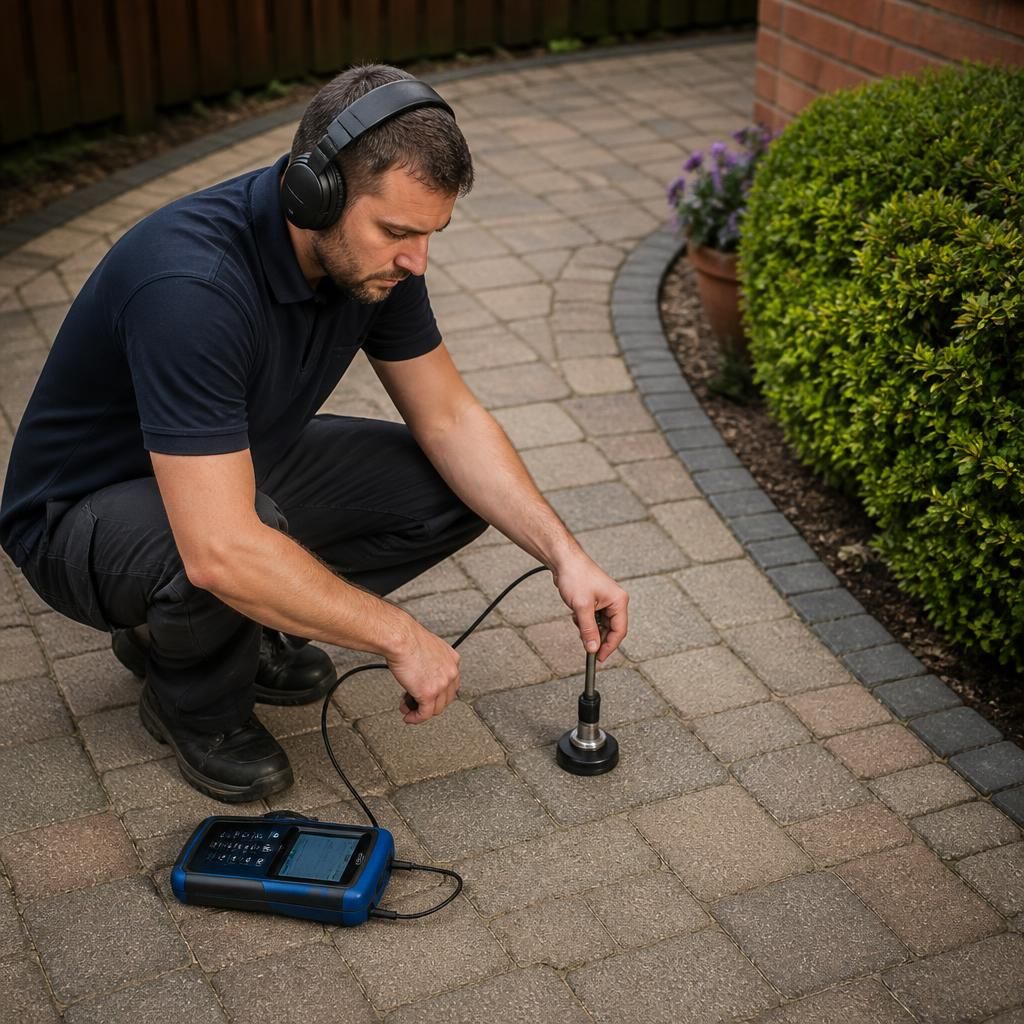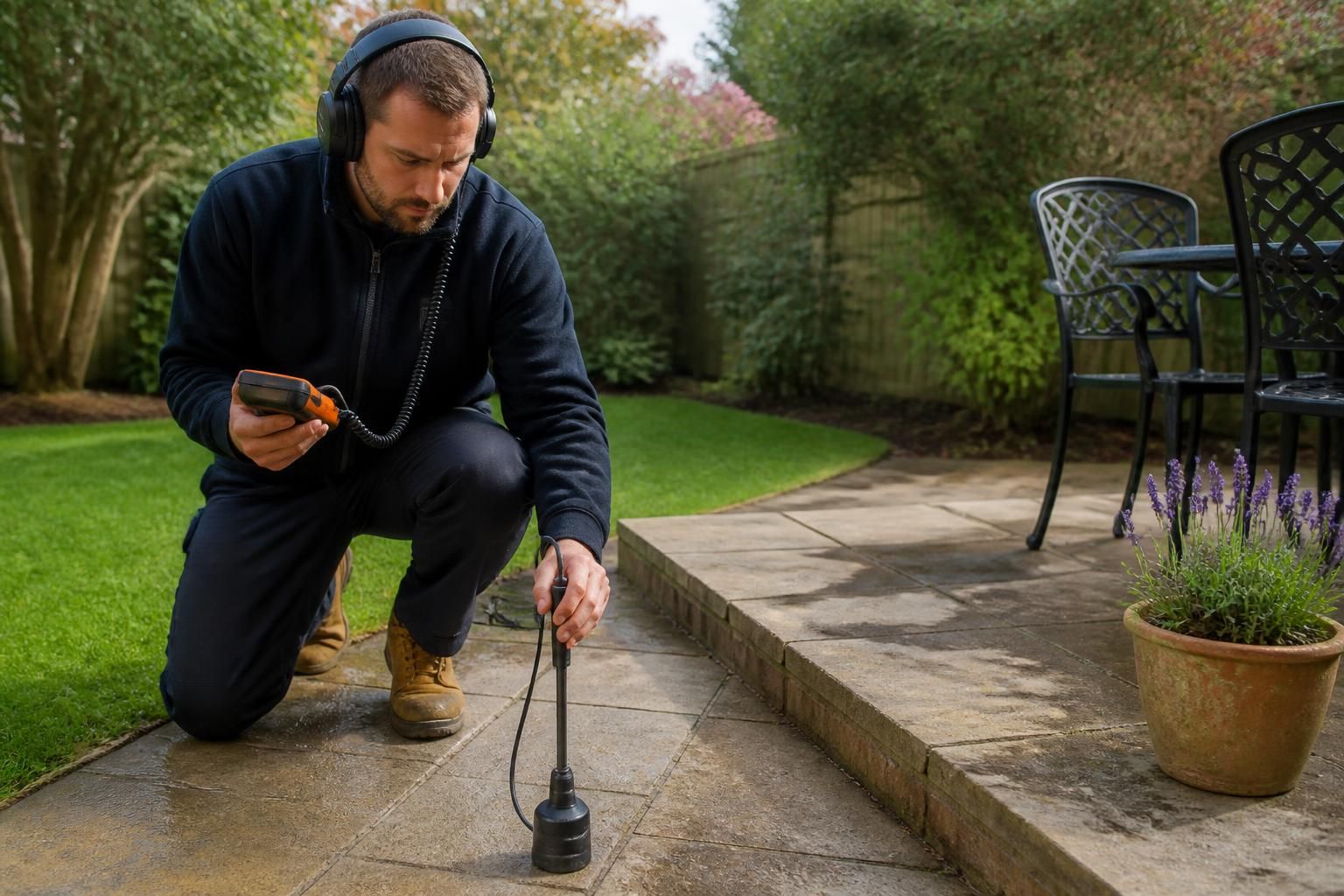
Ground water leak detection is suitable for most residential properties where the suspected problem lies beneath soil, paving, a driveway, a garden or another inaccessible surface. It is particularly appropriate when the water system, pipework layout or site conditions make it impractical to identify the source through a visual inspection alone.
It may be suitable for the following property types:
- Detached and semi-detached houses: underground supply pipes may run between the boundary stop tap, external meter and the building, sometimes passing beneath hard landscaping or extensions.
- Terraced homes: adjoining properties can have closely positioned or shared pipe routes, so accurate identification is important before any excavation is considered.
- Flats and maisonettes: detection can help establish whether the suspected leak is within an individual dwelling, a communal supply or external pipework. Access and responsibility may need to be agreed with a managing agent or freeholder.
- Older properties: undocumented alterations, replaced sections of pipe and changes to the garden or driveway can make the route of buried services difficult to establish.
- Newer properties and extensions: a leak can still occur where underground pipework has been disturbed, poorly protected or affected by ground movement.
- Rental properties: landlords, tenants and property managers may use detection to clarify the location of a suspected leak before arranging remedial work.
It is usually worth considering when the suspected pipe is not accessible. Buried water pipes may run under concrete, block paving, patios, conservatories, floors or planted areas. Locating the affected section before lifting or breaking these surfaces can help limit investigation to the relevant area, although the detection process itself does not repair the pipe or remove the need for access where a repair is required.
Detection is also relevant where the property has an internal plumbing fault that cannot be explained by visible fittings. A professional assessment can distinguish between a leak on the property’s underground supply and problems such as a faulty toilet, leaking valve, internal pipe joint or drainage defect. This distinction matters because underground water-pipe detection is not the right first step for every damp patch or plumbing fault.
Ground water leak detection may be less suitable as the first investigation where:
- the source is clearly visible at an internal fitting or appliance;
- the moisture is caused by condensation, rain penetration or a roof defect;
- the suspected issue concerns foul or surface-water drainage rather than a pressurised water supply;
- the property has a shared or privately managed pipe network and access arrangements have not been established;
- the symptoms are isolated and there is no reasonable indication that buried pipework is involved.
The term can also cause confusion. A leak from a buried mains or private supply pipe is different from groundwater entering a basement, cellar or foundation. Groundwater ingress is generally investigated through building fabric, drainage, waterproofing and site drainage rather than solely through water-supply leak detection. Describing the location and behaviour of the water accurately helps determine which type of investigation is appropriate.
Before arranging an inspection, gather any available information about the property’s stop tap, water meter, previous plumbing alterations and known pipe routes. Note when the problem first became apparent and whether it changes when the property’s water outlets are not being used. For a flat, rented property or shared supply, check who is responsible for the relevant pipework and obtain any required permission before access is arranged.
Suitability does not depend on the property being modern or having exposed pipework. It depends on whether there is a credible reason to suspect an underground water leak and whether locating that leak would assist the next decision. An assessment can establish whether specialist detection is justified, whether another type of plumbing or drainage investigation is more appropriate, and what information is needed before repair work is planned.
Ideal Plumbing Services provides leak detection and plumbing support for homeowners, landlords and tenants across Birmingham and the wider West Midlands. The assessment should be based on the property’s pipework, access conditions and symptoms rather than on the building’s age or type alone.