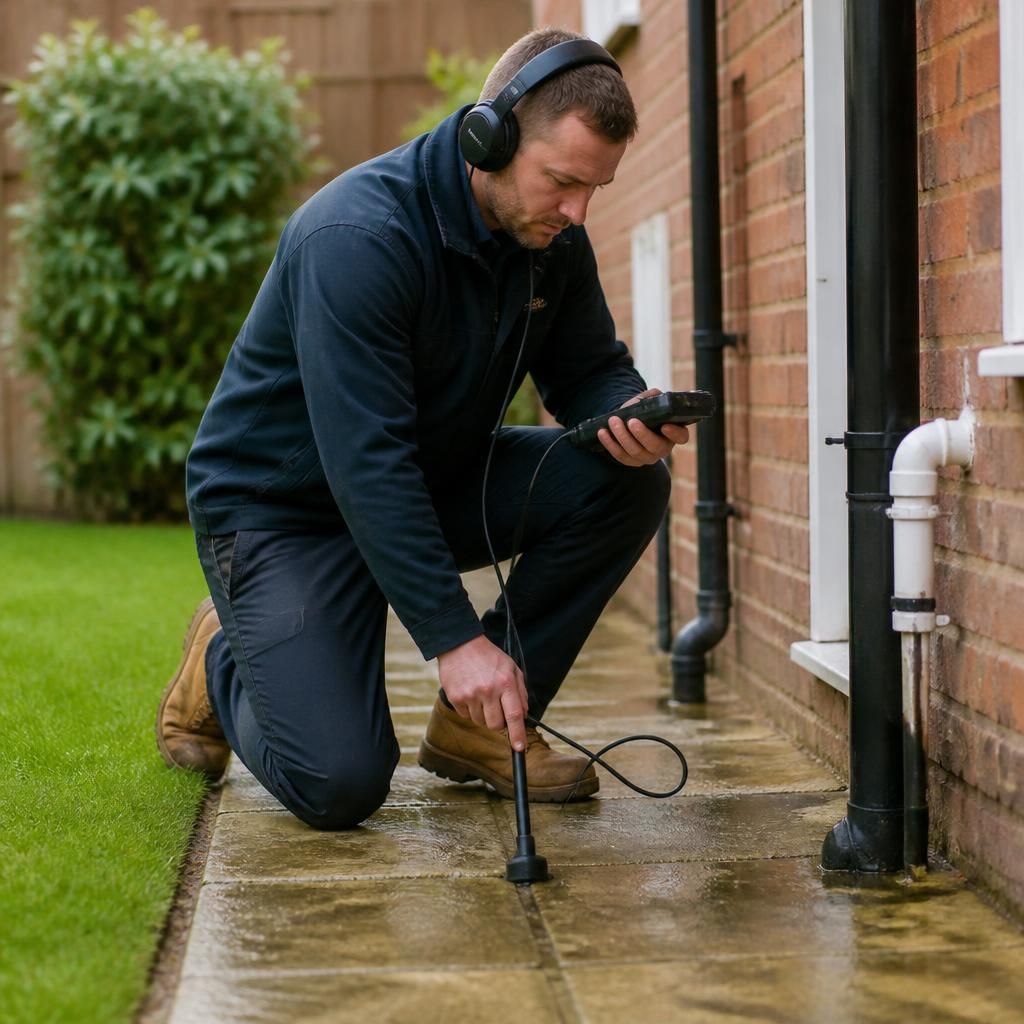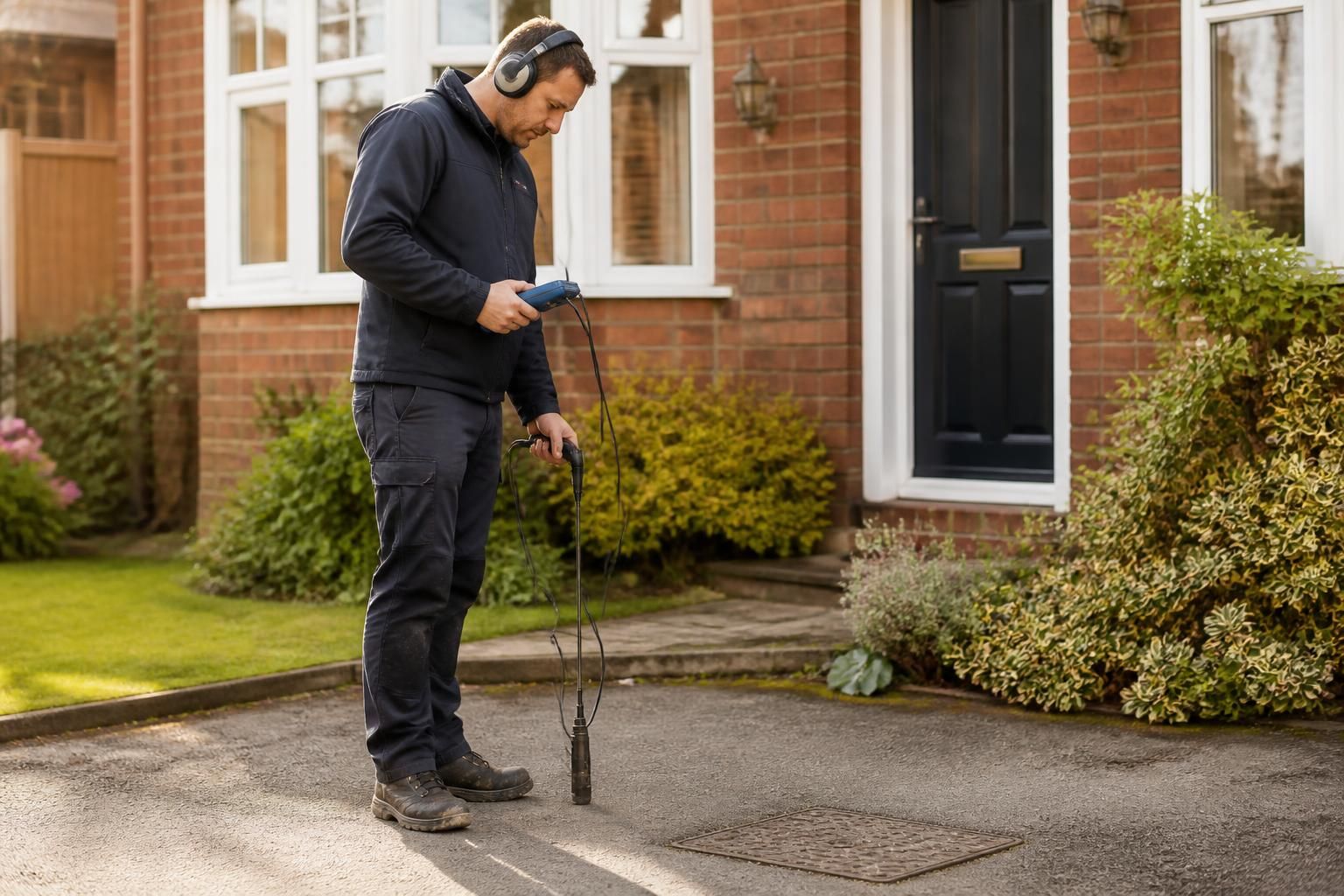
Ground water leak detection is normally a controlled investigation rather than a major building job. The main disruption comes from gaining access to the affected pipework, carrying out diagnostic tests and, if needed, exposing a small area for confirmation. In many cases, the investigation can be completed without lifting large sections of flooring or opening extensive areas of wall.
What the inspection may involve
A technician will first discuss the symptoms, such as unexplained dampness, a drop in water pressure, unusually high water use, saturated ground or sound from pipework. They may inspect accessible appliances, stop taps, meters, chambers, visible pipework and areas where moisture has appeared. This preliminary assessment helps determine which sections of the system need testing, rather than disturbing the property unnecessarily.
Specialist equipment may then be used to identify changes in sound, pressure, temperature or gas concentration. The exact method depends on the pipe material, its depth, surrounding ground conditions and whether the suspected leak is on a supply pipe, heating circuit or another pressurised system. Equipment can often be operated from accessible points, although covers, floor finishes or stored items may need to be moved to reach those points.
How much access is normally needed?
- Furniture or belongings may need to be moved away from inspection areas.
- Access covers, meter boxes or service chambers may need to be opened.
- Small sections of flooring, paving or soil may be lifted if testing cannot identify the position precisely.
- In some cases, a narrow inspection opening is required to confirm the pipe condition or the location of the defect.
These access requirements are different from carrying out the repair itself. Detection aims to establish where the problem is and, where possible, what type of fault is present. Excavation, pipe replacement, joint repair, drying work and reinstatement are separate stages and can create more disruption than the diagnostic inspection.
When can detection be more disruptive?
Investigation may require more extensive access where the leak is deep, beneath a solid floor, under paving, close to foundations or in an area with several overlapping pipes. Poor access can also make it harder to distinguish a leaking pipe from water migrating through soil or masonry. If the sound or pressure pattern does not provide a sufficiently clear result, a controlled opening may be needed to verify the findings.
Properties with suspended floors, buried services, extensions or complex plumbing layouts may require a more methodical assessment. The presence of insulation, thick screed, hard landscaping or background noise can also affect which detection technique is suitable. A careful inspection should identify these constraints before any intrusive work is proposed.
What happens after the leak is located?
The findings should be explained before repair work begins. A professional report or verbal assessment may identify the suspected position, the evidence supporting it and whether further confirmation is advisable. This information can help limit excavation or opening-up to the area most likely to contain the fault.
Detection does not normally leave the property in the same condition as a repair or excavation project, but it can still cause temporary inconvenience. Access routes should remain clear, equipment may need to be placed near the suspected pipework and water services may need to be tested or isolated during parts of the assessment. Removing vulnerable items from the working area can help prevent accidental damage.
How to prepare
- Clear access to stop taps, meters, inspection covers and suspected damp areas.
- Move furniture, rugs and stored items away from floors or walls being examined.
- Make a note of when sounds, damp patches, pressure changes or water-use changes occur.
- Tell the technician about previous repairs, extensions or known buried services.
- Ask which areas may need to be lifted or opened before work starts.
Overall, the disruption is usually concentrated around access and testing, not widespread removal of finishes. The extent cannot be confirmed in advance for every property, because it depends on the pipe layout and the evidence available on site. Ground water leak detection is intended to replace unnecessary searching with targeted investigation, while keeping any intrusive work proportionate to the information needed.