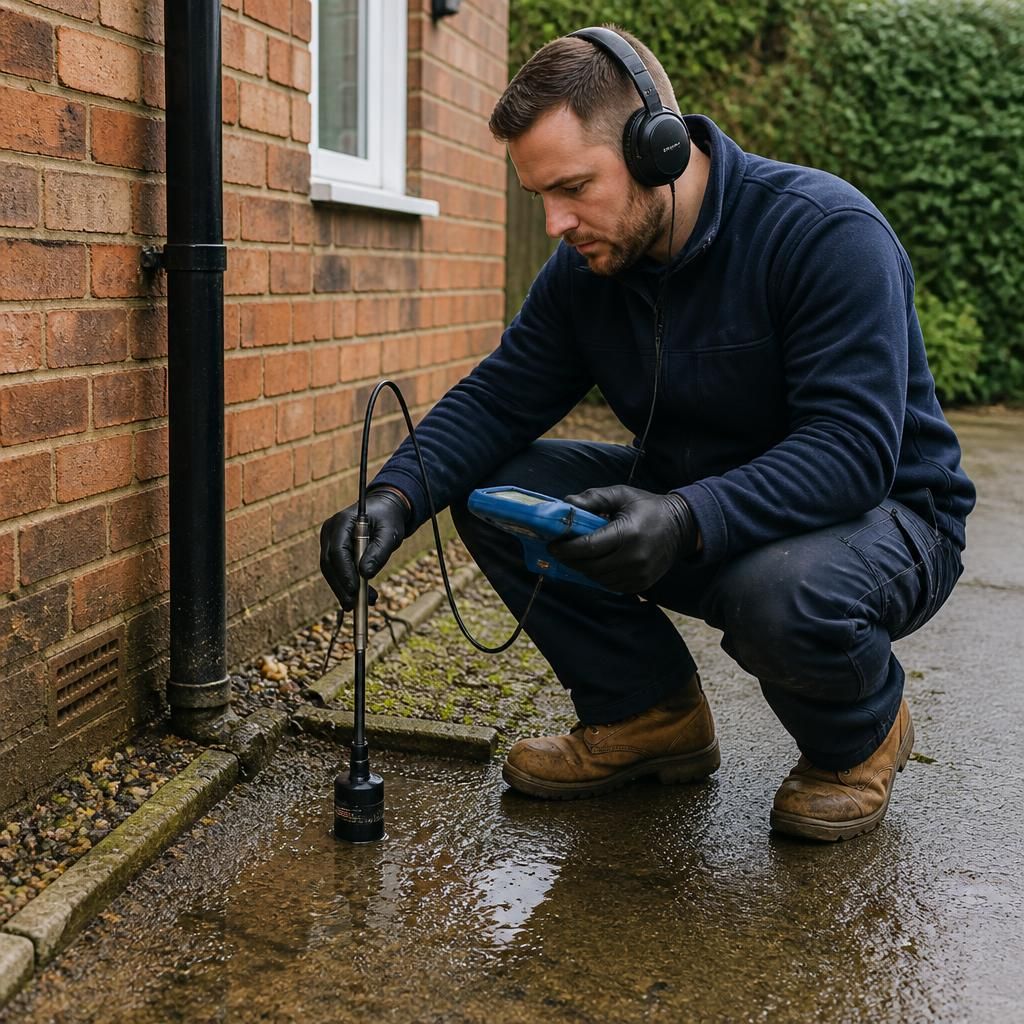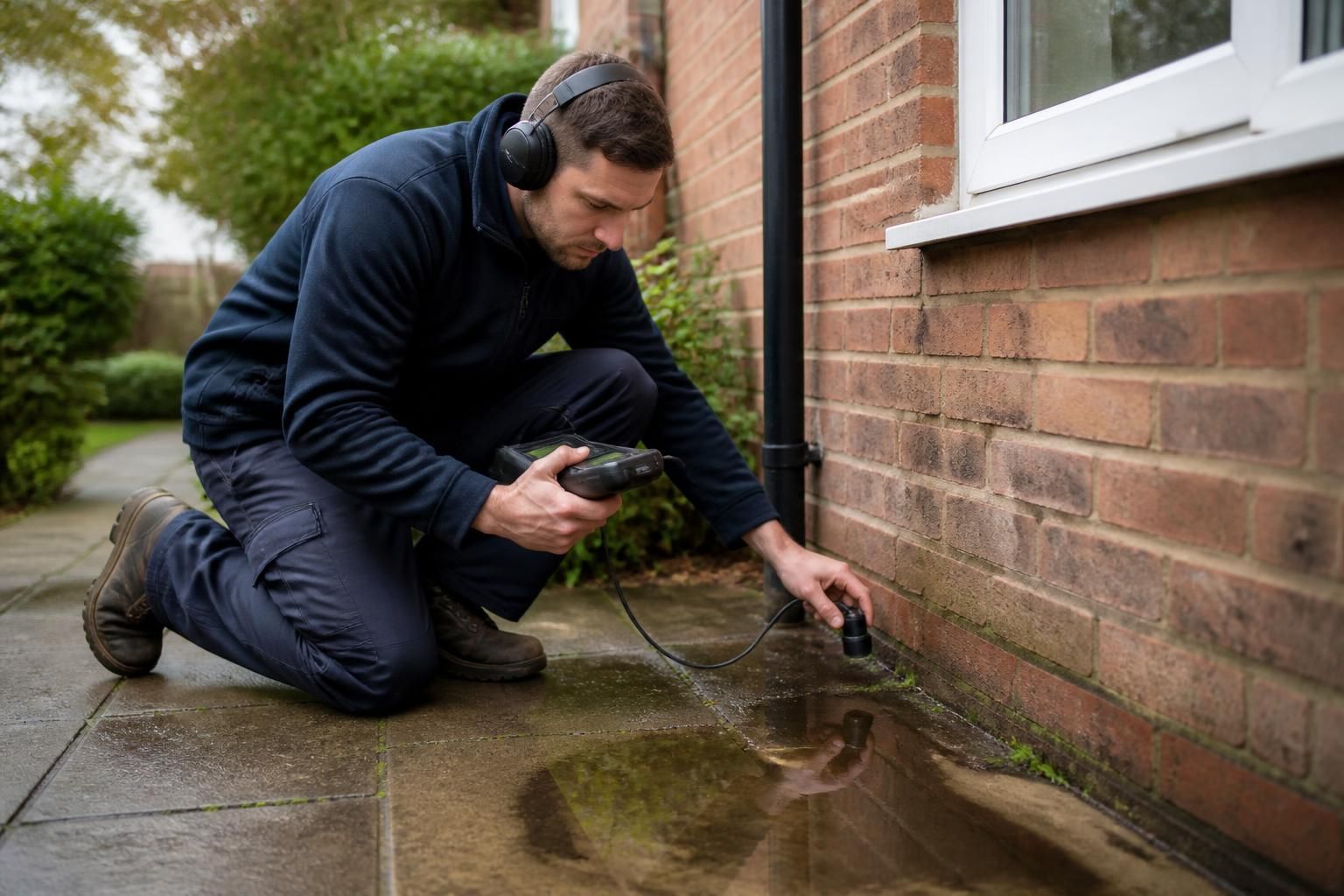
Before ground water leak detection, prepare the property, gather useful information and make the site safe for inspection. Good preparation helps the plumber distinguish a supply-pipe leak from condensation, drainage problems or surface water, while reducing the risk of further damage during the investigation.
Check the immediate safety risks. Keep people away from areas where the ground is soft, sinking or visibly unstable. If water is close to electrical sockets, appliances, outdoor electrical equipment or service cabinets, avoid contact with the affected area and explain the risk when arranging the inspection. Do not enter flooded spaces unless you are confident they are safe.
Record what you have observed. Written notes and dated photographs can provide useful context, particularly if the appearance of the leak changes before the inspection. Record:
- When the problem was first noticed
- Whether the affected area is indoors, outside or close to the building
- Changes in staining, mould, pooling or soil condition
- Whether the issue appears after rainfall or continues during dry weather
- Any impact on flooring, walls, paving, gardens or neighbouring areas
This information does not confirm the source, but it can help the plumber establish a pattern and choose suitable detection methods.
Gather relevant property information. If available, locate plans, previous plumbing reports, records of extensions or landscaping work, and details of earlier repairs. Information about the age and route of underground pipework can help identify possible supply routes. Note any known stop valves, inspection chambers, water meters or buried services, but do not lift covers or excavate if doing so could be unsafe.
Tell the plumber about recent changes. Mention new patios, driveways, fencing, planting, building work, drainage alterations or plumbing installations. Recently disturbed ground can alter water flow or damage buried pipework, while construction materials may conceal signs of a leak. Also explain whether the property has a water meter, a shared supply or any unusual plumbing arrangement.
Arrange access and permissions. Ensure the inspector can reach the relevant rooms, external walls, gardens, driveways and other areas connected with the suspected leak. If the pipework may cross a rented property, communal area or neighbouring land, obtain the necessary permission in advance. Landlords and managing agents should tell the occupant about the inspection and provide any access instructions.
Keep the suspected area unchanged. Avoid covering damp ground, replacing damaged finishes, applying sealant or using chemicals intended to dry or mask the problem before the inspection. Do not move heavy items onto the affected area. Preserving the condition of the site gives the plumber a more reliable set of clues and avoids creating additional damage.
Prepare practical details for the appointment. Make a note of the property address, the location of the water meter and any access restrictions. Tell the plumber about children, pets, locked gates or areas that require protective measures. If a neighbour, landlord or insurer needs to be involved, have their contact details available. You can also ask which areas may need to be inspected and whether any surface opening could be necessary if non-invasive checks do not locate the source.
Ground water leak detection may involve comparing water usage, checking pressure, tracing pipe routes and using specialist listening or other detection equipment. The inspection is more useful when the site is accessible, the relevant history is available and the visible evidence has not been disturbed. Once the source has been identified, the plumber can advise whether the next step is a targeted repair, further investigation or assessment of related damage.