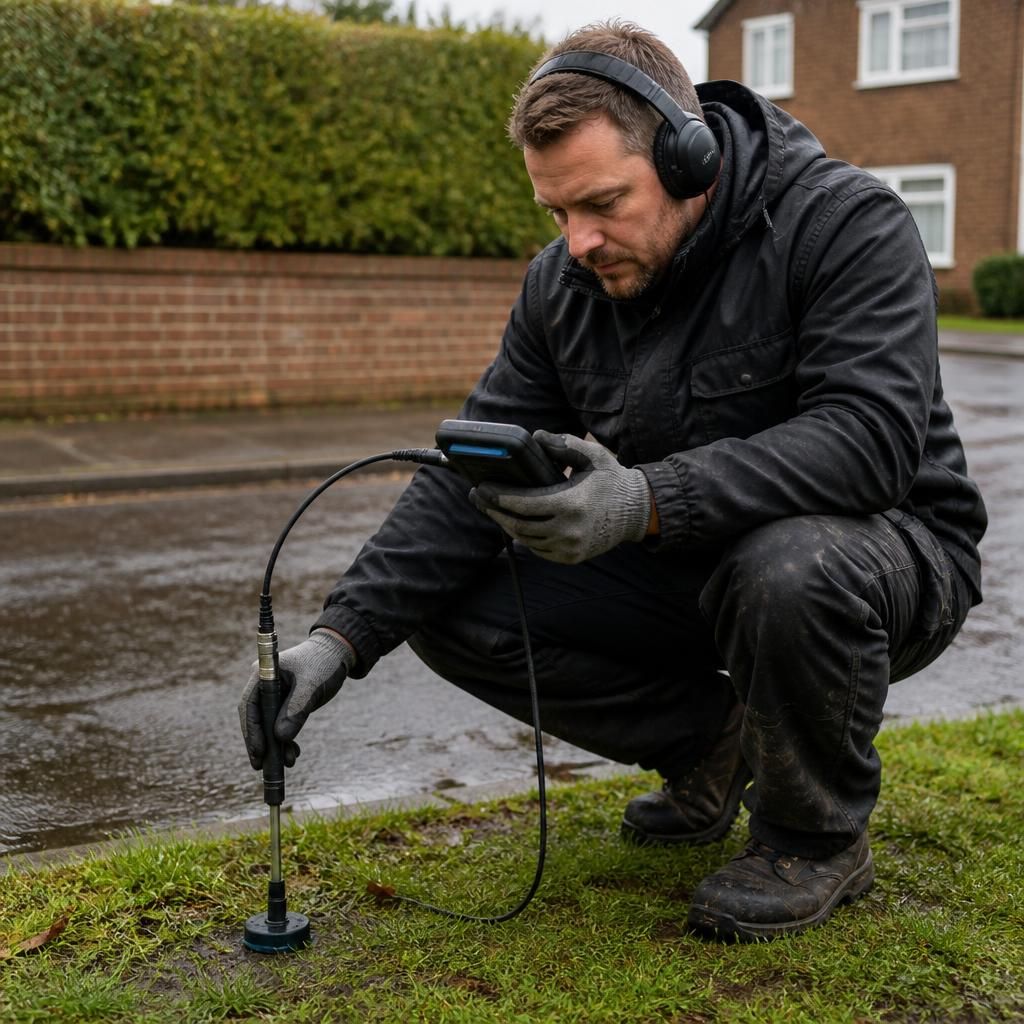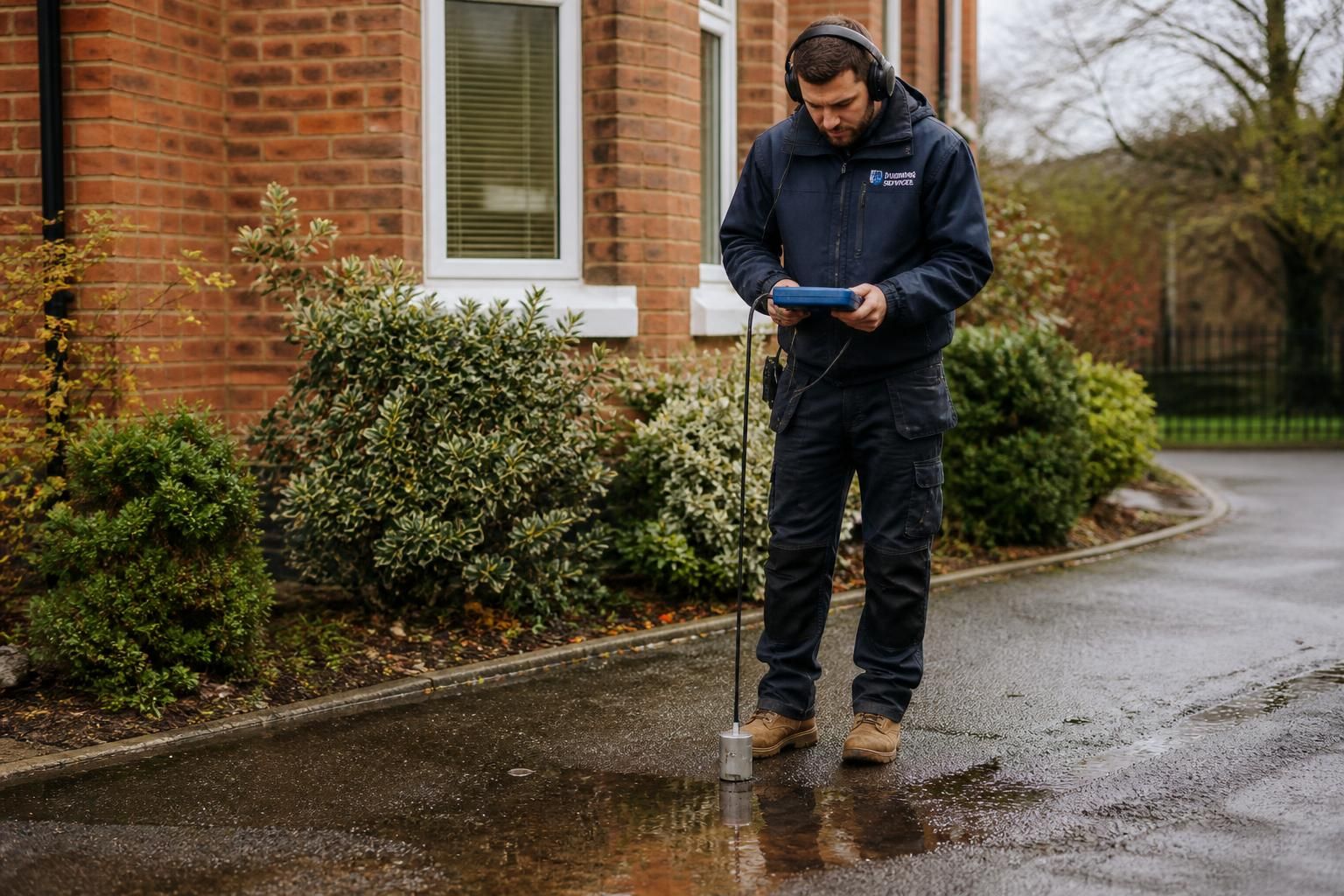
Ground water leak detection is normally priced as an investigation service rather than a standard fixed-price repair. The charge covers the time, equipment and expertise needed to establish whether water is escaping below ground, identify the likely route of the pipe and narrow down the leak position. The cost of repairing the pipe, excavating the ground or reinstating surfaces is usually considered separately once the source has been confirmed.
The main factors that affect the quotation include:
- Type of property and pipework: A private water supply, external service pipe, underground heating circuit or buried drainage connection may require different diagnostic techniques.
- Accessibility: Hardstanding, paving, concrete, planted areas, outbuildings and restricted access can affect the time needed to inspect the suspected route.
- Available information: Water meter readings, pressure tests, visible damp areas, unusual sounds and existing pipe plans can help focus the investigation. Where there is little information, more testing may be needed.
- Length and complexity of the suspected route: A long supply pipe or a network serving several parts of a property may take longer to assess than a short, clearly defined run.
- Detection equipment: Acoustic listening, pressure testing, tracer methods and other non-invasive techniques may be selected according to the pipe material, depth and surrounding ground conditions.
A professional assessment may begin with a visual inspection and a review of the symptoms. The plumber can then compare water usage or meter movement, check whether the pipe holds pressure and listen for escaping water. Where appropriate, specialist equipment is used to pinpoint the probable location without opening up the whole route. This targeted approach can help determine where an excavation is justified, although detection cannot always remove the need for some access work.
When comparing quotations, check exactly what the price includes. Important points include whether the initial inspection, pressure testing, equipment use, written findings and any follow-up visit are covered. Ask separately whether excavation, pipe repair, replacement materials, disposal of spoil and reinstatement of paving, flooring or landscaping are included. These items can materially change the final cost and should not be assumed to form part of the detection fee.
It is also worth confirming whether the quotation is based on a fixed investigation charge or on the time required on site. A clear estimate should explain any conditions that could lead to additional work, such as the need to test more than one pipe, gain access to a locked area or investigate a second suspected leak. This makes it easier to compare like-for-like prices from plumbing professionals.
Ground water leak detection can be worthwhile where the alternative is opening a large area in search of an unknown leak. However, the most economical option depends on the evidence available and the condition of the buried pipework. If the pipe is old or damaged in several places, locating one leak may be only the first stage of deciding between a local repair and replacing a longer section.
Before arranging an assessment, record when the problem was first noticed, whether the water meter moves when all outlets are off, where dampness or pooling appears, and whether the issue changes when internal stop taps or heating systems are isolated. These details do not establish the price by themselves, but they can help the plumber determine the appropriate investigation and provide a more accurate quotation.