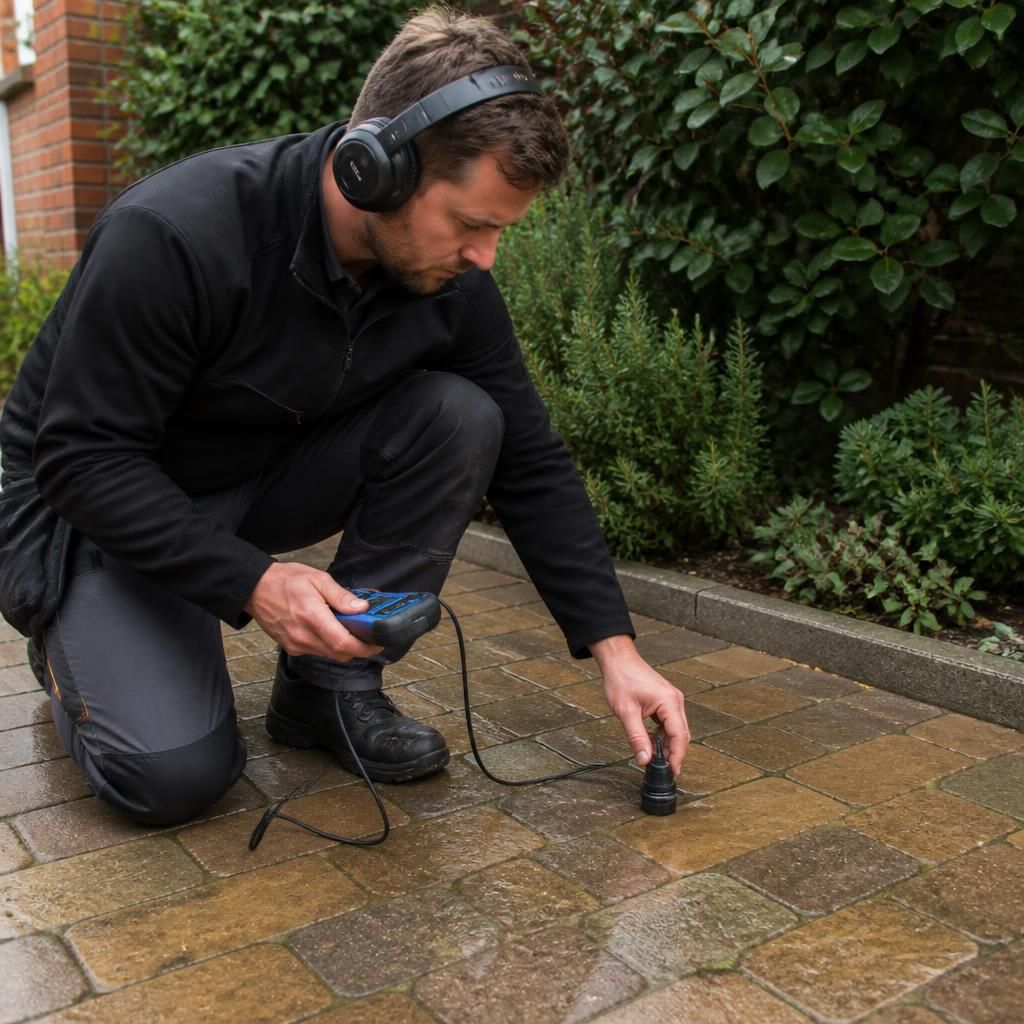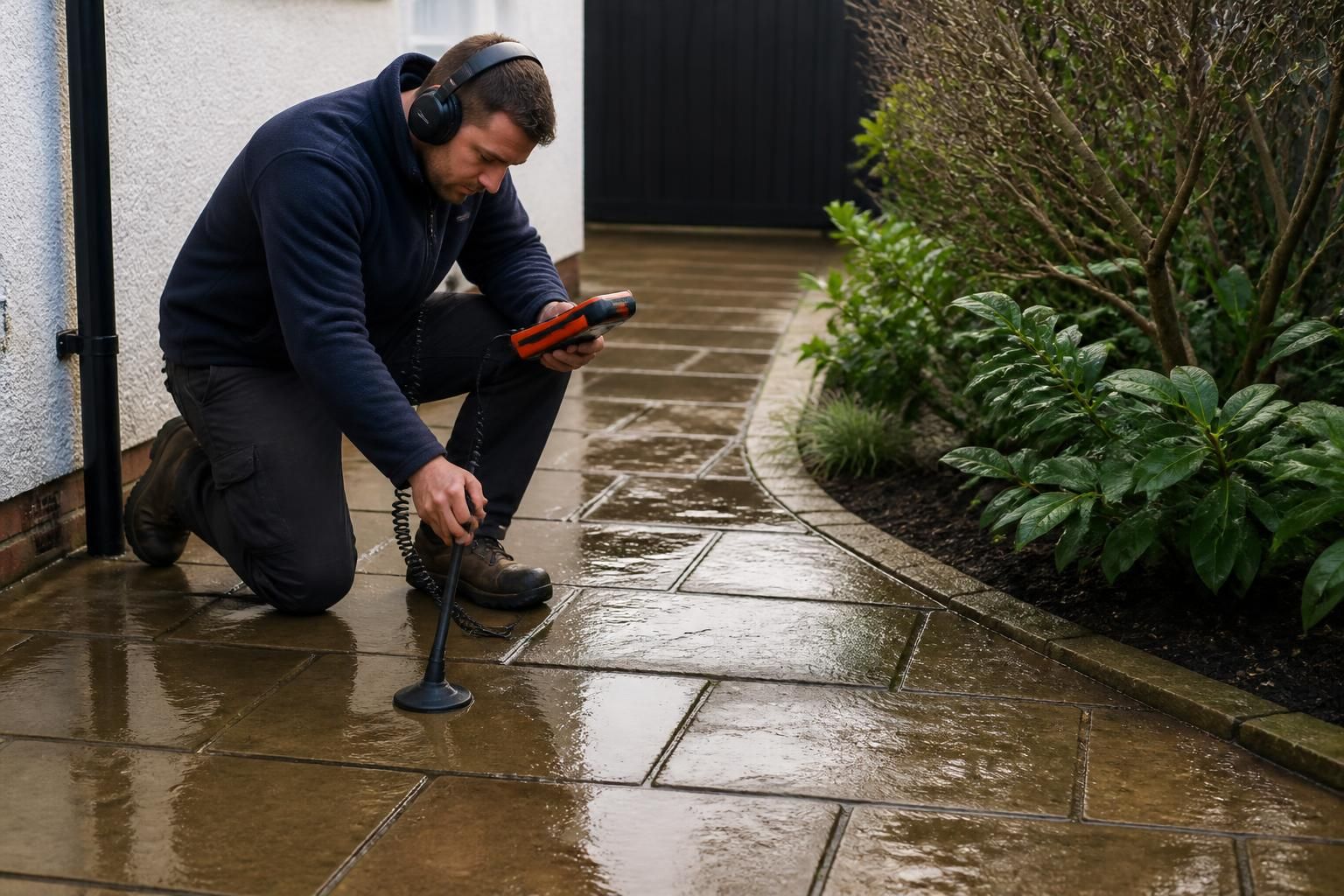
Yes. A leak beneath paving can usually be investigated from above the surface using non-invasive and minimally invasive detection methods. The aim is to identify the route of the supply pipe, confirm whether water is escaping, and narrow the suspected fault to a specific area before any paving is lifted.
The investigation normally begins with a visual and plumbing assessment. Signs may include persistently damp joints, moss or algae growth, unusually wet soil at the edge of paving, sinking sections, or water appearing when there has been no recent rainfall. The water meter and internal stop tap may also provide useful clues if the meter continues to register usage while all taps and appliances are turned off.
Pressure testing can help establish whether the pipework is losing water. If a loss is confirmed, an engineer may use acoustic equipment to listen for the noise produced as pressurised water escapes through a crack, loose joint or damaged section. The sound can travel through the pipe and surrounding ground, although its strength is affected by the pipe material, depth, soil conditions and background noise.
Where acoustic readings are difficult to interpret, other techniques may be considered. Tracer gas can be introduced into suitable pipework and detected at the surface as it moves through the ground. Moisture mapping can help identify areas with abnormal water content, while thermal equipment may sometimes reveal temperature differences associated with escaping water. These methods are not equally suitable for every installation, so the pipe layout and suspected leak conditions need to be assessed first.
- Pipe material: Metal pipes often transmit acoustic signals differently from plastic pipes, which can make the leak harder to pinpoint.
- Depth and access: A deeply buried pipe, restricted stop tap or lack of inspection points may limit the available testing methods.
- Surface construction: Block paving, concrete, tarmac and other surfaces affect how sound and moisture move above the pipe.
- Other water sources: Rainwater drainage, irrigation systems and nearby supply pipes can create symptoms that resemble a water leak.
- Environmental noise: Traffic, machinery and running water may interfere with acoustic detection.
Detection equipment usually identifies the most likely leak position rather than removing the need for confirmation. Once the readings have been compared with the pipe route and visible evidence, a small, targeted opening may be recommended. This is generally more controlled than lifting the entire paved area, but the exact extent of excavation depends on the pipe depth, the fault and how accurately the leak can be located.
Before paving is disturbed, the area should also be checked for other buried services. Excavation should be carried out carefully because electricity cables, gas pipes, drainage runs and communications cables may be close to the leaking water pipe. A proper survey helps separate leak detection from repair: the detection stage locates the likely fault, while the repair may involve replacing a fitting, repairing a section of pipe or renewing a longer run if the pipe has deteriorated.
If paving is wet without an obvious cause, water pressure appears reduced, or the meter shows continued use when the property is not consuming water, arranging a professional assessment can help prevent unnecessary lifting and identify whether the moisture is coming from the supply pipe or another source.