Outdoor pipe leak detection is priced according to the amount of diagnostic work required and the conditions in which the investigation must be carried out. The final cost may include the inspection itself, specialist testing, tracing the pipe route, confirming the leak point, documenting the findings and any separate work needed to expose or repair the damaged section.
The scope of the investigation is one of the first pricing considerations. A straightforward check may involve testing an accessible external supply pipe, whereas an unclear leak may require several stages of investigation. For example, a plumber may need to compare water usage, isolate sections of the system, carry out pressure testing and examine both internal and external pipework before the source can be confirmed. More diagnostic stages generally mean more labour and equipment time.
The type of pipework also matters. The cost can differ depending on whether the suspected leak is on a private supply pipe, a service pipe leading to the property, a garden water line or pipework connected to an external building. Identifying who is responsible for the affected section may be necessary before work proceeds, particularly where a supply is shared or runs across more than one property.
Existing information can reduce uncertainty. Drainage or plumbing plans, previous repair records, meter readings and details of when the problem was first noticed can help establish the likely route and behaviour of the leak. These details do not prove the leak location, but they can help the plumber plan the investigation and avoid treating unrelated symptoms as the main fault.
Detection and repair are normally separate parts of the work. A detection charge covers locating or confirming the problem; it may not include excavation, removal of paving, replacement of pipework, joint repairs or reinstatement. If the leak is found beneath a hard surface, the repair estimate may need to account for lifting and replacing that surface. Where the pipe can be reached without opening the ground, the follow-on cost may be lower, but this depends on the condition and arrangement of the pipework.
Access and site conditions can affect the practical effort involved even when the approximate leak area is known. Narrow side passages, fixed structures, planted areas, stored materials and restricted access to external stop taps can make inspection more involved. A property with several possible supply routes may also require more testing than one with a clearly identifiable pipe run.
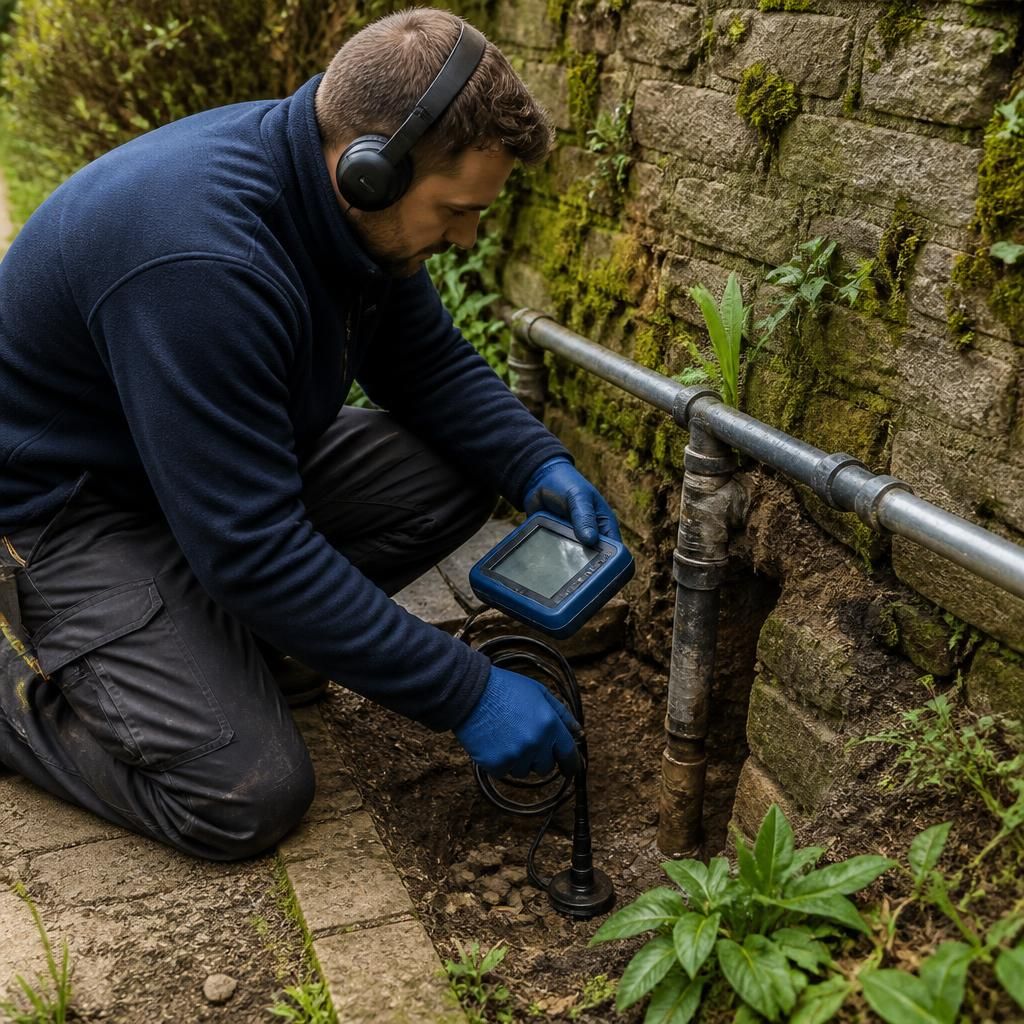
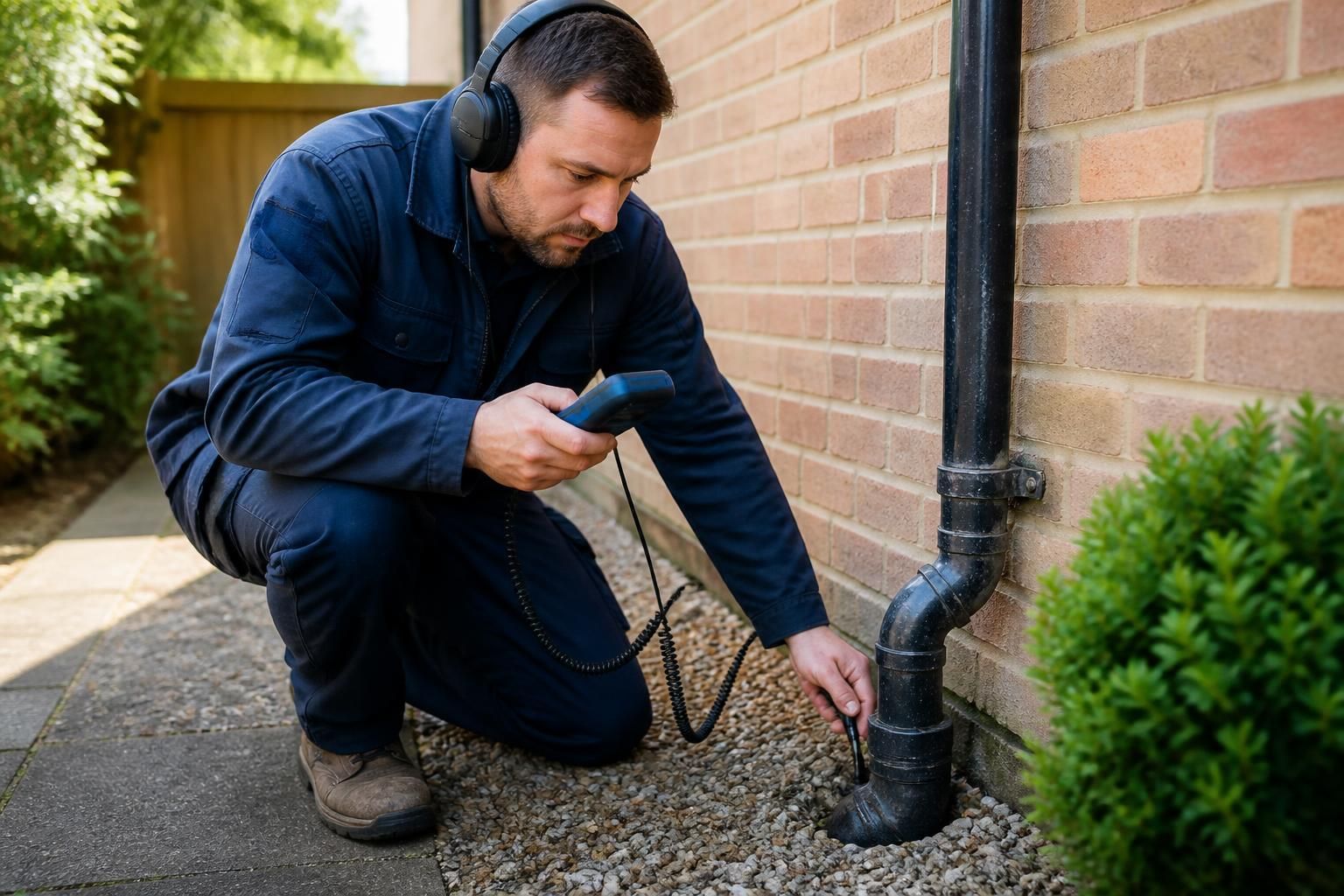
The equipment used depends on the evidence available and the nature of the suspected fault. Acoustic listening equipment, pressure testing, trace methods and other non-invasive techniques may be used to narrow down the source before any ground is disturbed. The required method is selected by the plumber rather than being an optional package that is suitable for every site. A specialist method can add to the charge, but it may help avoid unnecessary excavation.
There may also be a difference between finding a likely area and pinpointing the precise failure. A visual inspection might identify damp ground or an unusually wet patch, while further testing is needed to establish whether the water is coming from the supply pipe, a drainage defect, groundwater or another source. A clear diagnostic conclusion is particularly useful before arranging excavation or repair.
When comparing quotations, check whether they state:
- whether the price covers investigation only or includes a repair;
- which testing methods and equipment are included;
- whether a written report, photographs or findings for an insurer are provided;
- what happens if the first suspected area does not contain the leak;
- whether excavation, access work and surface reinstatement are excluded; and
- whether any further work requires separate approval.
An accurate quotation may require basic information before the visit, such as the property layout, the position of the external stop tap, visible signs of water loss and any changes in meter readings. The plumber can then distinguish the cost of identifying the fault from the cost of putting it right. Ideal Plumbing Services provides leak detection and plumbing repairs for homeowners, landlords and tenants, with clear explanations of the work recommended and charges that are not hidden.