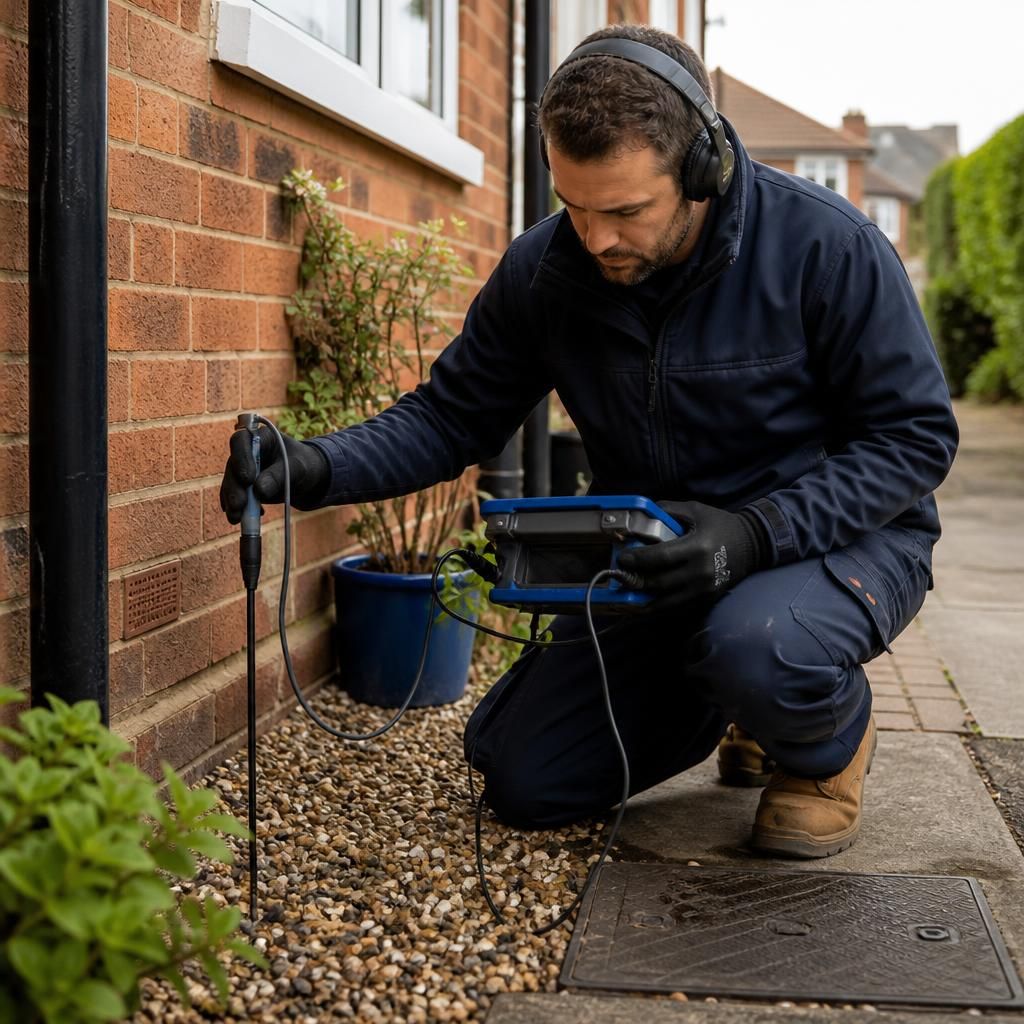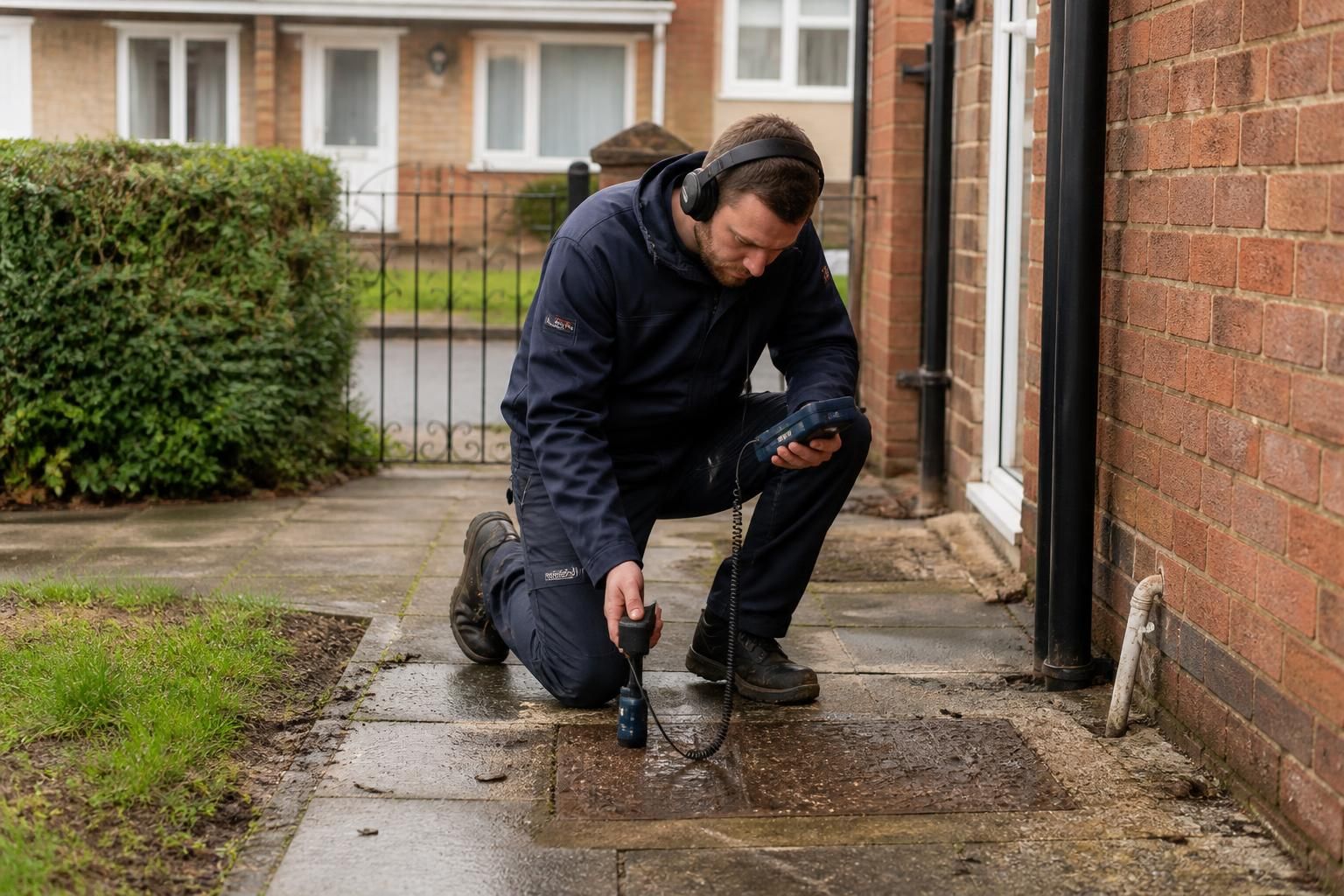
Outdoor pipe leak detection is appropriate for rented homes when the source of water loss is outside the building, underground or otherwise difficult to inspect directly. It allows the suspected section of pipework to be investigated before any repair work is planned, helping establish whether the problem relates to the property, a shared supply or a service that falls elsewhere.
For tenants, the correct first step is to report the signs to the landlord, letting agent or managing agent. Tenants should not lift paving, excavate soil, disconnect pipework or arrange major remedial work without permission. A tenant can, however, record useful information such as:
- Unexplained wet areas, puddles or persistently soft ground
- Water appearing near an external tap, boundary wall or inspection cover
- A water meter that continues to register use when the property’s taps and appliances are off
- Reduced pressure, unusual pipe noises or dampness entering the building
- Damage to paving, brickwork, fencing, planting or neighbouring ground
Photographs and notes about when the symptoms were noticed can help the landlord decide how to proceed. If water is entering the property or creating a risk of damage, the tenant should follow the tenancy’s reporting procedure and only turn off the internal stop tap if it is safe to do so and they know where it is located.
Landlords are usually responsible for arranging investigation of fixed plumbing serving their property, but the exact responsibility can depend on the tenancy agreement, the position of the leak and who owns the affected pipe. For example, an underground supply pipe between the boundary and the building may be treated differently from a shared pipe serving several homes. A managing agent, freeholder, water supplier or insurer may also need to be involved where the pipe is communal or outside the landlord’s ownership.
A suitable inspection normally begins with a discussion of the symptoms and a visual check of accessible pipework, meter readings and stop-tap arrangements. Depending on the findings, the engineer may use pressure testing, acoustic equipment, tracer methods or other specialist techniques to narrow down the location. The aim is to identify the likely route and position of the leak so that access can be planned carefully, rather than removing surfaces without evidence.
Permission and access should be agreed before the appointment. This may include access to the garden, driveway, side passage, utility area or neighbouring land. In a block of flats or a property with shared services, access arrangements may need to be coordinated with other occupants. The person commissioning the inspection should also confirm whether the report is intended to support an insurance claim or a later repair, as the required documentation may differ.
Detection and repair are separate stages. Finding the leak does not necessarily establish who must pay for reinstatement, replacement pipework or damage to surrounding surfaces. The landlord should ask for the findings to be explained clearly, including the suspected location, the evidence supporting it, any limitations caused by access and what further work is recommended. Tenants should keep copies of reports, photographs and communications in case responsibility or damage is later disputed.
Ideal Plumbing Services can assess outdoor water leaks for landlords and property occupants, with the appropriate permission and access in place. For a rented property, providing the tenancy details, the affected outdoor area and any meter or water-use observations will help ensure that the inspection is focused on the relevant pipework.