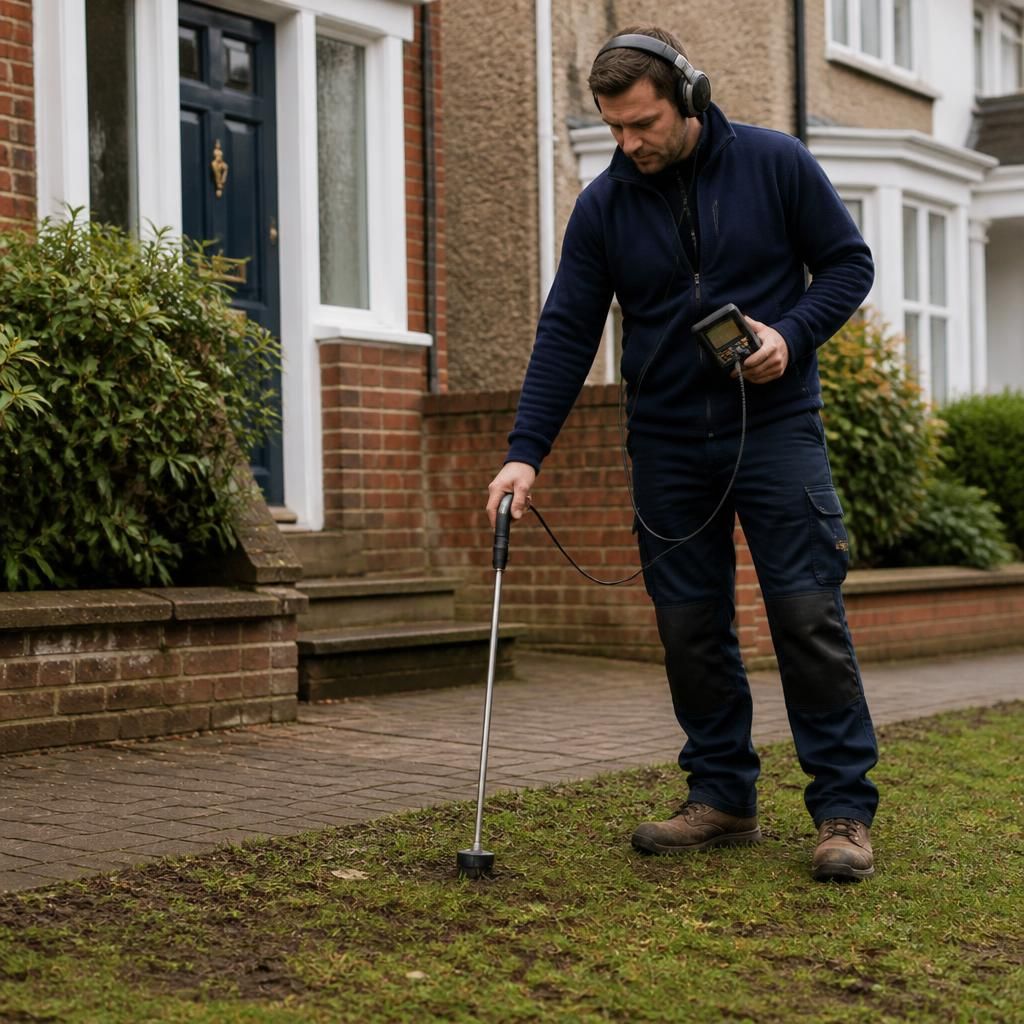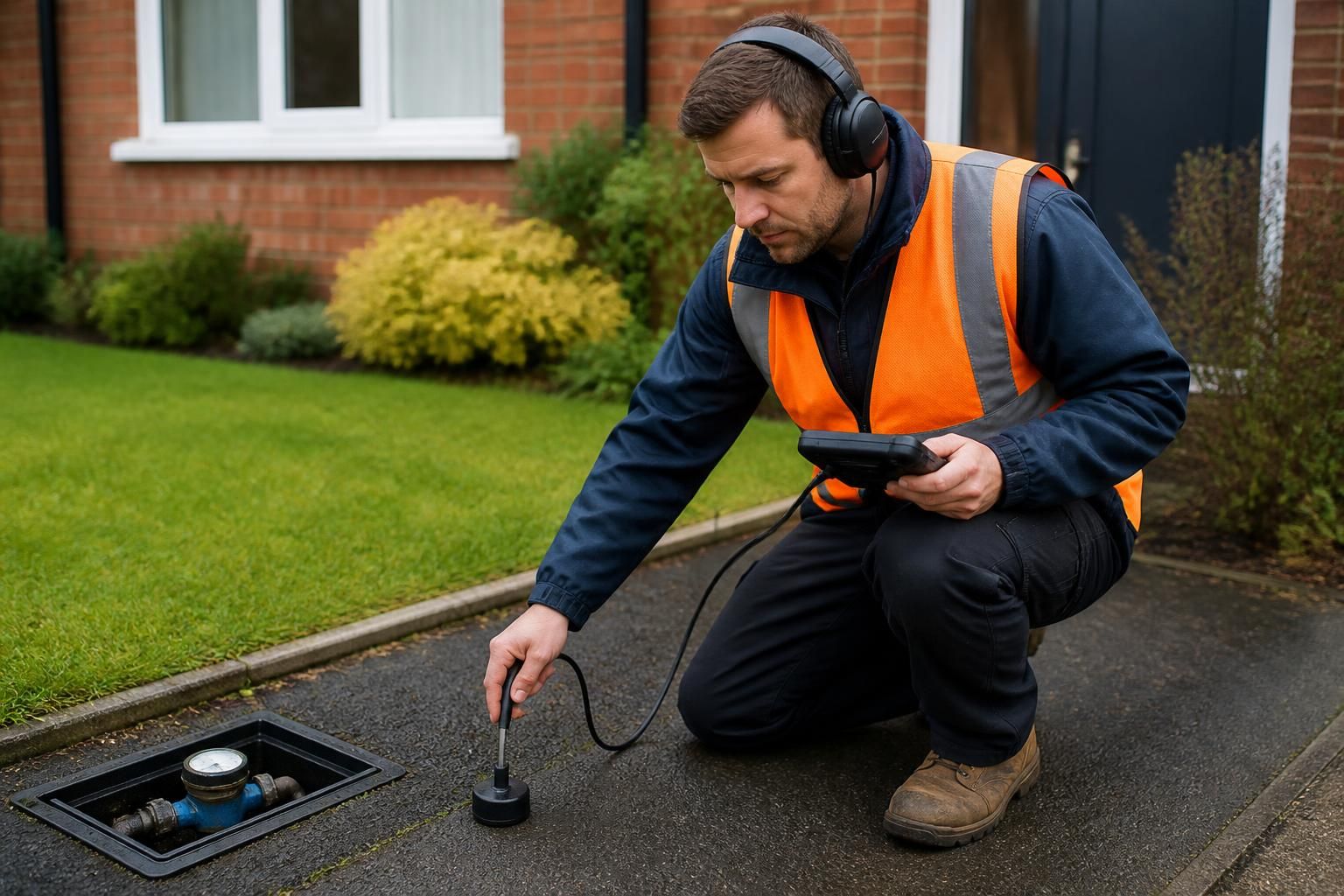
An underground water leak is located by narrowing down the affected section of pipe, measuring how the system behaves when isolated, and confirming the suspected point with specialist detection equipment. The aim is to identify the pipe route and leak position accurately before any paving, tarmac, soil or concrete is disturbed.
The investigation usually begins with a visual and practical assessment of the property. A plumber may check the water meter, stopcock, exposed pipework and visible ground conditions, looking for signs such as unusually damp soil, moss growth, sinking surfaces, unexplained puddles or water entering a building. These clues can indicate the general route of the buried pipe, but they do not prove the exact leak position.
The pipework is then divided into sections where possible. Valves, internal stopcocks and other access points help establish whether the loss is on the property side of the supply, within an external private pipe or on another part of the plumbing system. Isolating sections in this way prevents water from elsewhere in the property being mistaken for the underground fault.
Acoustic equipment is used to detect the vibration created as pressurised water escapes through a damaged joint, crack or hole. A technician places sensitive ground microphones or contact sensors over accessible points along the pipe route and compares the readings. A stronger signal is not always enough on its own: soil type, pipe material, surface coverings, traffic and background noise can all affect the result. Taking readings from multiple positions helps identify where the sound is originating.
Where the pipe route is uncertain, electronic pipe-locating equipment can help trace buried metal or detectable plastic pipework. A correlation system may also compare the arrival time of the leak noise at two sensors. The difference between those readings can be used to calculate the leak's position between the sensors, provided the pipe material, diameter and route are understood sufficiently for the equipment to be calibrated.
Other techniques may be selected according to the circumstances. Tracer gas can be introduced into an isolated pipe so that gas escaping through a small or low-noise leak can be detected at the surface. Thermal imaging can sometimes reveal temperature differences caused by escaping water, although its usefulness depends on the depth of the pipe, ground conditions and weather. Moisture readings and inspection chambers can provide supporting evidence but are rarely reliable enough to locate every underground leak by themselves.
Once the findings from the different tests have been compared, the likely pipe route and access point are recorded. A good survey distinguishes between the place where water appears at the surface and the point where the pipe is actually damaged; these can be several metres apart because water can travel through soil, bedding material or service ducts. If the evidence is inconclusive, further testing may be needed rather than assuming that the wettest area is the source.
- Supply pipe leak: may cause meter movement when the property's outlets are closed, pressure loss or persistent wet ground near the incoming service.
- Heating or internal plumbing leak: may be affected by a boiler, heating circuit or individual appliance rather than the external water supply.
- Drainage problem: usually involves wastewater and may produce foul odours, blocked outlets or flow-related symptoms rather than a continuous pressurised leak.
After the location has been confirmed, the repair method can be considered. This may involve exposing a joint, replacing a damaged section, renewing a longer run or installing a suitable access point. The chosen approach depends on pipe material, depth, accessibility, ownership of the pipe and the condition of surrounding ground. Detection should be completed before excavation wherever possible, because opening the ground without sufficient evidence can damage nearby services and create unnecessary reinstatement work.
For a property in Birmingham or elsewhere in the West Midlands, Ideal Plumbing Services can assess suspected external supply leaks and explain the evidence behind the proposed repair. The most useful information to provide is when the problem was first noticed, whether the meter changes when all outlets are closed, and whether there are damp patches, subsidence or recent landscaping works outside.