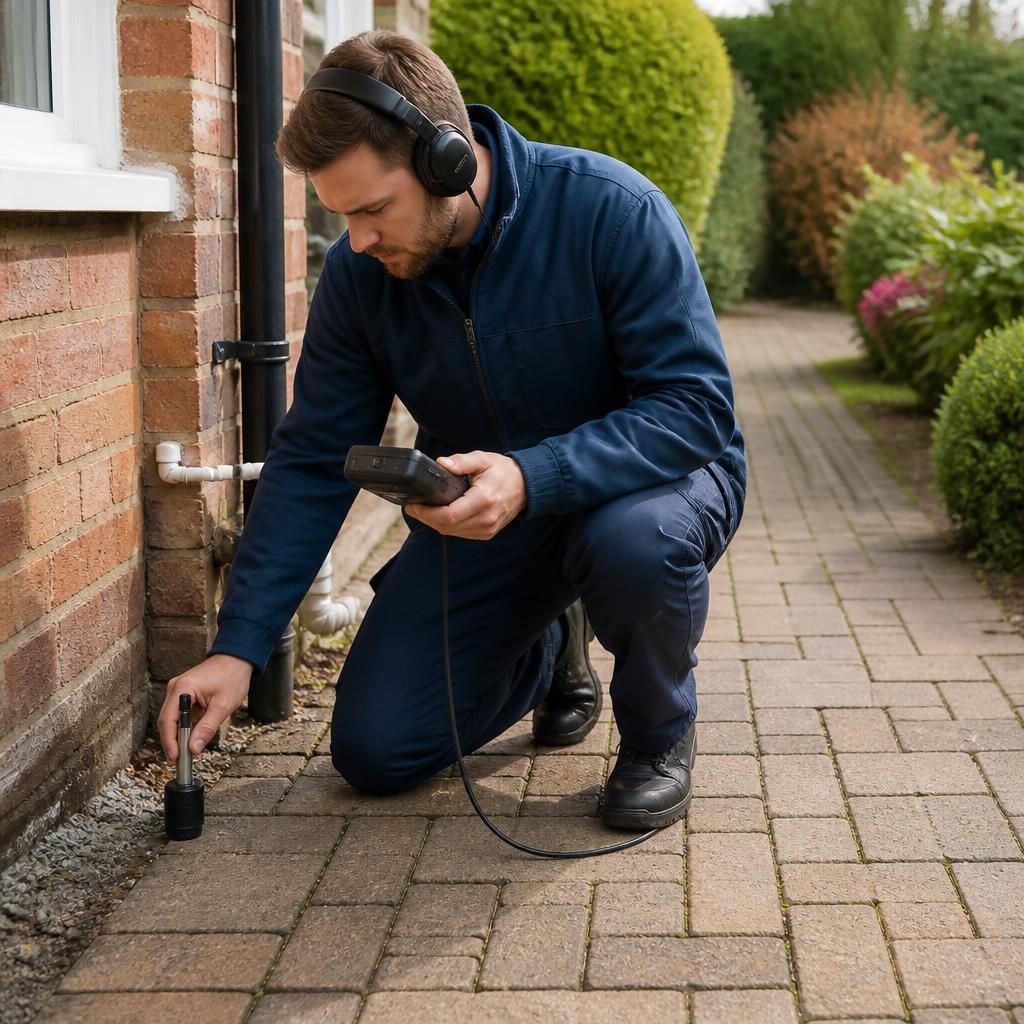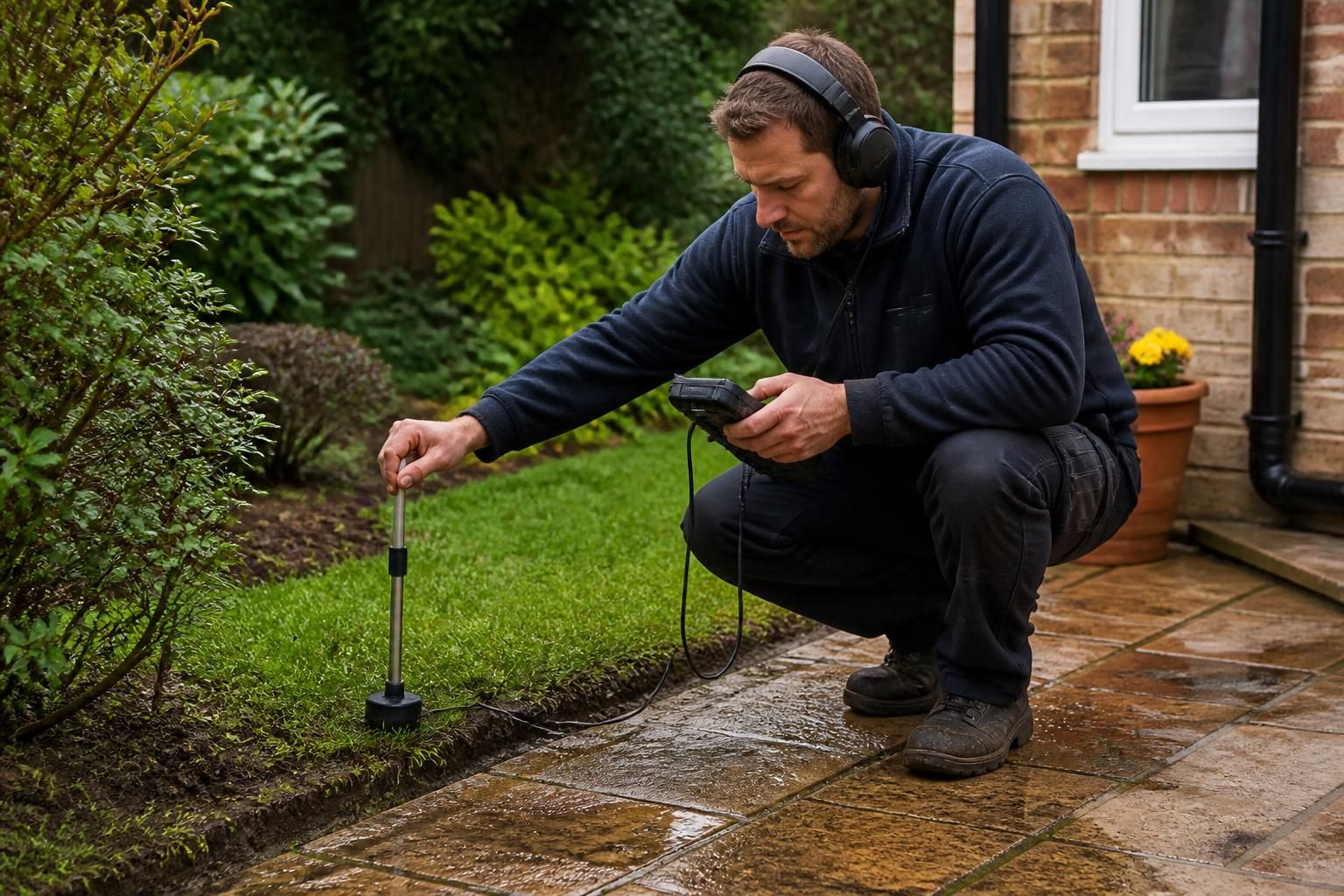
The disruption from outdoor pipe leak detection is normally limited to inspection, testing and access to the suspected section of pipe. Detection can often be carried out from accessible points such as an internal stop tap, an external meter, an inspection chamber or a visible pipe connection, without disturbing the entire garden, driveway or path.
What the detection process involves
- Initial assessment: The plumber considers symptoms such as unexplained meter movement, damp ground, soft patches, water pooling, reduced pressure or a sound of running water when outlets are closed.
- System checks: Valves, meters and accessible pipework may be checked to establish whether the issue is on the property’s supply pipe, an external fitting or another part of the plumbing system.
- Specialist testing: Suitable detection equipment can help narrow down the position of a concealed leak. The method used depends on the pipe material, ground conditions, the depth of the pipe and whether the surrounding area is paved, landscaped or built over.
- Confirmation: Findings are assessed before any ground is opened. This reduces the risk of lifting paving or disturbing soil in areas that are not connected to the leak.
During detection, there may be some equipment noise and a need to keep particular areas clear. Access may be required to the outside stop tap, meter, utility room, manhole or other connection points. Moving garden furniture, vehicles, stored materials or movable planters beforehand can make the inspection more straightforward, although fixed structures should not be removed simply to prepare for an assessment.
Where outdoor surfaces are involved
Grass and soil are generally easier to inspect than constructed surfaces because access can be created and reinstated more simply if confirmation or repair requires a small opening. Paving, blockwork, tarmac, concrete, decking and planted areas require more care. The position of joints, underground services, drainage runs and the condition of the surface can all affect how access is created.
A detection visit does not automatically mean that paving will be lifted or a driveway cut. If opening the surface becomes necessary, the plumber should explain where access is required and why. Detection and repair are separate decisions: locating the suspected point helps determine the appropriate repair, but it does not by itself authorise excavation or surface removal.
What can increase disruption?
- The suspected leak is beneath a driveway, patio, conservatory, extension or other fixed surface.
- The pipe route is unclear or has several connections and changes in direction.
- Ground is waterlogged, frozen, heavily planted or difficult to access.
- Previous alterations have left buried pipework, redundant fittings or undocumented repairs.
- The leak is intermittent, very small or affected by changing pressure conditions.
- Access points are obstructed or the supply cannot be isolated for testing.
These conditions may mean that additional checks are needed before the leak can be confirmed. They do not necessarily mean that the whole pipe run must be exposed. A careful assessment should distinguish between evidence of a leak and the work needed to reach it.
After detection
If the source can be confirmed without opening the ground, the inspection may finish without visible alteration to the property. If a section needs to be exposed, the affected area should be kept as small as practical and the proposed work explained before it begins. The condition of any reinstatement depends on the surface, the extent of access and whether specialist landscaping or surfacing work is needed.
Report signs such as persistent damp patches, unexplained water use or a continual running-water sound when all outlets are closed, as these can help narrow the search. Avoid digging at random or sealing suspected points before the pipe route has been assessed, since this can hide evidence and create unnecessary disturbance.