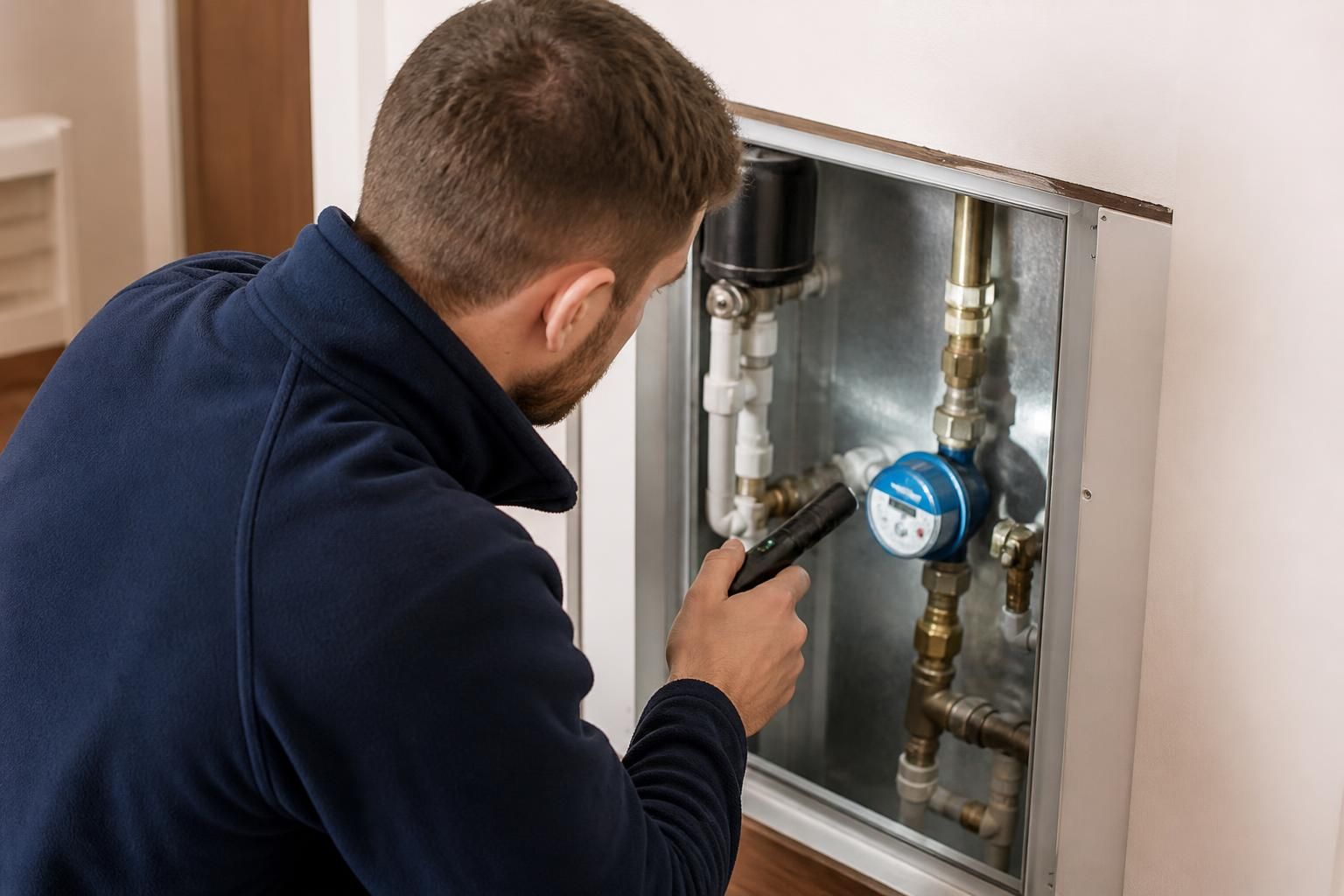
Water main leak detection is permitted at a rented property, but the person arranging the inspection should first establish who controls the property and who may be responsible for the affected pipework. In most cases, the tenant reports the suspected leak to the landlord or managing agent, while the owner or agent authorises access and agrees how the investigation will be funded.
The location of the leak is more important than the fact that the property is rented. A leak may be found in the water company’s underground main, the private supply pipe serving the property, or the internal plumbing system. Responsibility can therefore depend on the position of the pipe, ownership of the installation, the tenancy agreement and any arrangements with the local water provider.
Tenants should report signs of a possible leak promptly, particularly where there is:
- an unexplained increase in water usage or a meter that continues to move when no water is being used;
- damp patches, mould, staining or peeling finishes;
- reduced water pressure or unusual noise from pipes;
- standing water, saturated ground or unusually soft areas outside; or
- damage appearing around ceilings, walls, floors or cupboards.
The tenant should provide the landlord or agent with clear information, including where the symptoms appeared, when they were first noticed and whether the stop tap changes the sound, pressure or flow. Photographs and meter readings can also help create a record of the problem. Avoid removing flooring, lifting fitted units or attempting repairs unless the responsible party has approved the work.
Before an engineer attends, the landlord or managing agent should confirm the access arrangements with the tenant. The appointment may require access to internal areas, the meter, the stop tap, an outside path or other parts of the property. Any notice and entry requirements in the tenancy agreement should be followed. A tenant should not be expected to allow unrestricted access without suitable arrangements, and a contractor should not enter areas that have not been authorised.
During an investigation, a plumber may inspect the visible pipework and meter, isolate sections of the supply and use specialist detection methods to narrow down the leak’s position. The objective is to distinguish a leak from normal water use and identify whether further investigation, excavation or repair is appropriate. Detection is separate from repair, so the report should explain what was tested, what was found and which party may need to take the next step.
Payment should be agreed before work starts. A landlord will commonly arrange investigation where the leak relates to the property’s fixed plumbing or private supply pipe, subject to the tenancy terms and the actual cause. A tenant may be responsible where the issue resulted from damage or misuse, or where the tenancy agreement expressly places a particular maintenance duty on them. The water company may need to assess leaks affecting its own mains or infrastructure. If responsibility is uncertain, the parties should avoid assuming that the person who first notices the leak must pay.
If water is actively escaping or causing damage, the tenant should take sensible steps such as turning off the internal stop tap if safe, moving belongings away from the affected area and notifying the landlord or agent without delay. The water company may also need to be contacted where the suspected problem is in the public road, at the external stop tap or on infrastructure believed to be under its control.
Ideal Plumbing Services can help landlords, agents and tenants investigate suspected water main and supply pipe leaks in Birmingham and the wider West Midlands. A written explanation of the suspected location and recommended next action can assist with arranging an appropriate repair and keeping the property’s maintenance records up to date.