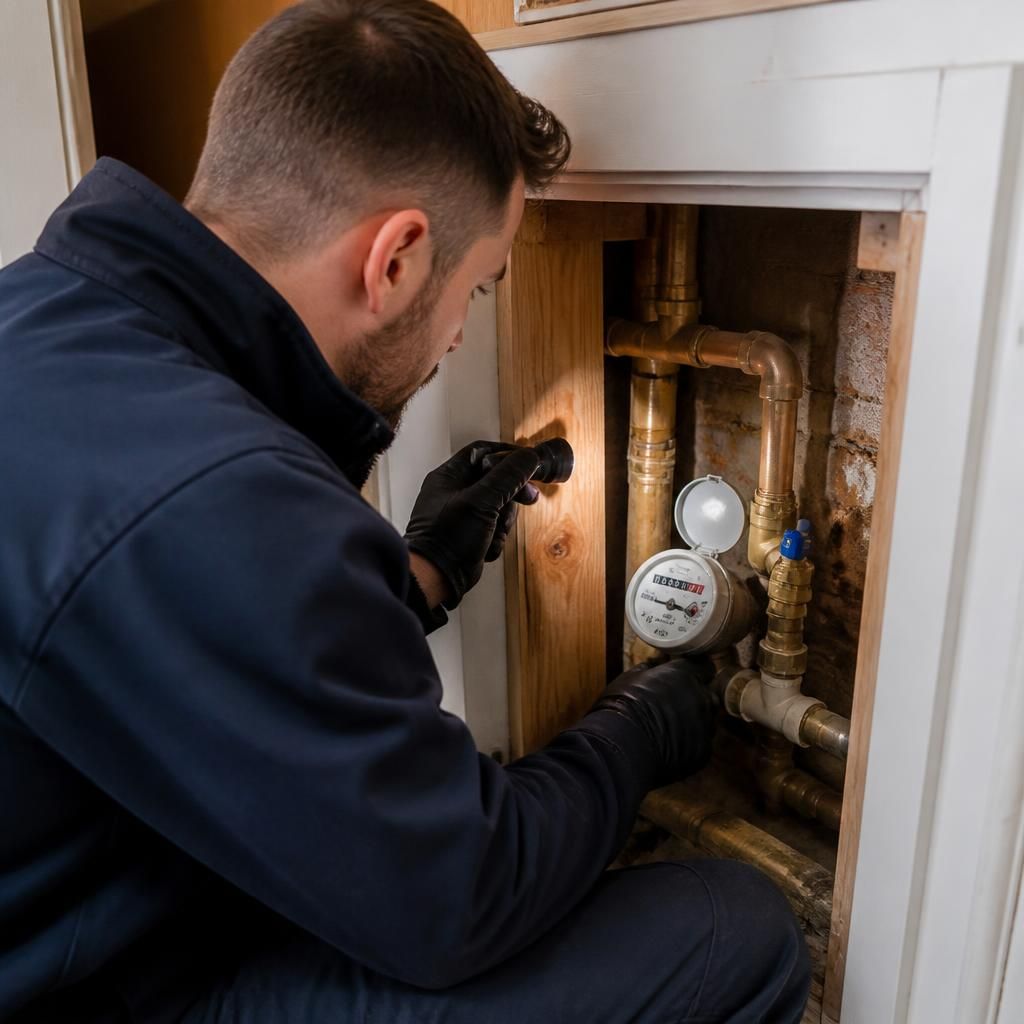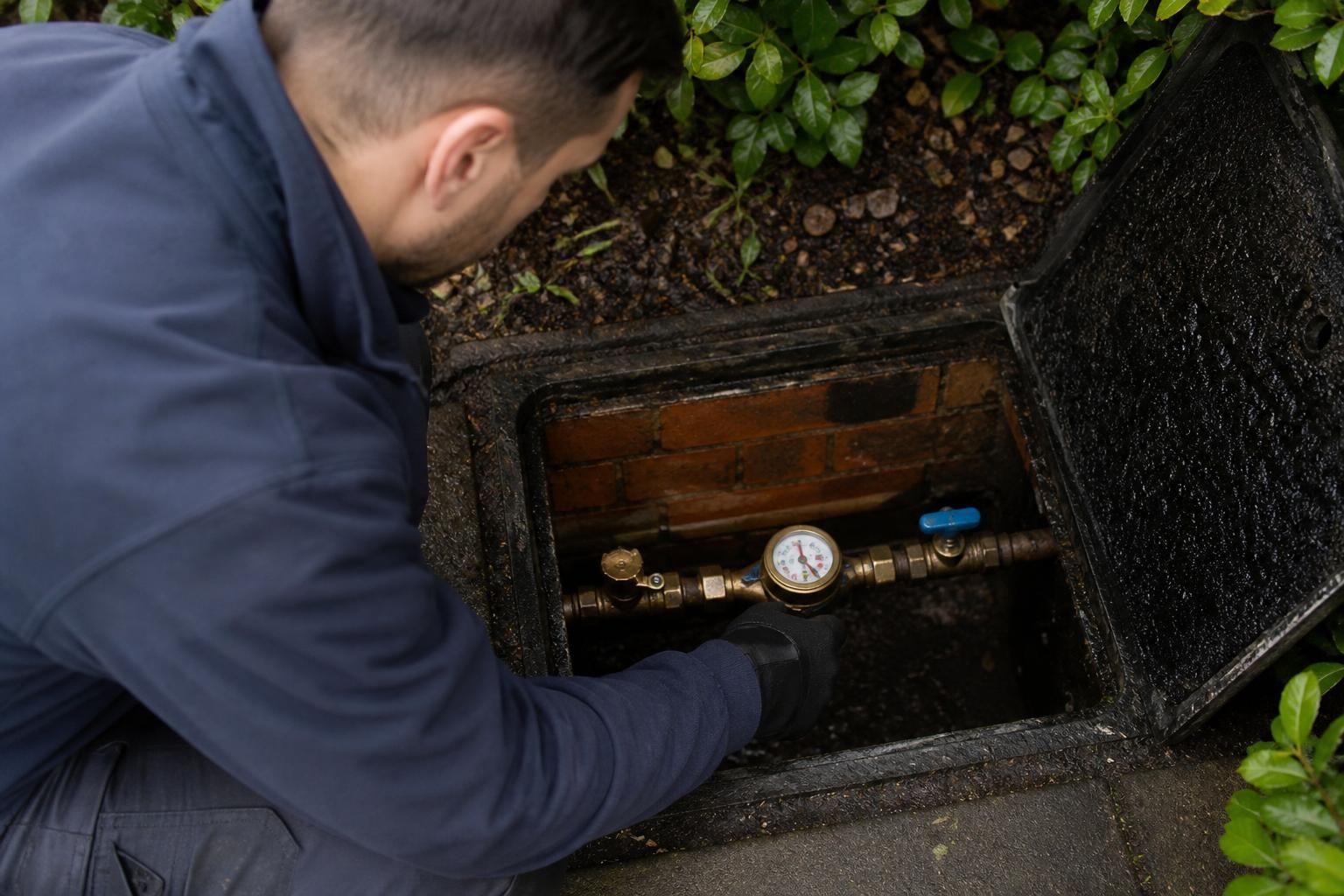
A “no leak detected” result means that no active escape of water was confirmed under the conditions and within the sections tested. It does not necessarily prove that the original concern was mistaken or that a leak can never be present. Water loss can stop temporarily, occur only when a pipe is under pressure, or be located beyond the part of the system that could be tested.
The first step should be to establish exactly what was examined. A useful report should record the accessible pipework, isolation points, meter or pressure observations, areas checked and any restrictions, such as concealed pipes, fixed flooring or inaccessible chambers. This distinction matters because a result based on limited access has a different meaning from a result covering the complete suspected route.
There are several reasons why a genuine problem may not be reproduced during an appointment:
- A small joint or pipe defect may open only when the system is hot, under higher pressure or being used in a particular way.
- Water may travel along a pipe, floor or wall before becoming visible, making the apparent location different from the source.
- An underground supply pipe may remain stable during testing but lose water intermittently because of ground movement, changing pressure or a defect that temporarily seals itself.
- The observed moisture, staining or meter movement may have resulted from a previous event rather than continuing water loss.
- A faulty stop tap, meter, valve or appliance connection may create confusing readings without producing the pattern expected from a buried main leak.
Before authorising repairs, compare the findings with the evidence that led to the inspection. Check whether the water meter still records movement when every tap, toilet and water-using appliance is isolated. If movement continues, the next investigation should identify which section remains connected and whether the issue is on the property side of the boundary. If the meter remains still, inspect changes in pressure, visible staining, flooring, ceilings and appliance connections rather than assuming that excavation or pipe replacement is needed.
Further checks may include isolating individual branches, testing sections separately, inspecting accessible pipework, checking toilets for silent refilling and monitoring the area over time. Where the suspected route is concealed, non-invasive investigation can help narrow down the location before opening floors, walls or external surfaces. Any monitoring should be documented with dates, meter readings and the conditions under which the symptoms appear.
If there is no continuing evidence of water loss, the appropriate next step may be observation rather than immediate repair. Photographing new marks, recording when sounds or dampness occur and noting whether symptoms follow showering, heating or appliance use can provide useful information for a second assessment. Do not cover a wet area, remove flooring or arrange major remedial work until the source and extent of the problem are reasonably established.
Where the investigation indicates that the suspected pipe is outside the property’s responsibility, the relevant water supplier or managing party may need to assess it. For rented accommodation, the tenant should provide the landlord or agent with the findings and any supporting photographs, particularly where access or authorisation is needed for further testing.
A Birmingham plumbing specialist can review the original readings, carry out targeted follow-up checks and explain whether further leak detection is justified. The aim is to separate an unresolved water-loss problem from a historical mark or an unrelated plumbing fault, so that the next work is based on evidence rather than a speculative repair.