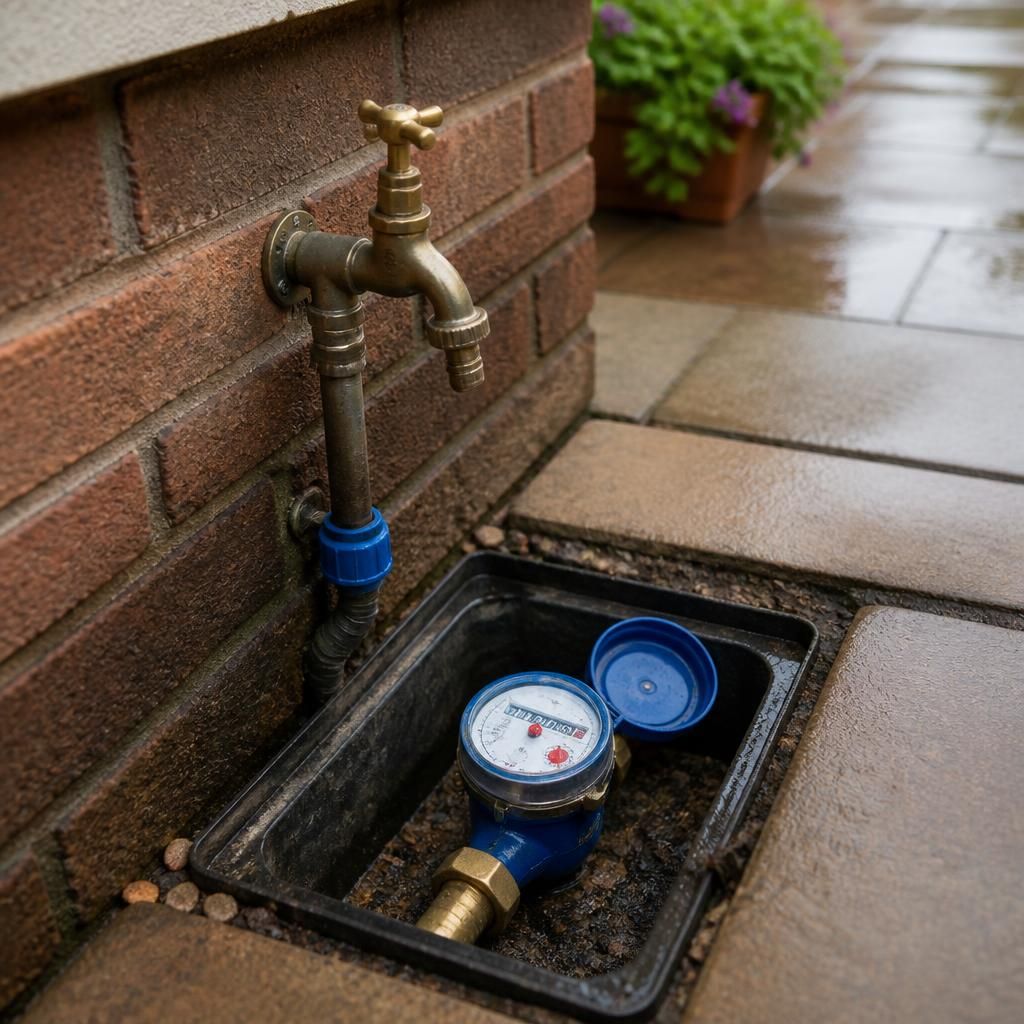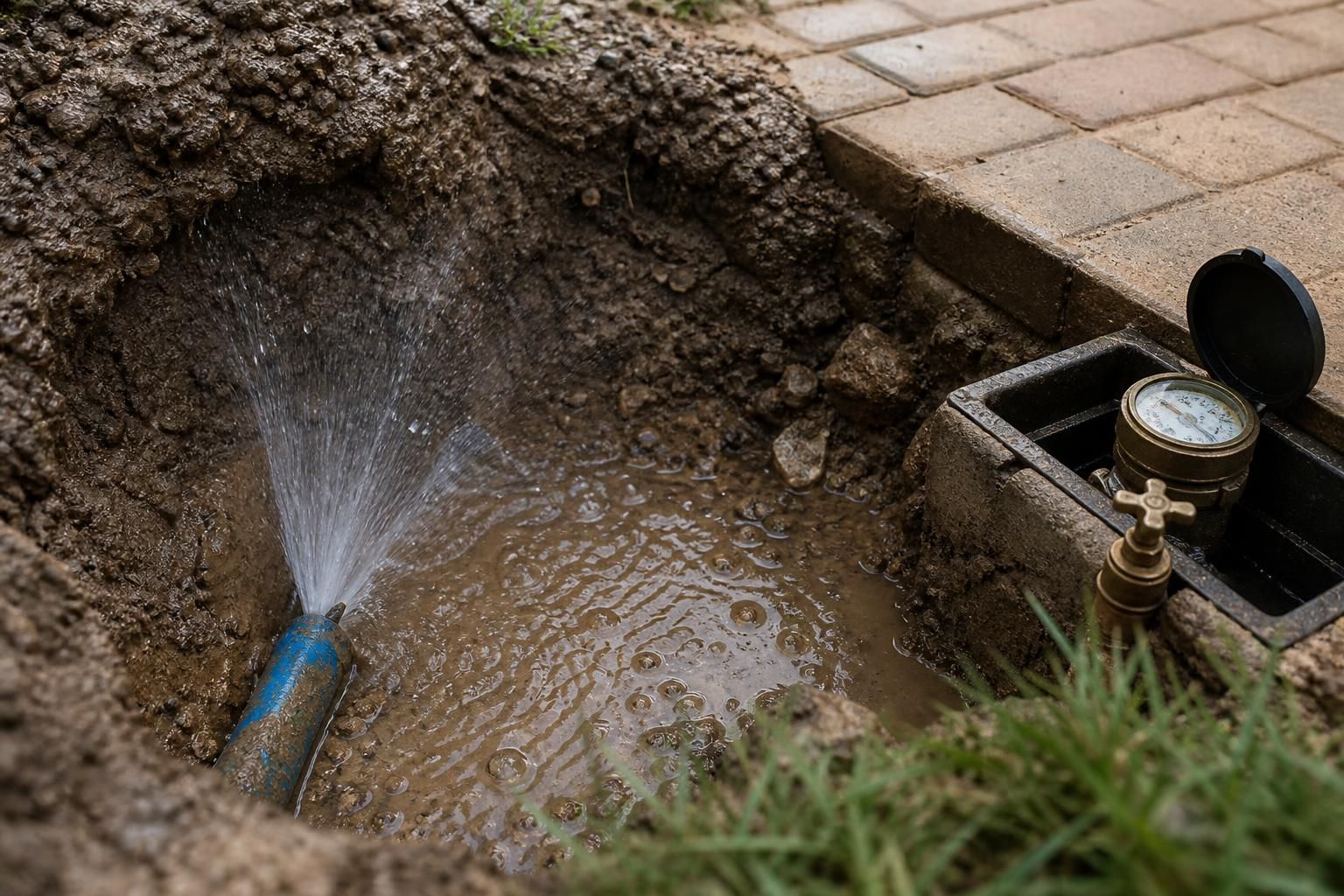
A water main leak is an escape of water from an underground supply pipe serving a property or from a larger public water main. Because much of the pipework is buried, the first evidence may be indirect rather than a visible stream of water. The signs should be assessed together, as a single symptom can have other causes.
One useful distinction is whether the suspected leak is on the public main, the private supply pipe or the internal plumbing. The private supply pipe may run from the water meter or property boundary to the building, while internal pipework begins inside the property. Responsibility for repairs can depend on the pipe’s location, ownership and the arrangement serving the property.
- Water appearing away from normal drainage points: Moisture at the base of walls, around an external stop tap or along the route of a buried pipe can suggest an underground escape. Check whether the area remains wet after dry weather, rather than only after rainfall or gardening.
- Changes in the appearance of paving or soil: Washed-out soil, softened ground, algae growth or an isolated area of unusually healthy vegetation can develop above a leaking pipe. These changes are more significant when they follow the likely route of the supply pipe.
- Water heard when the property is not using it: A faint hiss, hum or rushing noise may be transmitted through walls, floors or the ground. Turn off taps, appliances and toilet cisterns before listening, because normal equipment can create similar sounds.
- Problems with the water meter: A meter that continues to register use when every outlet is closed can indicate water is moving through the system. This test is not conclusive if a cistern is refilling, an appliance is running or another outlet has been overlooked.
- Visible movement around underground pipework: Erosion or a void beneath paving can occur when escaping water carries soil away. Do not excavate to investigate it yourself, as buried utility services may be nearby and the ground may be unstable.
Before assuming that the main supply is leaking, check toilets, outside taps, heating systems and appliances for faults. A continuously running toilet, leaking valve or damaged washing-machine connection can produce similar meter activity and water loss. Internal leaks may also show as staining, peeling finishes or dampness, although these symptoms do not identify the source on their own.
A simple initial check is to record the meter reading, avoid using water for a suitable period and take a second reading. Make sure nobody uses a tap or flushes a toilet during the check. If the reading changes, there is likely to be water flow somewhere on the property’s supply system, but the test cannot establish the exact location or whether the pipe is privately or publicly maintained.
Professional leak detection may involve checking the meter and stop taps, listening for acoustic signals, measuring pressure and tracing the pipe route. Specialist equipment can help locate an underground leak without immediately opening large areas of paving, flooring or soil. The technician should also establish whether the suspected fault is inside the property, on a private service pipe or associated with the public network.
Arrange an assessment where the evidence persists, particularly if water is entering the building, the ground is being washed away or the suspected pipe is close to foundations, electrical installations or other buried services. If the leak is substantial, isolate the supply using the internal stop tap if it is safe and accessible, and keep people away from unstable ground. A qualified plumber can help determine the source, explain the available repair approach and identify whether another responsible party or water supplier needs to be contacted.
Keeping photographs, meter readings and notes about when the symptoms occur can assist the investigation. Avoid covering damp areas, filling voids or carrying out permanent repairs before the source has been identified, as this may conceal evidence and allow an underground leak to continue unnoticed.