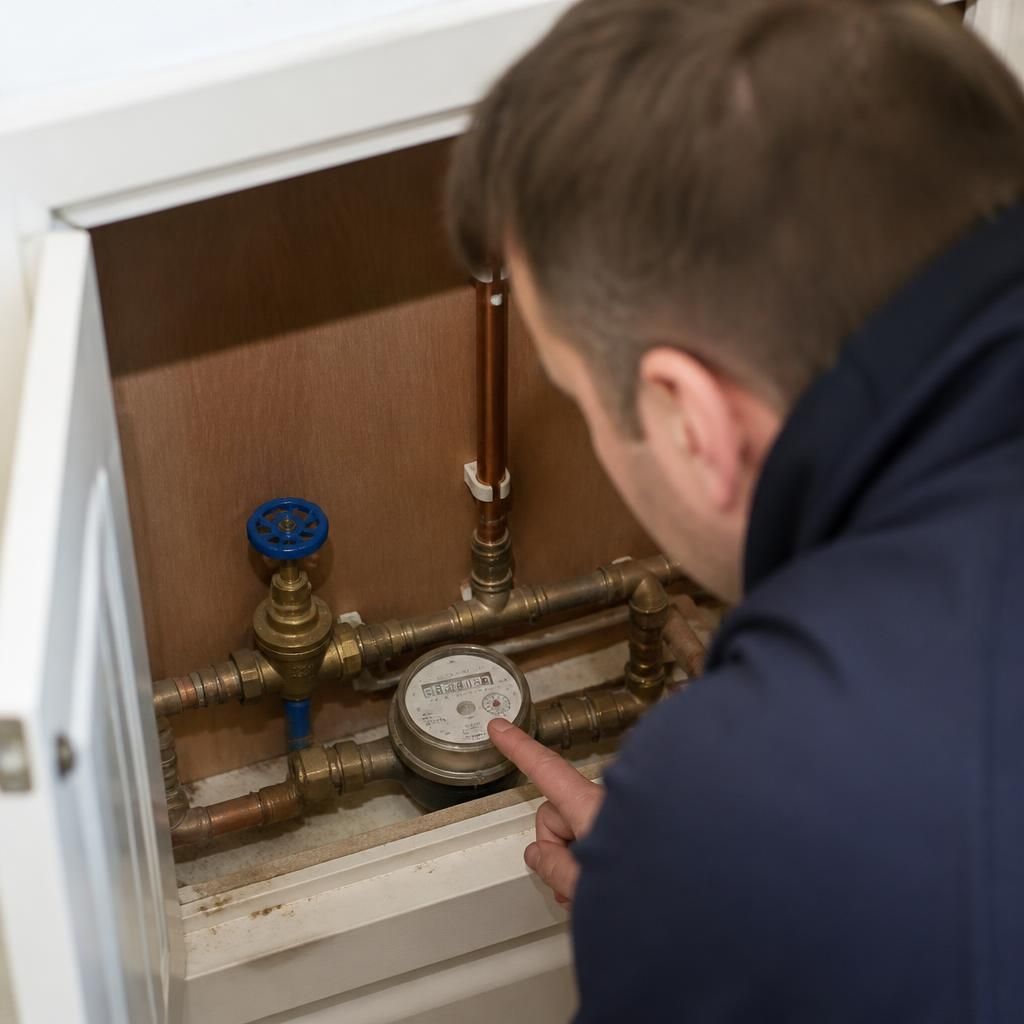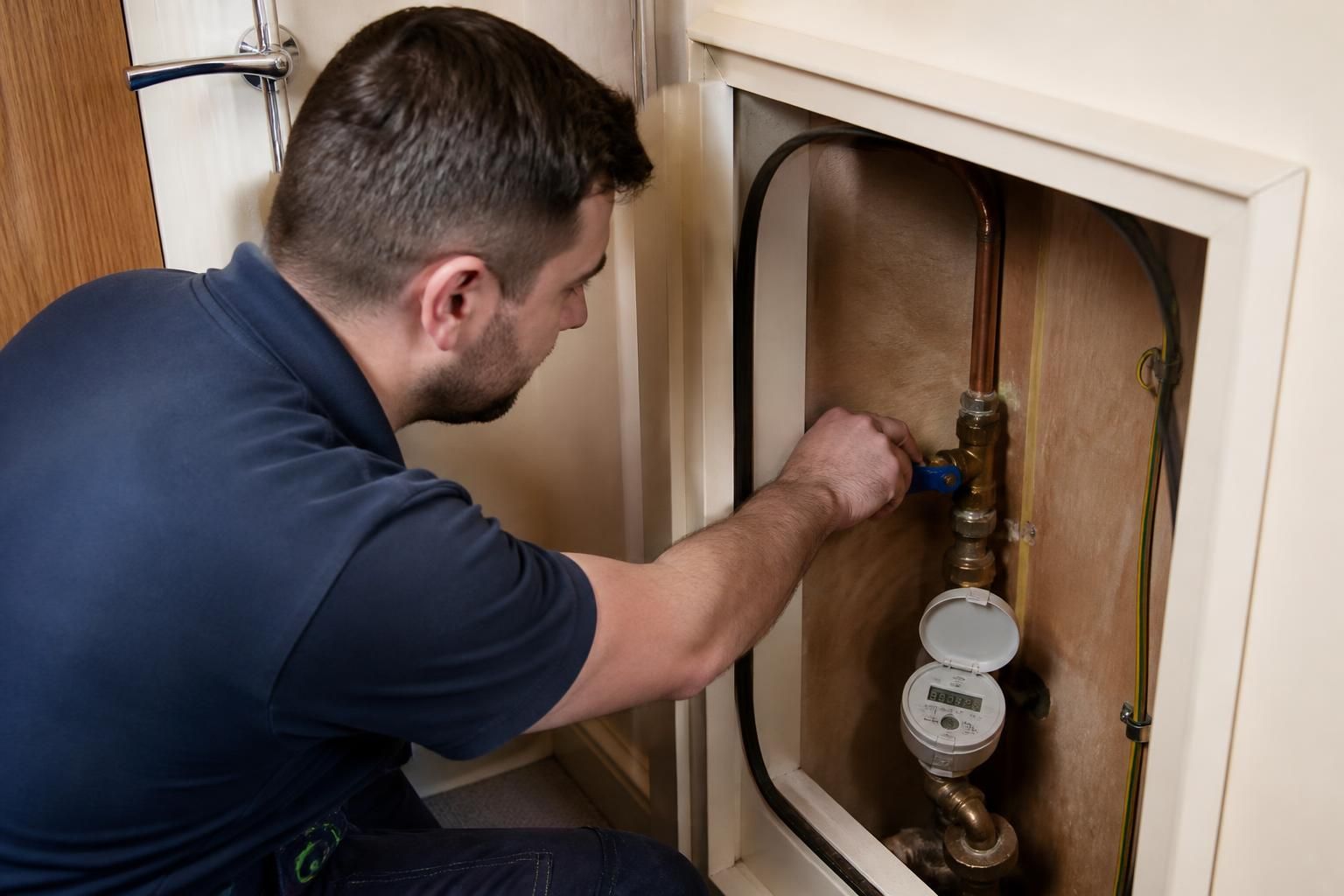
Before a water main leak detection visit, make the property accessible, gather relevant information and avoid disturbing the suspected leak area. Good preparation helps the technician assess the symptoms accurately, use detection equipment effectively and distinguish a private supply-pipe issue from a problem elsewhere on the water network.
Confirm who needs to be present. Make sure the person arranging the appointment can provide access to the relevant parts of the property and answer questions about when the symptoms began. If the property is rented, inform the landlord or managing agent and obtain any permission needed for inspection or investigative work. Where several households share a supply, tell the technician about shared access arrangements before the visit.
Keep the suspected route undisturbed. Do not lift paving, dig in the garden, remove flooring or open walls simply to look for the leak unless a qualified professional has advised this. Excavation can damage buried services, conceal useful evidence and make the eventual repair more complicated. Leave visible damp patches, pooling water, unusually soft ground or damaged surfaces in their current condition where it is safe to do so.
Make indoor areas easy to inspect. Move stored items, furniture and personal belongings away from likely pipe routes, service cupboards and areas affected by damp. Protect valuables from possible moisture, but do not cover a wet area so thoroughly that it cannot be examined. If access panels, loft hatches or garden gates are secured, make arrangements for them to be opened.
Record useful observations. A short written record can help establish a pattern. Note whether the problem appears constant or intermittent, whether it changes when water is being used, and whether nearby surfaces, fixtures or appliances have shown signs of moisture. Photographs can be useful if the appearance changes between the time of booking and the visit. Avoid making assumptions about the source: water can travel along floors, walls and ducts before becoming visible.
Keep relevant documents available. If you have them, provide plumbing plans, previous repair records, information about alterations and details of any insurance claim connected with the issue. These records may indicate the approximate age and route of the supply pipe, but a lack of paperwork does not prevent an inspection.
Consider safety first. If water is close to electrical equipment, sockets or consumer-unit wiring, keep clear of the area and follow appropriate electrical safety guidance. If there is active flooding, protect people and pets from the affected space and take sensible steps to limit damage only where it is safe to do so. Do not enter contaminated standing water or attempt work in an excavation.
Ask what the inspection will involve. Water main leak detection may use non-invasive methods such as listening equipment, pressure checks or specialist tracing techniques, depending on the pipework and the symptoms. The technician may need to compare readings at different points or inspect both internal and external sections of the supply. Ask before the visit whether any particular rooms, outbuildings or external areas need to be accessible, and whether further investigation could involve minor opening-up work.
Once the inspection is complete, the findings should identify whether a leak is likely, where it is located as far as the evidence allows, and what further repair or access work may be appropriate. Ideal Plumbing Services can assess water main leak concerns for homeowners, landlords and tenants, with residential plumbing support across Birmingham and the wider West Midlands.