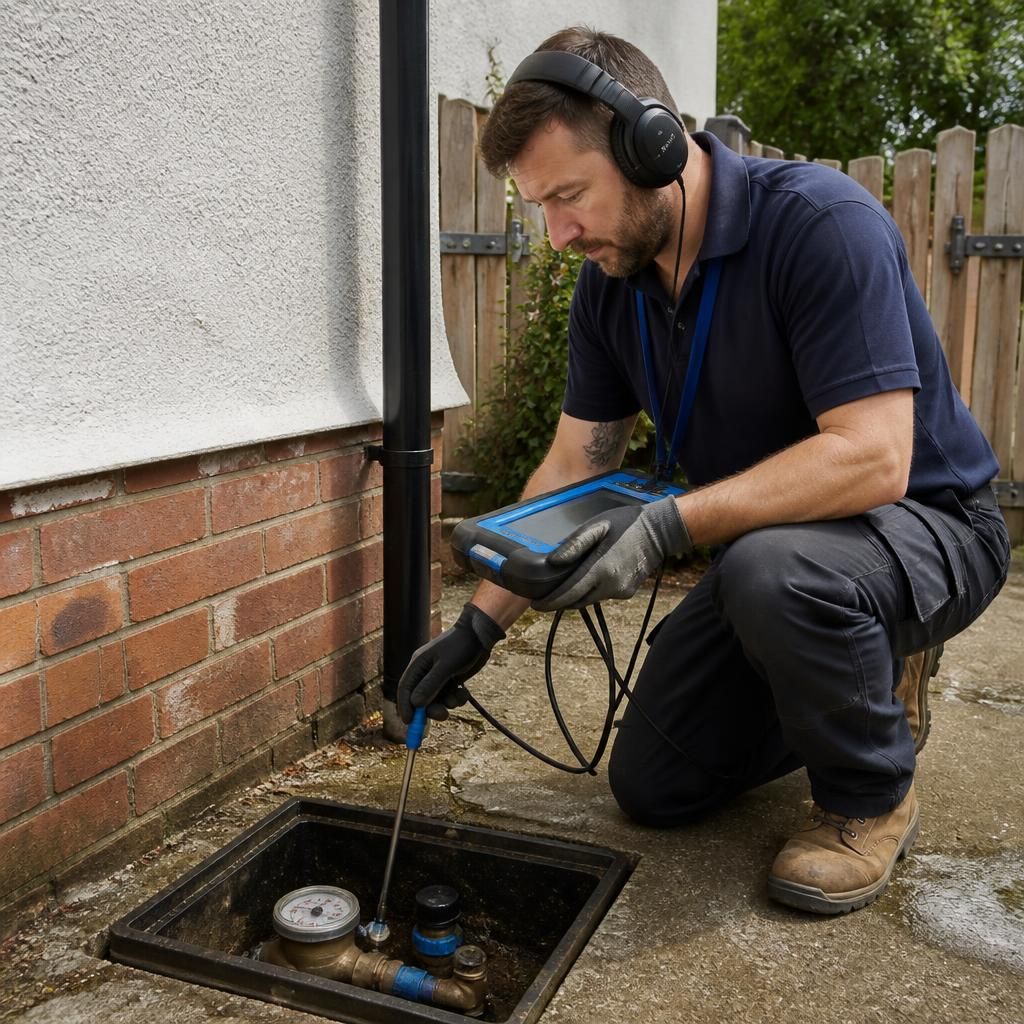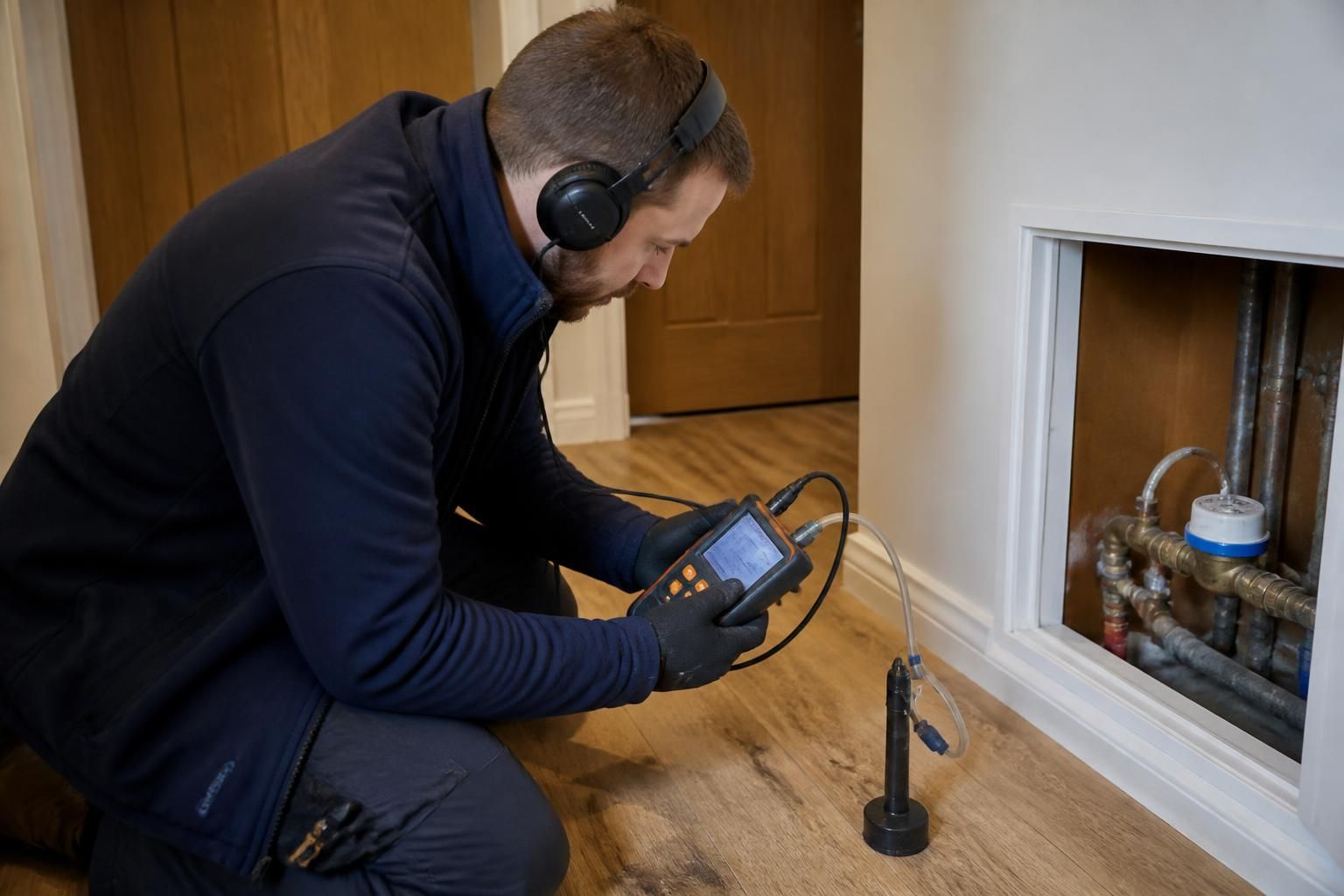
Water main leak detection is normally a controlled investigation rather than major building work. The greatest disruption usually comes from gaining access to a concealed pipe, while the diagnostic checks themselves can often be completed with equipment positioned around the property.
What the inspection involves: The plumber will assess the property, review the symptoms and identify the likely route of the water main. This may include checking the meter, monitoring pressure, listening for escaping water and using specialist detection equipment. These checks are designed to narrow down the leak location without opening up large areas unnecessarily.
There may be a temporary interruption to the water supply while pressure or isolation tests are carried out. The duration depends on the pipework and the tests required. Internal inspection points may include the stop tap, utility areas, kitchens, bathrooms, service cupboards or other places where the supply pipe is accessible. Furniture or stored items may need to be moved to create a safe working area.
When access is concealed: A leak beneath a floor, driveway, patio or other finished surface may require a small access point or carefully controlled excavation. The work can involve lifting floor coverings, removing a limited section of flooring or paving, or exposing soil around the pipe. The amount of disturbance depends on the pipe depth, surface construction, suspected leak position and whether the route is known.
Detection and repair are separate stages. Finding the position of the leak does not necessarily mean that the pipe will be opened or repaired during the same investigation. If excavation, pipe replacement or surface reinstatement is needed, the proposed work should be explained before it begins. This allows the property owner, landlord or tenant to understand which areas may be affected and what follow-on work is involved.
Steps that help limit disruption include:
- starting with non-destructive checks where suitable;
- using the available plans, meter position and visible pipework to narrow the search area;
- protecting floors, furnishings and surrounding surfaces before equipment or access work begins;
- creating the smallest practical inspection opening rather than removing a broad section of surface; and
- recording the confirmed leak position before deciding on excavation or repair.
Some evidence of the investigation may remain even when the leak is located without extensive opening-up. For example, there may be moved furnishings, a temporarily lifted floor covering or a small access point awaiting repair. Reinstatement requirements vary by surface and may need to be arranged as part of the repair rather than the detection itself.
Ideal Plumbing Services can assess water main leaks for homeowners, landlords and tenants across Birmingham and the West Midlands, explaining the likely access requirements before intrusive work is considered. The practical disruption should be judged against the risk of leaving an underground leak unresolved, including ongoing water loss, dampness, damage to finishes and weakening ground around the pipe.