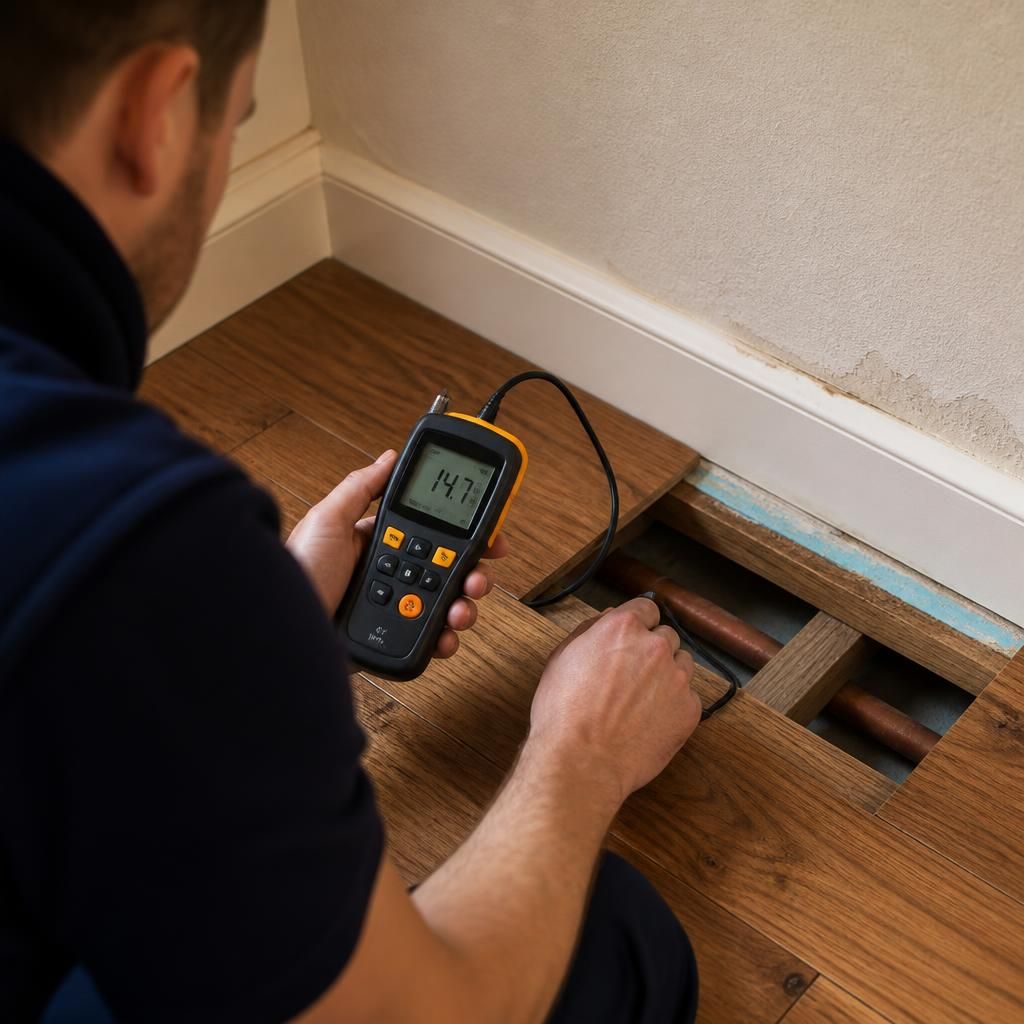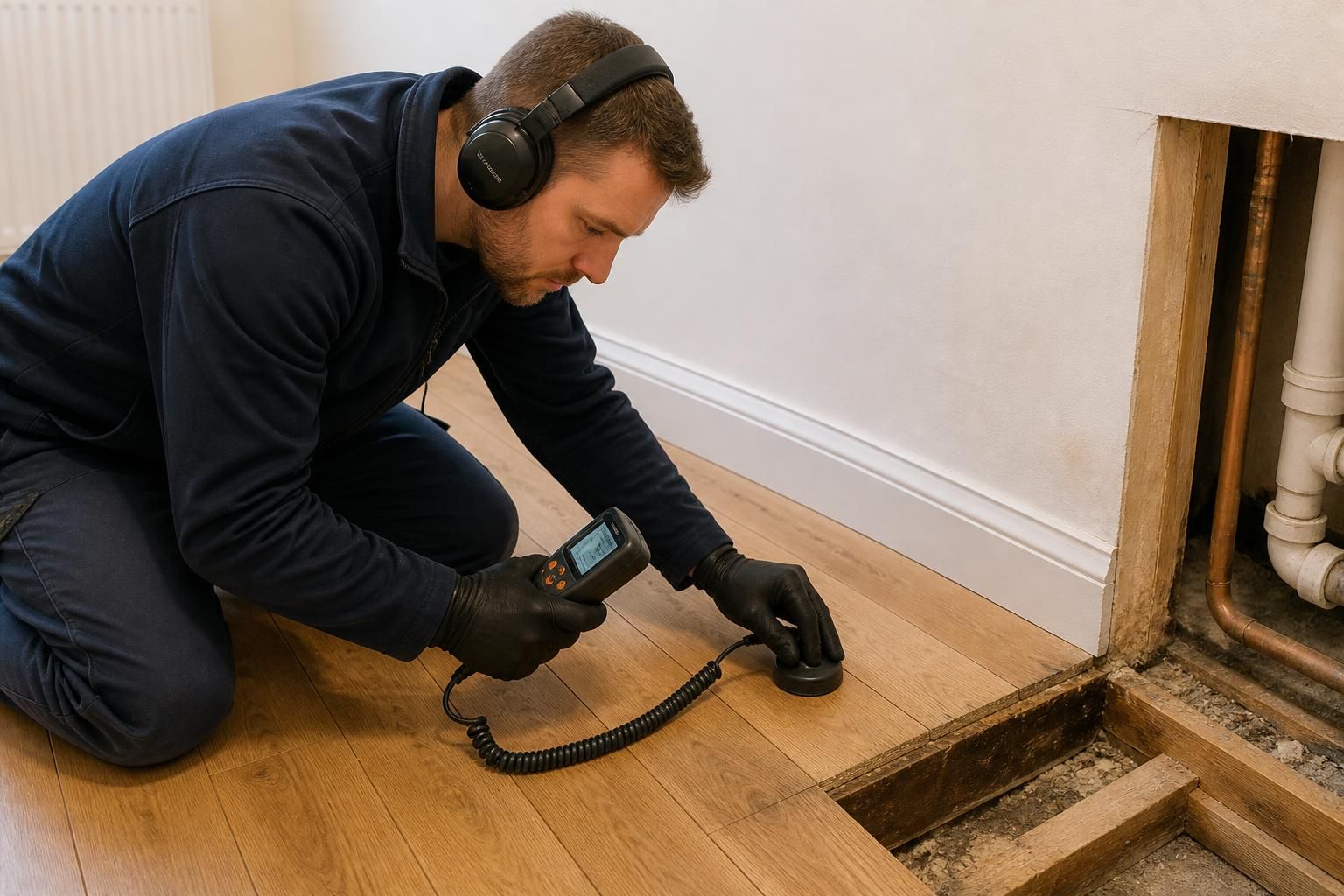
Yes. A leak beneath flooring can usually be located by assessing changes in moisture, temperature and sound around the affected area, then comparing those findings with the layout of the pipework. The inspection can often narrow the problem to a particular section of floor rather than requiring the entire floor covering to be removed.
What the inspection can establish
- Whether moisture is concentrated beneath the floor or has migrated from another location.
- Which part of the plumbing system is most likely to be involved, such as a supply pipe, heating pipe, waste connection or appliance feed.
- Whether the leak appears active or whether the visible dampness is residual moisture from an earlier problem.
- Where access is most appropriate if a section of flooring or subfloor must be opened for confirmation and repair.
Finding the damp patch is not always the same as finding the leak. Water can travel along a screed, underlay, joist or subfloor before appearing at the surface. As a result, a stained board, lifted laminate plank or damp area may be some distance from the failed joint or damaged pipe. A proper inspection follows the pattern of moisture and checks nearby pipe routes rather than assuming the most visible mark is the source.
The flooring material affects the investigation. Carpet and underlay can retain water and may need to be lifted at an edge for inspection. Laminate and engineered timber can swell, separate or distort when moisture remains underneath. Tiles may conceal dampness for longer, particularly where water is held in the adhesive or screed. Solid flooring may restrict access to the pipework, but it does not prevent the area from being assessed.
Where the pipework runs below a suspended timber floor, access may sometimes be possible from beneath. Pipes installed in a solid floor may require a more limited opening once the likely position has been established. The aim is to avoid unnecessary disruption, but non-invasive investigation cannot always confirm the precise failed component where several pipes are close together or where the floor construction blocks a clear reading.
Signs that support an under-floor leak assessment include:
- A patch of flooring that feels warmer, colder, soft or swollen without an obvious spill.
- Persistent dampness, musty odours or mould around skirting boards and floor edges.
- A drop in boiler pressure or unexplained use of water where a heating or pressurised system is involved.
- Sounds of running or dripping water when taps and appliances are not being used.
- Floor movement, staining or deterioration that continues after the surface has been dried.
These signs are useful evidence but do not prove that the leak is beneath the floor. A failed appliance hose, wall cavity, radiator connection or external source can produce similar symptoms. The inspection should therefore consider the surrounding walls, ceilings, fixtures and pipe routes before attributing the damage to under-floor pipework.
If a leak is suspected, avoid covering the affected area or applying heat directly to it, as this can alter the moisture pattern and worsen damage to some flooring materials. Where it is safe to do so, stop using the suspected fixture and note when the dampness changes in relation to taps, toilets, heating or appliances. Any electrical equipment affected by water should be isolated only if this can be done safely; otherwise, professional assistance is appropriate.
Once the source has been identified, the next step depends on the type of failure and the condition of the surrounding materials. A local pipe repair may resolve the leak, while saturated underlay, damaged boards or compromised flooring may require separate drying or replacement. Detecting the source before lifting flooring helps determine the necessary access and reduces the risk of opening an irrelevant area.